Integrated red and IR LEDs plus photodetector for SpO2 and heart-rate sensing
In stock
Biometric
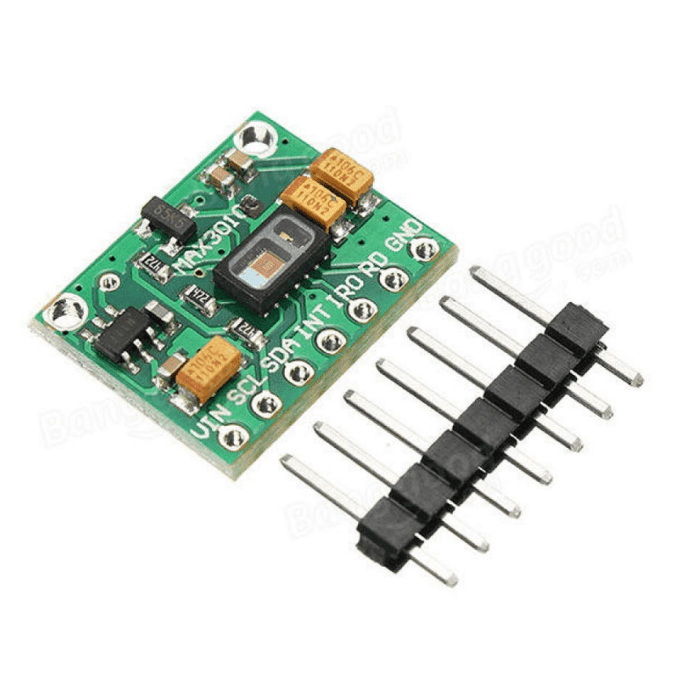
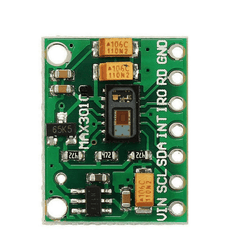
MAX30102 Pulse Oximeter and Heart Rate Sensor Module
Integrated I2C SpO2 and heart-rate sensor using red/IR LEDs, the standard module for DIY pulse oximeters.
₹124 + 18% GST
SKU: BOTBIT-SEN-16 · Best for: DIY pulse oximeters and heart-rate monitors
Overview
About MAX30102 Pulse Oximeter and Heart Rate Sensor Module.
The MAX30102 module is an integrated pulse-oximetry (SpO2) and heart-rate sensor built around Maxim Integrated's MAX30102 IC. It combines a red LED, an infrared LED, photodetectors and low-noise analog front-end electronics in a single package, outputting the raw optical readings over an I2C interface. By measuring how the two wavelengths are absorbed as they pass through tissue, software can estimate heart rate and blood-oxygen saturation.
It is the standard sensor for DIY pulse-oximeter and health-monitor projects in the maker community because it is compact, needs only I2C, and has ready-made libraries for computing heart rate and SpO2. A finger placed gently on the sensor window gives usable pulse data within a few seconds.
The breakout board typically includes on-board level-shifting and a 3.3V regulator on many variants, so it works with both 3.3V and 5V microcontrollers. It is a favourite for wearable prototypes, fitness gadgets and biomedical learning projects.
Key features
Why it stands out.
I2C digital output, so no analog signal chain to build
On-board temperature sensor for calibration compensation
Programmable LED current, sample rate and pulse width via registers
Built-in FIFO buffer that stores samples so the host does not need to poll continuously
Compact module suitable for wearable and handheld prototypes
Specifications
Selection facts.
| Sensor IC | Maxim MAX30102 |
|---|---|
| Function | Pulse oximetry (SpO2) + heart rate |
| LEDs | Red (~660 nm) and IR (~880 nm) |
| Interface | I2C (fixed address 0x57) |
| Supply voltage | 1.8V core + separate 3.3V/5V LED supply (module regulated) |
| ADC resolution | 18-bit |
| Sample rate | 50 to 3200 samples/s (programmable) |
| On-chip temperature sensor | Yes, for reading compensation |
| FIFO | 32-sample buffer |
| Power consumption | Ultra-low with shutdown mode |
Applications
Where it is used.
- DIY pulse oximeters and heart-rate monitors
- Wearable fitness and health-tracking prototypes
- Biomedical and physiology learning projects
- IoT heart-rate and SpO2 dashboard experiments over Wi-Fi
- Sleep and activity tracking experiments
- Finger or wrist-based vitals measurement demos
Buying guide
How to choose.
Buy the MAX30102 if you want a single-chip solution for heart rate and SpO2 that talks I2C and has mature libraries. It is by far the easiest optical vitals sensor to get started with, and the readings are good enough for hobby and educational use.
Check the module's supply pins before wiring: many boards accept 3.3V to 5V thanks to on-board regulation and level shifting, but bare variants expect 1.8V and 3.3V rails. It works with Arduino, ESP32 and Raspberry Pi over I2C. For clean readings, keep the finger still and shield the sensor from bright ambient light.
Pair it with the SparkFun MAX3010x library or the popular MAX30105 library, which include heart-rate and SpO2 example algorithms. Note that this sensor is for hobby and learning use and is not a certified medical device, so do not rely on it for clinical diagnosis.
FAQ
Common questions.
Is this a medical-grade device?
No. The MAX30102 is excellent for DIY, learning and prototyping, but the module is not a certified medical instrument and should not be used for clinical diagnosis.
What library do I use to get heart rate and SpO2?
The SparkFun MAX3010x / MAX30105 Arduino library is the most popular choice. It includes example sketches for heart-rate detection and SpO2 estimation that work with the MAX30102.
What is the I2C address?
The MAX30102 has a fixed I2C address of 0x57, so you connect SDA, SCL, VIN and GND and scan or address it directly.
Does it work at 5V or only 3.3V?
Most breakout modules include a regulator and level shifting so you can power VIN from 3.3V or 5V. Always check your specific board; the raw IC needs 1.8V and 3.3V rails.
Why are my readings noisy?
Optical vitals sensing is sensitive to motion and ambient light. Keep the finger still, apply gentle steady pressure, avoid bright light on the window, and use the library's averaging and algorithms.
Is it available in India?
Yes, the MAX30102 module is widely stocked by Indian electronics retailers and is a common health-project sensor.
More in Sensors & Modules
Related hardware.
Environment
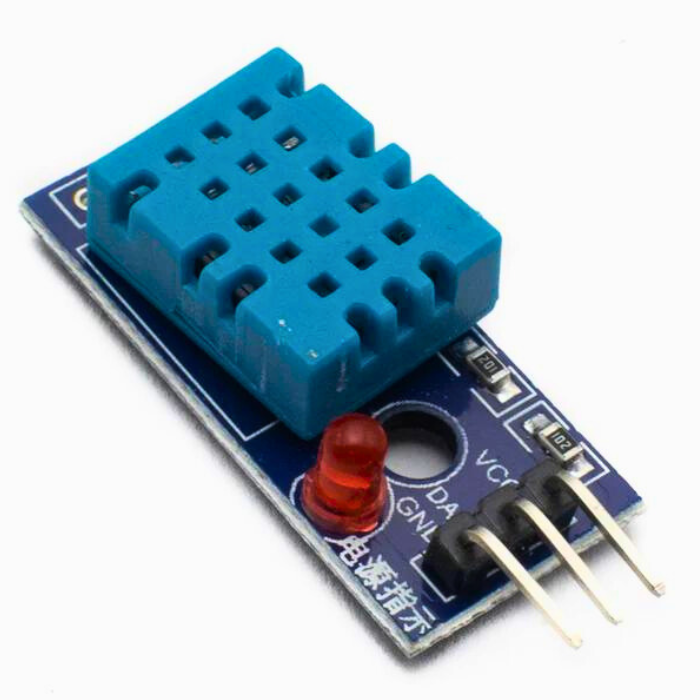
DHT11 Digital Temperature and Humidity Sensor Module
Low-cost single-wire digital temperature (0-50C) and humidity (20-90% RH) sensor, the default beginner Arduino sensor.
₹60 + 18% GST
Environment
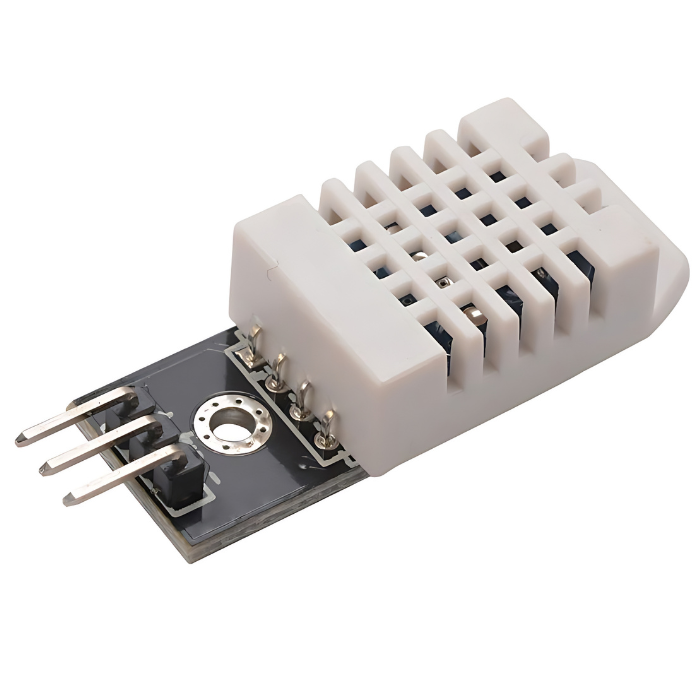
DHT22 / AM2302 Temperature and Humidity Sensor Module
Higher-accuracy digital temperature (-40 to 80C) and humidity (0-100% RH) sensor, upgrade over DHT11.
₹199 + 18% GST
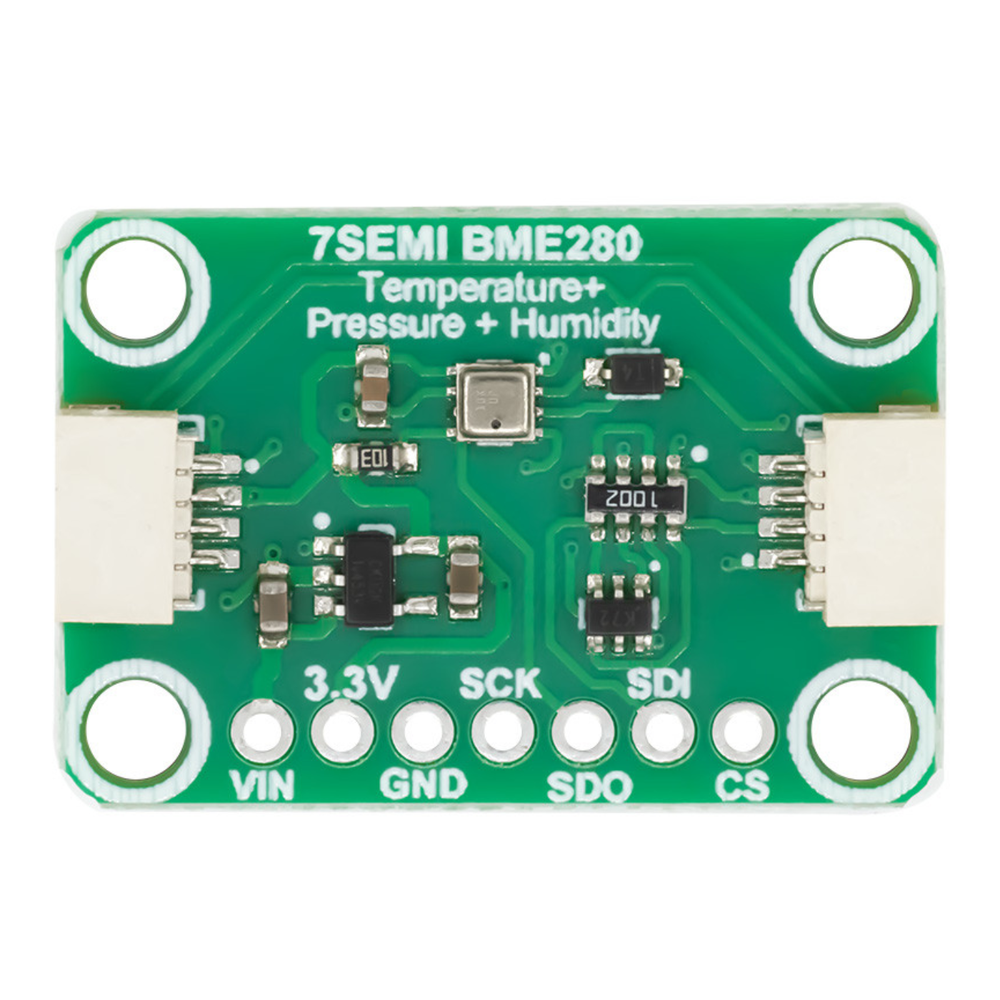
Environment
BME280 Temperature Humidity Barometric Pressure Sensor Module (I2C/SPI)
Bosch 3-in-1 sensor measuring temperature, humidity and barometric pressure over I2C/SPI, popular for weather and altitude projects.
₹190 + 18% GST
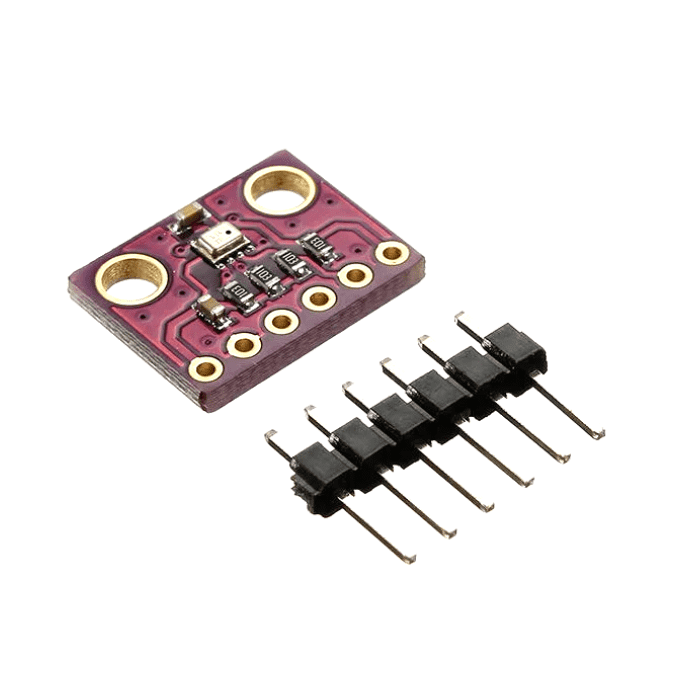
Environment
BMP280 Barometric Pressure and Temperature Sensor Module
Bosch precision barometric pressure and temperature sensor over I2C/SPI, used for altitude and weather sensing.
₹95 + 18% GST
You may also need
Pairs well with.
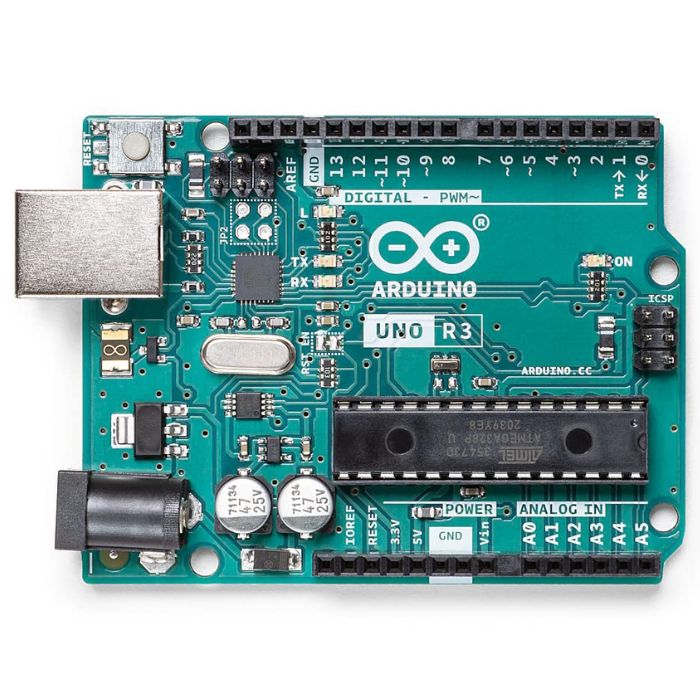
Arduino Boards
Arduino Uno R3
The classic ATmega328P 8-bit microcontroller board, a popular beginner prototyping platform with 14 digital and 6 analog I/O pins.
₹799 + 18% GST
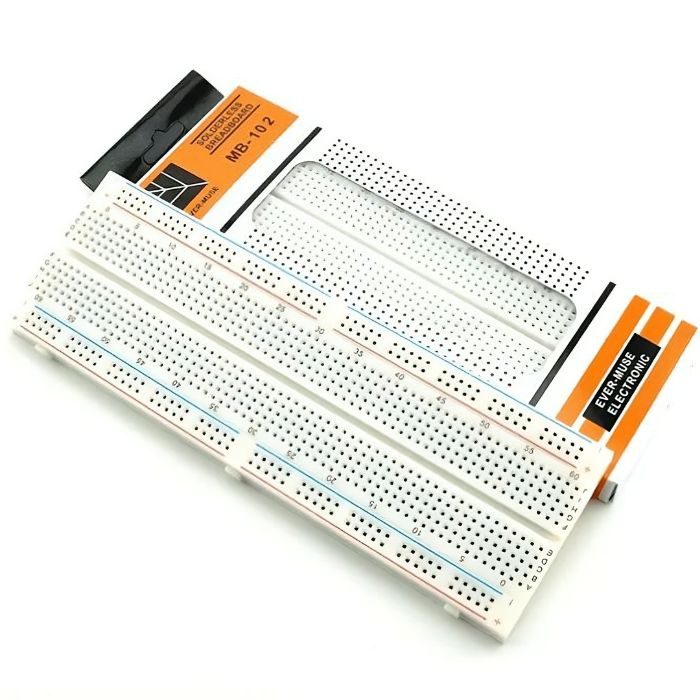
Breadboards Jumpers
MB102 830 Points Solderless Breadboard
Full-size 830 tie-point solderless prototyping breadboard with power rails, accepts 20-29 AWG wire.
₹90 + 18% GST