830 total tie points (630 in the main IC area plus 200 on the power rails)
In stock
Breadboards Jumpers
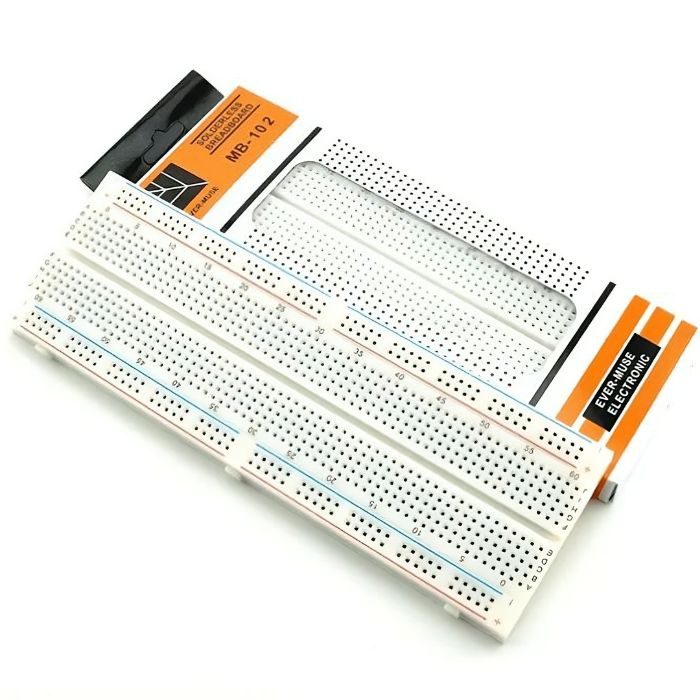
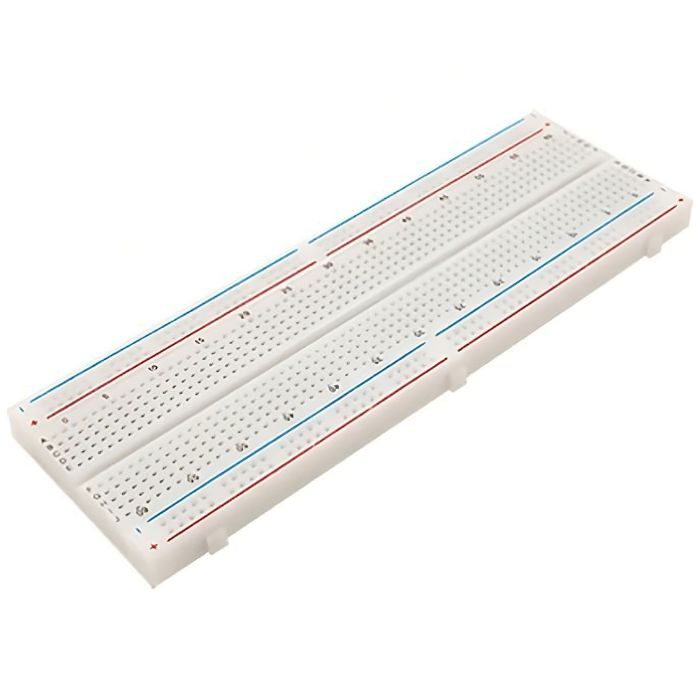
MB102 830 Points Solderless Breadboard
Full-size 830 tie-point solderless prototyping breadboard with power rails, accepts 20-29 AWG wire.
₹90 + 18% GST
SKU: BOTBIT-PWR-01 · Best for: Prototyping Arduino, ESP32 and Raspberry Pi circuits without soldering
Overview
About MB102 830 Points Solderless Breadboard.
The MB102 is a full-size 830 tie-point solderless breadboard, the workhorse prototyping surface found on nearly every electronics bench and in every college lab in India. It lets you build and modify circuits by simply pushing component legs and jumper wires into its spring-clip contacts, no soldering required, so you can test ideas fast and reuse the board endlessly.
The board is organised into a central IC-friendly area of 630 tie points split by a center gap for DIP chips, plus power rails along both sides that provide 200 additional tie points for distributing power and ground. It accepts standard 20-29 AWG single-core (solid) jumper wire and component leads.
As part of the MB102 family it mates neatly with the common MB102 breadboard power supply module and is a staple pairing for Arduino, ESP32, Raspberry Pi and discrete-component experiments. At around Rs 90 it is an essential, low-cost building block for any maker or student.
Key features
Why it stands out.
Full-size solderless breadboard for fast, reusable, no-solder prototyping
Center gap sized for DIP integrated circuits, with rows connected in standard 5-point strips
Dual power/ground rails down both sides for easy power distribution
Accepts 20-29 AWG solid jumper wire and standard component leads
Self-adhesive backing and interlocking edges to tile multiple boards together
Specifications
Selection facts.
| Model | MB102 |
|---|---|
| Total tie points | 830 |
| Main area tie points | 630 |
| Power rail tie points | 200 (2 x 100) |
| Contact pitch | 0.1 inch (2.54 mm) standard |
| Accepted wire gauge | 20-29 AWG (solid core) |
| Power rails | Dual rails on both sides |
| Mounting | Self-adhesive back; interlocking edges |
Applications
Where it is used.
- Prototyping Arduino, ESP32 and Raspberry Pi circuits without soldering
- Building and testing discrete component and IC (DIP) circuits
- College, school and training-lab electronics experiments
- Quickly iterating and modifying circuit designs before finalizing
- Teaching breadboard basics, power distribution and wiring
- Temporary sensor, LED and logic test rigs on the bench
Buying guide
How to choose.
The MB102 830-point breadboard is the standard choice for anyone starting or expanding an electronics kit. Its full size comfortably fits DIP ICs and leaves room for an Arduino-style build, and the dual power rails make distributing 5V/3.3V and ground straightforward.
Pair it with a set of solid-core male-to-male jumper wires (20-29 AWG) and, for standalone power, the matching MB102 breadboard power supply module that plugs onto the rails and provides selectable 3.3V/5V. Multiple MB102 boards can interlock along their edges if you need a larger prototyping area.
Buy this if you want a reliable, low-cost, reusable prototyping surface. Choose a smaller half-size board only if bench space is tight; for most projects the full 830-point board offers the best balance of room and price.
FAQ
Common questions.
How many tie points does it have and how are they arranged?
It has 830 tie points: 630 in the main IC prototyping area (rows connected in 5-point strips around a center DIP gap) and 200 on the two power rails (100 per side) for distributing power and ground.
What wire gauge should I use with it?
Use solid-core (single-strand) jumper wire in the 20-29 AWG range, or standard component leads. Stranded wire tends to fray and does not seat reliably in the spring clips, so stick to solid-core jumpers.
Can I power it directly?
The breadboard has no power source of its own; you feed the side rails from your project's supply. It is commonly paired with the MB102 breadboard power supply module that plugs onto the rails and outputs selectable 3.3V or 5V.
Does it work with Arduino and Raspberry Pi?
Yes. It is ideal for prototyping around Arduino, ESP32, Raspberry Pi and discrete circuits. You connect the board's GPIO/pins to the breadboard with jumper wires and build your circuit in the tie-point grid.
Can I join multiple breadboards together?
Yes. MB102 boards have interlocking edges so you can tile several side by side for larger projects, and a self-adhesive backing lets you mount the board onto a base or enclosure.
What is in the box?
You receive one MB102 830-point solderless breadboard. Jumper wires and the MB102 power supply module are sold separately, so add them if you do not already have them.
More in Power & Prototyping
Related hardware.
Breadboards Jumpers
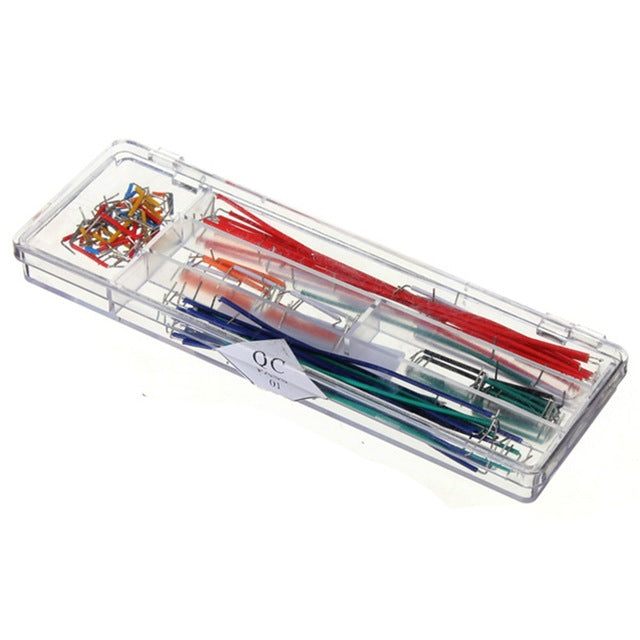
140pcs U-Shape Solderless Breadboard Jumper Wire Kit
140 pre-formed solid-core jumper wires in 14 lengths for clean breadboard wiring.
₹130 + 18% GST
Breadboards Jumpers
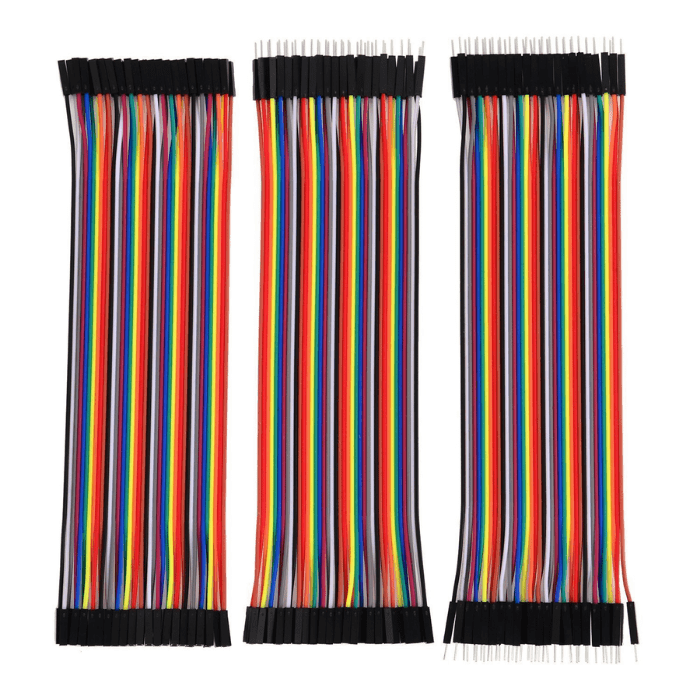
120pcs Dupont Jumper Wire Set (M-M, M-F, F-F)
40pcs each of male-male, male-female, female-female flexible jumper cables for Arduino/breadboard.
₹150 + 18% GST
Breadboards Jumpers
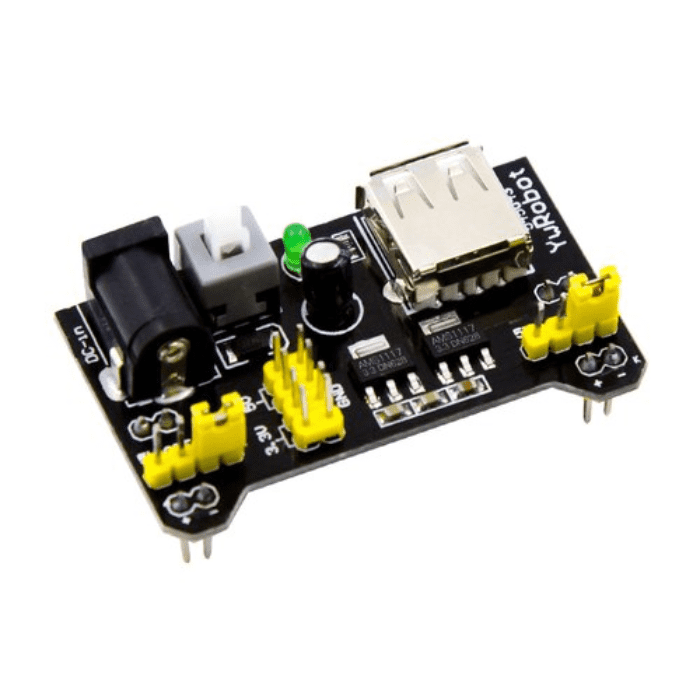
MB102 Breadboard Power Supply Module (3.3V/5V)
Dual-rail 3.3V/5V breadboard power module with USB output, 7-12V DC input, up to 700mA.
₹60 + 18% GST
Buck Boost
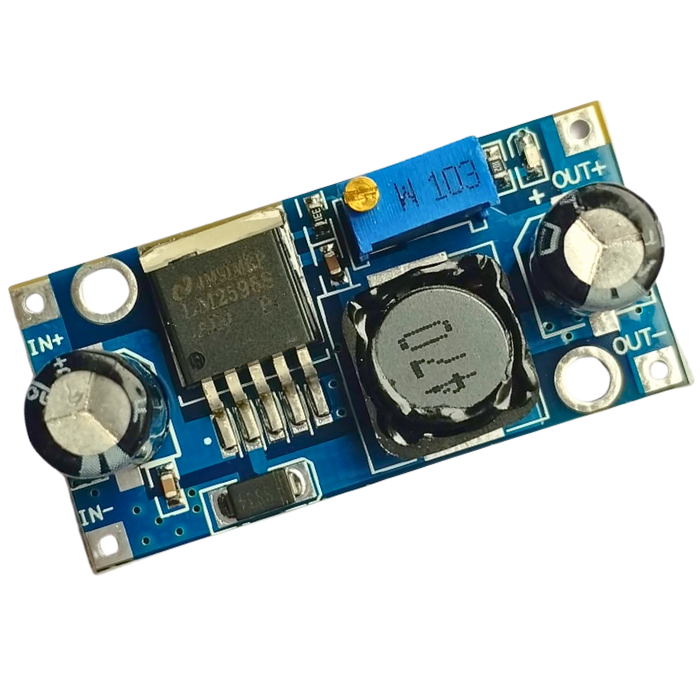
LM2596 DC-DC Buck Converter Step-Down Module
Adjustable step-down regulator, 4-40V in to 1.25-37V out, up to 3A load.
₹75 + 18% GST
You may also need
Pairs well with.
Arduino Boards
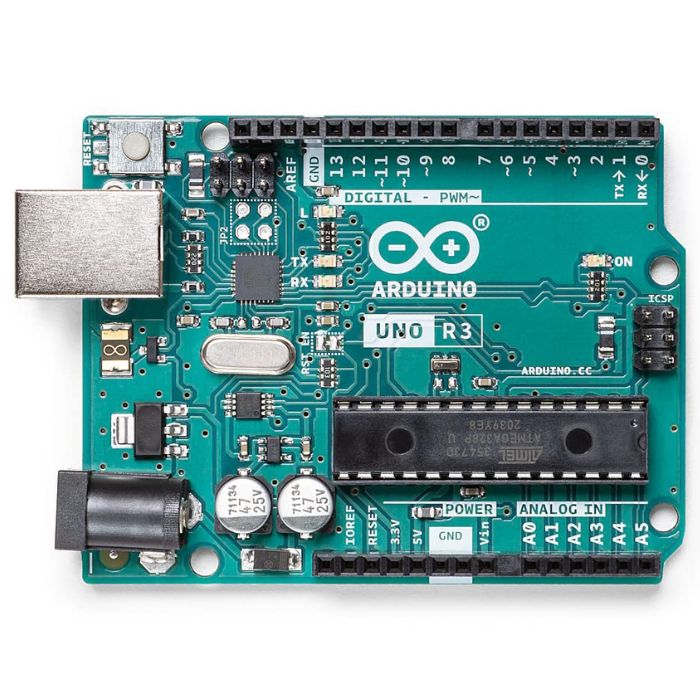
Arduino Uno R3
The classic ATmega328P 8-bit microcontroller board, a popular beginner prototyping platform with 14 digital and 6 analog I/O pins.
₹799 + 18% GST
Environment
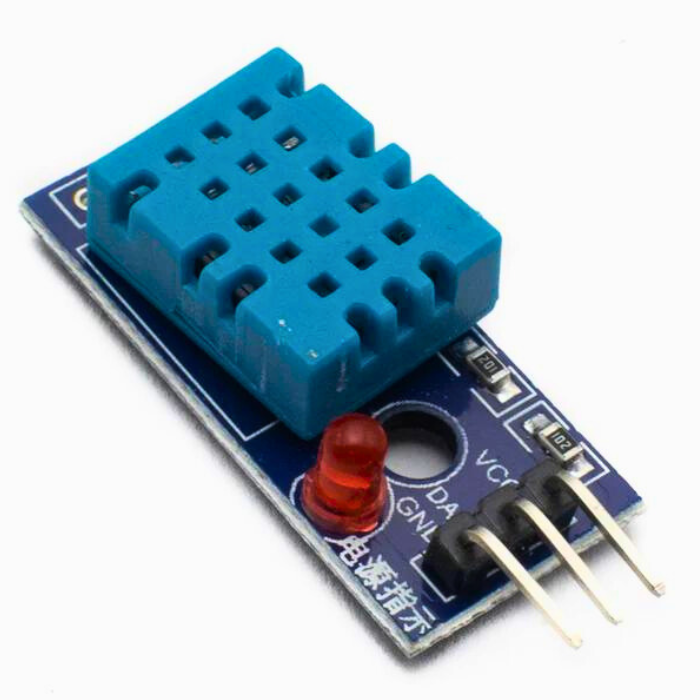
DHT11 Digital Temperature and Humidity Sensor Module
Low-cost single-wire digital temperature (0-50C) and humidity (20-90% RH) sensor, the default beginner Arduino sensor.
₹60 + 18% GST