Allegro ACS712ELCTR-20A Hall-effect sensor with full galvanic isolation between the measured line and the signal output
In stock
Current Voltage
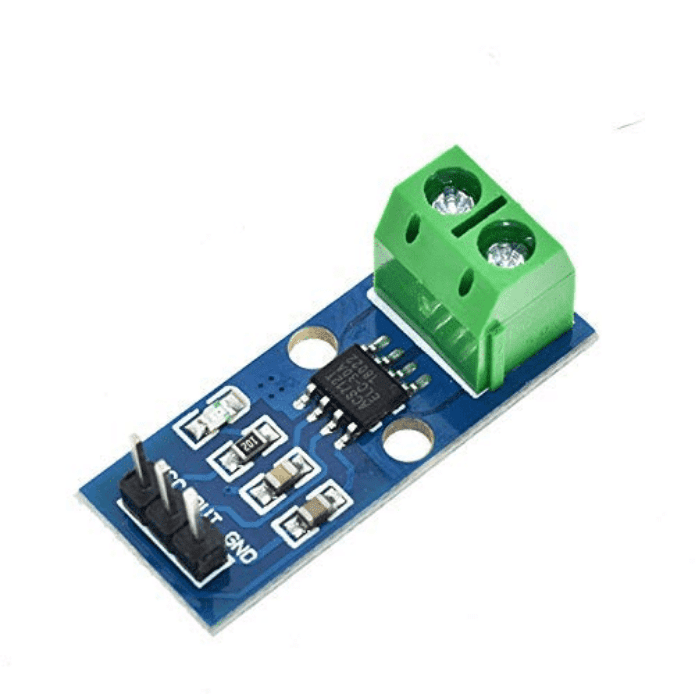
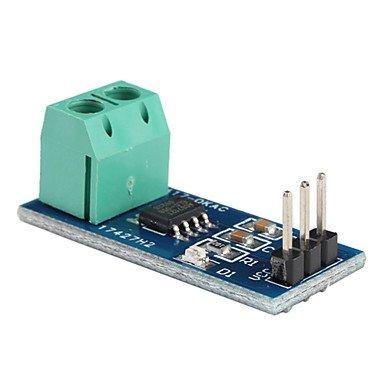
ACS712 20A Hall-Effect Current Sensor Module
Hall-effect AC/DC current sensor rated +-20A giving analog voltage proportional to measured current with galvanic isolation.
₹80 + 18% GST
SKU: BOTBIT-SEN-14 · Best for: Battery charge/discharge current monitoring for Li-ion, LiPo and lead-acid packs
Overview
About ACS712 20A Hall-Effect Current Sensor Module.
The ACS712 20A current sensor module is a compact breakout board built around Allegro MicroSystems' ACS712ELCTR-20A Hall-effect IC. It measures AC or DC current up to +-20A and outputs an analog voltage that rises and falls proportionally with the current flowing through its internal copper conduction path. Because sensing is done via a magnetic field rather than a direct electrical connection, the low-current signal side stays galvanically isolated from the high-current line, which makes it safe and convenient for hobby and industrial monitoring.
It is one of the most popular current-sensing modules in the Indian maker community because it is inexpensive, needs a single 5V supply, and plugs straight into any microcontroller's analog input. The 20A version outputs 100 mV per amp with a zero-current output of Vcc/2 (about 2.5V), so an Arduino, ESP32 or STM32 can read current with a couple of lines of code.
The board integrates the required bypass capacitors and a screw terminal for the load wires, so it is ready to use out of the box for battery monitors, motor current logging, solar setups and overcurrent protection experiments.
Key features
Why it stands out.
Measures both AC and DC current in the range of -20A to +20A
Analog output sensitivity of 100 mV per ampere, with a Vcc/2 (approx 2.5V) offset at zero current
Low internal conductor resistance of about 1.2 milliohm for minimal power loss and self-heating
Single 5V supply operation; output feeds directly into any ADC/analog pin
Fast response with an output rise time around 5 microseconds and on-board filtering
Specifications
Selection facts.
| Sensor IC | Allegro ACS712ELCTR-20A |
|---|---|
| Current range | -20A to +20A (AC or DC) |
| Sensitivity | 100 mV per amp |
| Zero-current output | Vcc/2 (approx 2.5V at 5V supply) |
| Supply voltage | 5V DC |
| Supply current | approx 10 mA |
| Internal conductor resistance | 1.2 milliohm typical |
| Isolation voltage | 2.1 kVRMS (IC rated) |
| Output type | Analog voltage (ratiometric to Vcc) |
| Bandwidth | 80 kHz (IC internal) |
Applications
Where it is used.
- Battery charge/discharge current monitoring for Li-ion, LiPo and lead-acid packs
- DC motor and servo current logging in robotics projects
- Solar panel and charge-controller current measurement
- Overcurrent detection and simple electronic fuse / trip circuits
- Power and energy metering for home automation and IoT dashboards
- Fault-current diagnostics on the bench with an Arduino or ESP32
Buying guide
How to choose.
Choose the 20A version if you are monitoring medium loads such as small DC motors, battery packs and solar circuits. If your load never exceeds a few amps, the 5A variant gives finer resolution (185 mV/A); for high-power lines pick the 30A variant (66 mV/A). Higher current ranges trade resolution for headroom, so match the module to your actual peak current.
Pair it with any microcontroller that has an analog input: Arduino Uno/Nano, ESP32, ESP8266 or STM32. For clean readings, add software averaging and calibrate the zero-current offset at power-up. A stable 5V rail matters because the output is ratiometric, so a noisy supply directly adds noise to your current reading.
For AC measurement you must sample fast enough to capture the waveform and compute RMS in code. If you only need on/off or rough current, a single reading is fine; for accurate energy metering, consider oversampling or a dedicated energy-metering IC instead.
FAQ
Common questions.
What is included in the box?
You get one ACS712 20A module on its breakout PCB with a 2-pole screw terminal already fitted for the load wires and a 3-pin header (VCC, OUT, GND) for the signal side.
How do I wire it to an Arduino?
Connect VCC to 5V, GND to ground and OUT to any analog pin such as A0. Run the load current through the two screw terminals in series with your load. Read the analog pin and convert using 100 mV/A around the Vcc/2 offset.
Can it measure both AC and DC current?
Yes. The Hall-effect sensing works for both. For DC you read the steady offset from Vcc/2; for AC you sample rapidly and compute the RMS value in your code.
Why does my reading show current even with no load?
The output sits at Vcc/2 (about 2.5V) at zero current, and small offset drift is normal. Calibrate by recording the exact no-load voltage at startup and subtracting it before converting to amps.
Is 3.3V logic like ESP32 safe with this module?
The module needs a 5V supply, and its output can swing near 5V. Use a voltage divider or scale the sensitivity in code, and never feed a raw 5V-referenced output straight into a 3.3V ADC without limiting it.
Is it available in India?
Yes, the ACS712 20A module is a common stock item with Indian electronics retailers and typically ships same or next day.
More in Sensors & Modules
Related hardware.
Environment
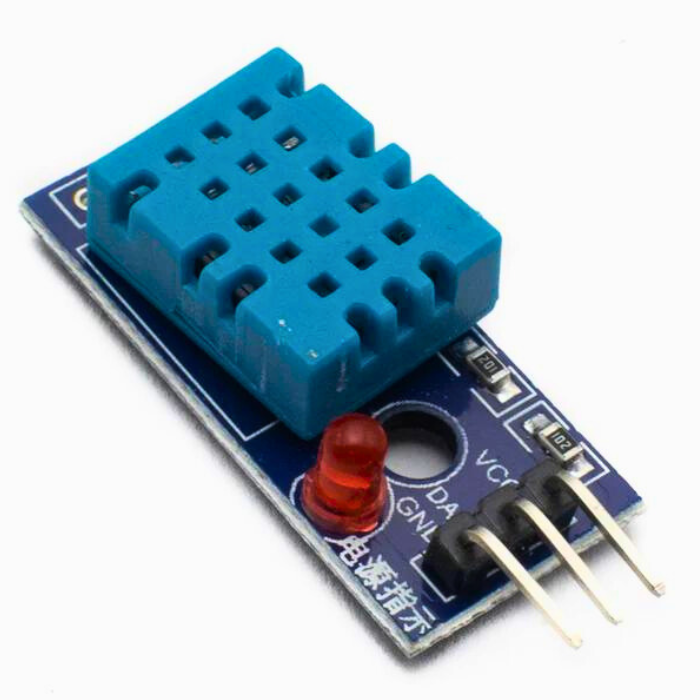
DHT11 Digital Temperature and Humidity Sensor Module
Low-cost single-wire digital temperature (0-50C) and humidity (20-90% RH) sensor, the default beginner Arduino sensor.
₹60 + 18% GST
Environment
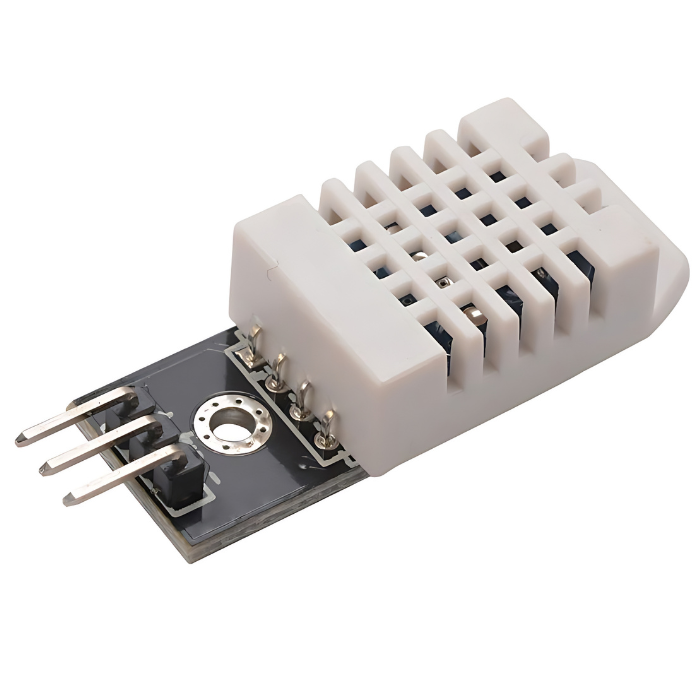
DHT22 / AM2302 Temperature and Humidity Sensor Module
Higher-accuracy digital temperature (-40 to 80C) and humidity (0-100% RH) sensor, upgrade over DHT11.
₹199 + 18% GST
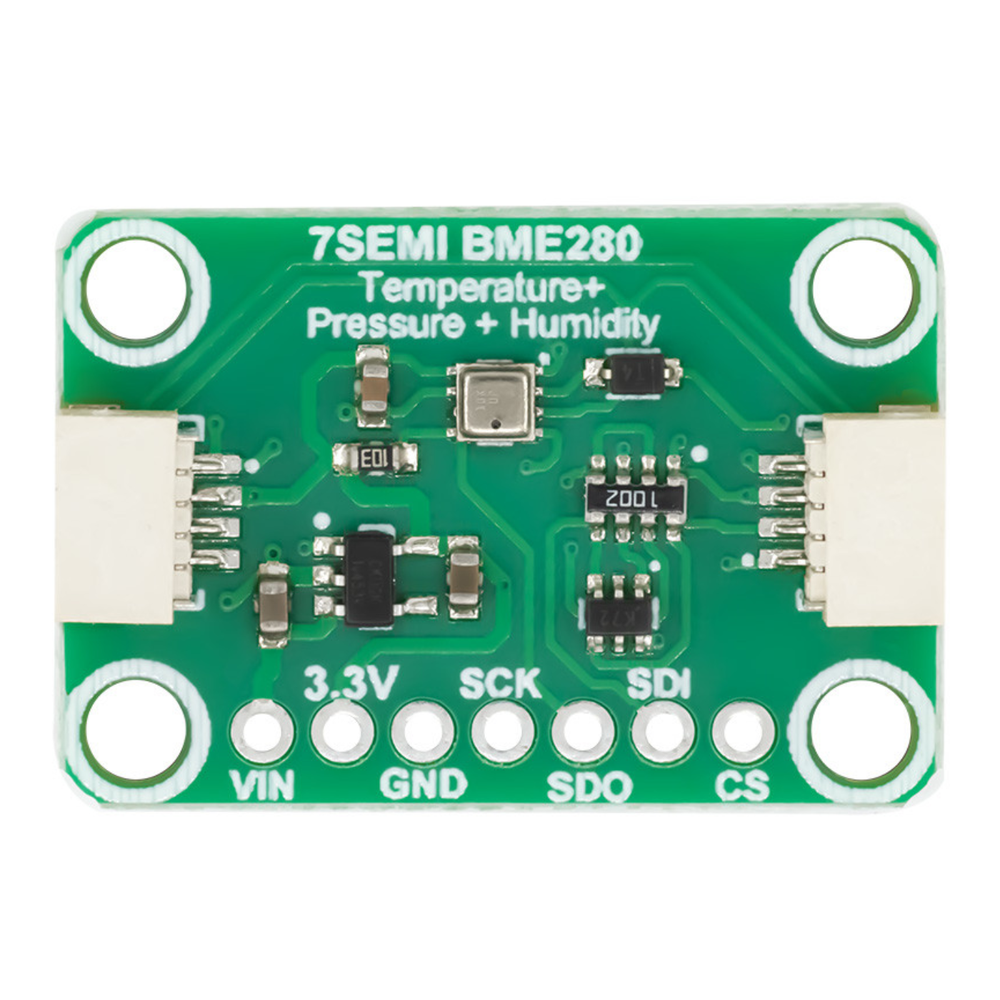
Environment
BME280 Temperature Humidity Barometric Pressure Sensor Module (I2C/SPI)
Bosch 3-in-1 sensor measuring temperature, humidity and barometric pressure over I2C/SPI, popular for weather and altitude projects.
₹190 + 18% GST
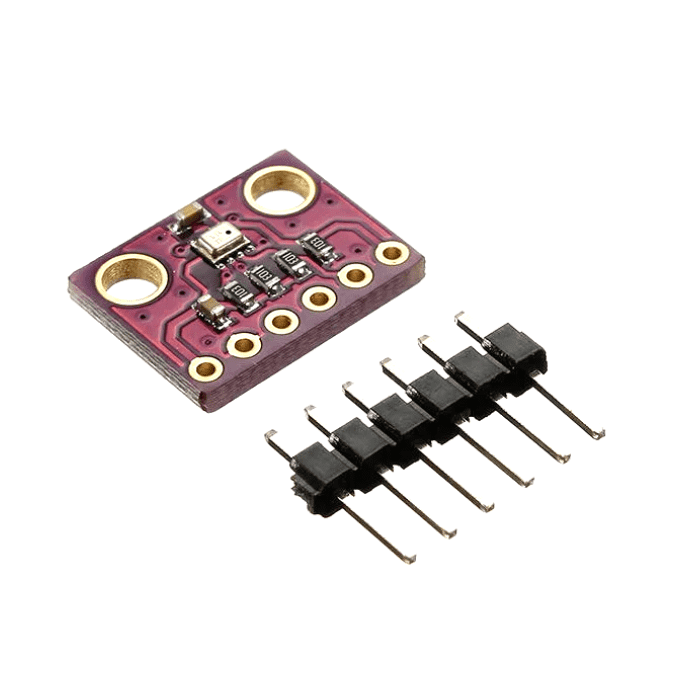
Environment
BMP280 Barometric Pressure and Temperature Sensor Module
Bosch precision barometric pressure and temperature sensor over I2C/SPI, used for altitude and weather sensing.
₹95 + 18% GST
You may also need
Pairs well with.
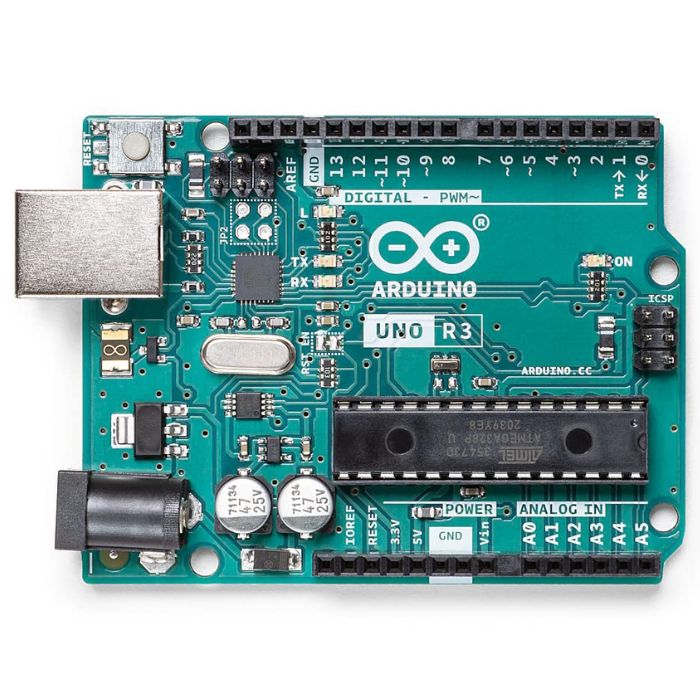
Arduino Boards
Arduino Uno R3
The classic ATmega328P 8-bit microcontroller board, a popular beginner prototyping platform with 14 digital and 6 analog I/O pins.
₹799 + 18% GST
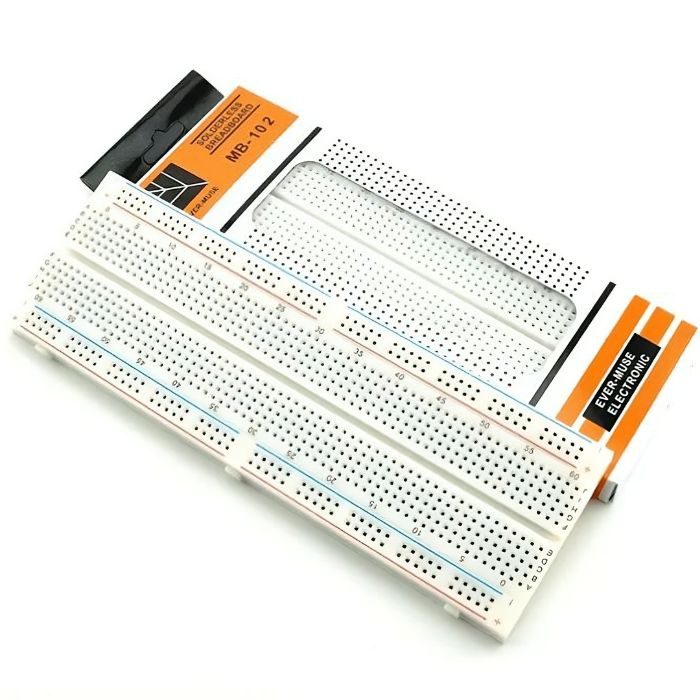
Breadboards Jumpers
MB102 830 Points Solderless Breadboard
Full-size 830 tie-point solderless prototyping breadboard with power rails, accepts 20-29 AWG wire.
₹90 + 18% GST