NXP PN532 13.56MHz NFC/RFID reader-writer controller
In stock
Nfc
PN532 NFC/RFID V3 Reader-Writer Module Kit
13.56MHz NFC/RFID reader-writer with I2C/SPI/UART interfaces and card+tag; reads/writes Mifare cards and talks to NFC phones.
₹430 + 18% GST
SKU: BOTBIT-IOT-13 · Best for: NFC/RFID access control and door locks
Overview
About PN532 NFC/RFID V3 Reader-Writer Module Kit.
The PN532 NFC/RFID V3 module is a 13.56MHz reader-writer built on NXP's PN532 controller, one of the most capable and widely used NFC chips available to makers. It reads and writes Mifare Classic and Ultralight cards, works with ISO14443 Type A/B tags, supports NFC peer-to-peer, and can even emulate a card, all controllable over three selectable host interfaces: I2C, SPI or HSU (UART).
This V3 board is popular in India for access control, attendance, payment simulation and phone-to-device NFC projects because it is flexible and well supported by Arduino/ESP libraries. A DIP switch on the board selects the interface mode, and it typically ships as a kit with a Mifare card and a keyfob tag so you can start experimenting immediately.
Compared to cheap 125kHz EM4100 or the RC522 reader, the PN532 works at the modern 13.56MHz NFC frequency, can talk to NFC-enabled smartphones, and offers more protocol coverage. It runs at 3.3V logic and is the go-to choice when you need real NFC rather than just basic Mifare tag reading.
Key features
Why it stands out.
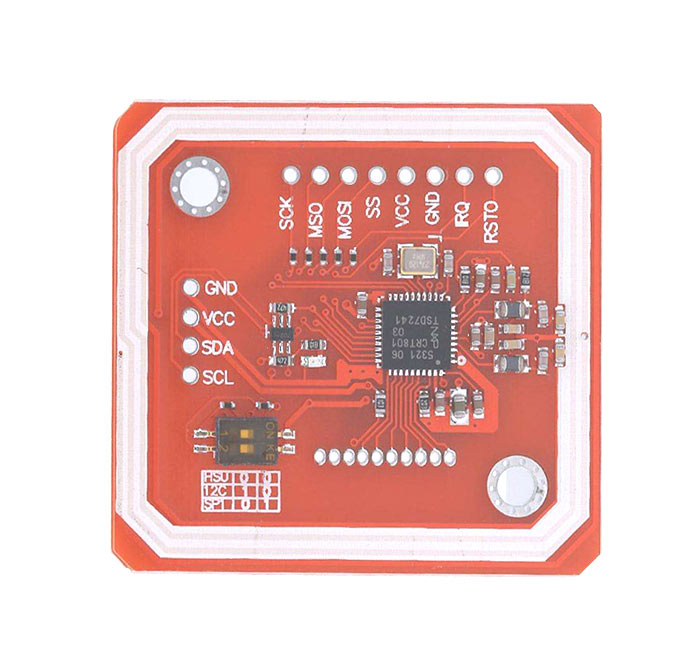
Three selectable host interfaces: I2C, SPI and HSU/UART (DIP-switch selectable)
Reads and writes Mifare Classic 1K/4K and Ultralight cards (ISO14443A/B)
NFC peer-to-peer and card emulation modes supported
Communicates with NFC-enabled smartphones
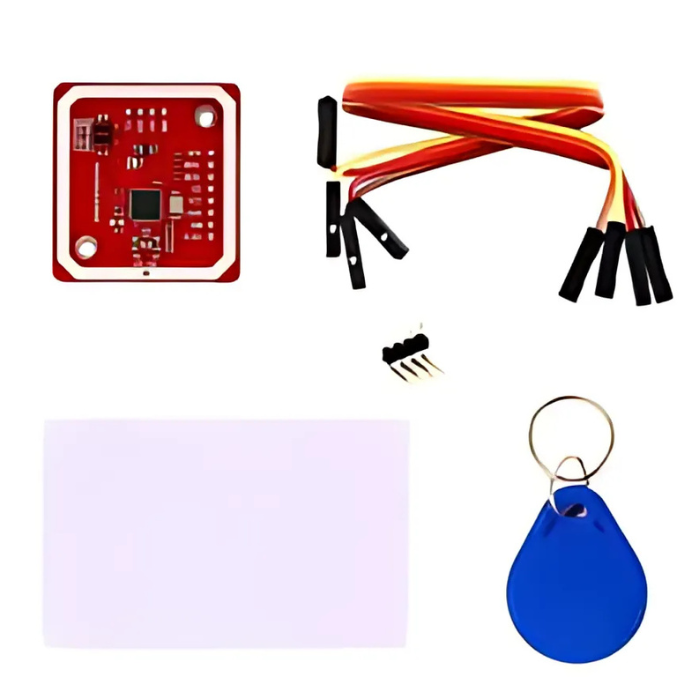
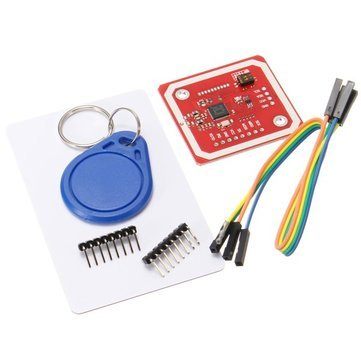
Usually supplied as a kit with a Mifare card and keyfob tag
Specifications
Selection facts.
| Controller | NXP PN532 (V3 board) |
|---|---|
| Operating frequency | 13.56 MHz |
| Standards | ISO14443 Type A/B, Mifare, FeliCa, NFC (ISO/IEC 18092) |
| Host interfaces | I2C, SPI, HSU/UART (DIP-switch selectable) |
| Read/write range | Typically up to ~5-7 cm |
| Supply voltage | 3.3 V (VCC 3.3-5 V input on most boards) |
| Logic level | 3.3 V |
| Modes | Reader/writer, peer-to-peer, card emulation |
| Supported cards | Mifare Classic 1K/4K, Ultralight, NTAG |
Applications
Where it is used.
- NFC/RFID access control and door locks
- Attendance and time-tracking systems with Mifare cards
- Contactless payment and ticketing prototypes
- Phone-to-device NFC data exchange and tap-to-pair
- Writing and cloning Mifare/NTAG tags for automation
- Smart posters, inventory tags and asset identification
Buying guide
How to choose.
Choose the PN532 over an RC522 or 125kHz reader when you need genuine 13.56MHz NFC: talking to smartphones, peer-to-peer, card emulation, or broad ISO14443 support. If you only ever read basic Mifare UIDs on a budget, an RC522 may suffice, but the PN532 is far more versatile.
Set the on-board DIP switch for the interface you want: I2C is simplest for wiring, SPI is fastest, and HSU/UART is handy on boards short of pins. It uses 3.3V logic, so pair it with a 3.3V MCU (ESP32, STM32) directly, or level-shift on a 5V Arduino. Confirm which mode your chosen library expects.
Use Adafruit's PN532 library (or Seeed's) for Arduino/ESP32; both cover I2C, SPI and UART. The kit's bundled card and keyfob let you test reading and writing immediately, so it is a strong all-round starter for NFC projects.
FAQ
Common questions.
Which interface should I choose: I2C, SPI or UART?
Set the DIP switch to match. I2C needs only two data lines and is easiest to wire; SPI is the fastest; HSU/UART is useful when I2C/SPI pins are scarce. Pick the one your chosen library and available MCU pins favour.
Is it 3.3V or 5V, and can I use it with an Arduino Uno?
The PN532 logic is 3.3V. Many boards accept 3.3-5V on VCC, but the data lines are 3.3V, so on a 5V Arduino you should level-shift (or use a 3.3V board like ESP32/STM32). Always share a common ground.
Can it read and write my phone or Mifare cards?
Yes. It reads/writes Mifare Classic and Ultralight/NTAG tags and can communicate with NFC-enabled smartphones, including peer-to-peer and card-emulation modes, depending on your firmware and library support.
Which library works with Arduino or ESP32?
The Adafruit PN532 library is the standard choice and supports I2C, SPI and UART; Seeed Studio also provides a library. Both include examples for reading UIDs and writing Mifare blocks.
What is the read range?
Typically up to about 5-7 cm with the on-board antenna, depending on the card/tag type and orientation. NFC is intentionally short range for security.
What comes in the kit?
The PN532 V3 module, and usually a Mifare Classic card plus a keyfob tag so you can start reading and writing right away. Jumper wires may or may not be included depending on the seller.
More in IoT & Wireless
Related hardware.
Camera Modules
ESP32-CAM Development Board with OV2640 Camera
ESP32-based WiFi+Bluetooth board with 2MP OV2640 camera and microSD slot for low-cost video/image capture and IoT vision projects.
₹450 + 18% GST
Wifi Ble
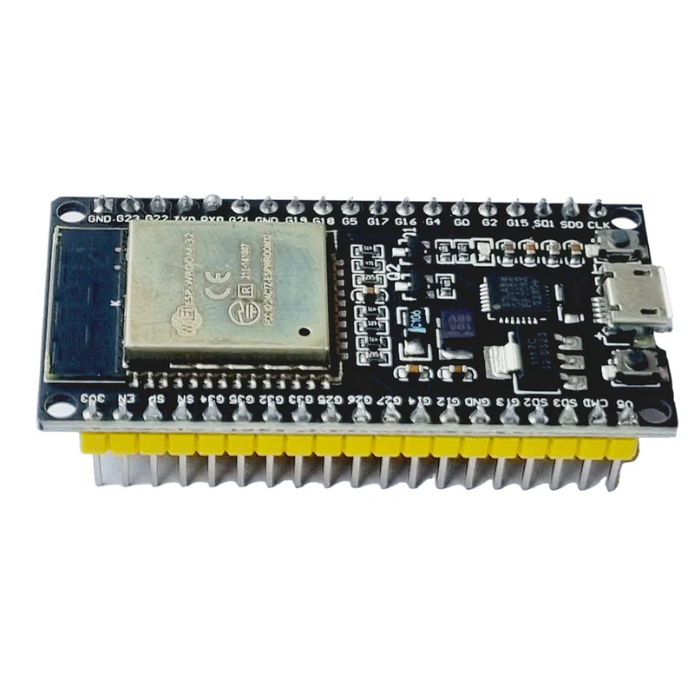
ESP32 WROOM-32 38-Pin Development Board (DevKit V1)
Dual-core ESP32-WROOM-32 board with WiFi and Bluetooth, 38 pins and USB-UART; the workhorse MCU for most Indian IoT projects.
₹320 + 18% GST
Wifi Ble
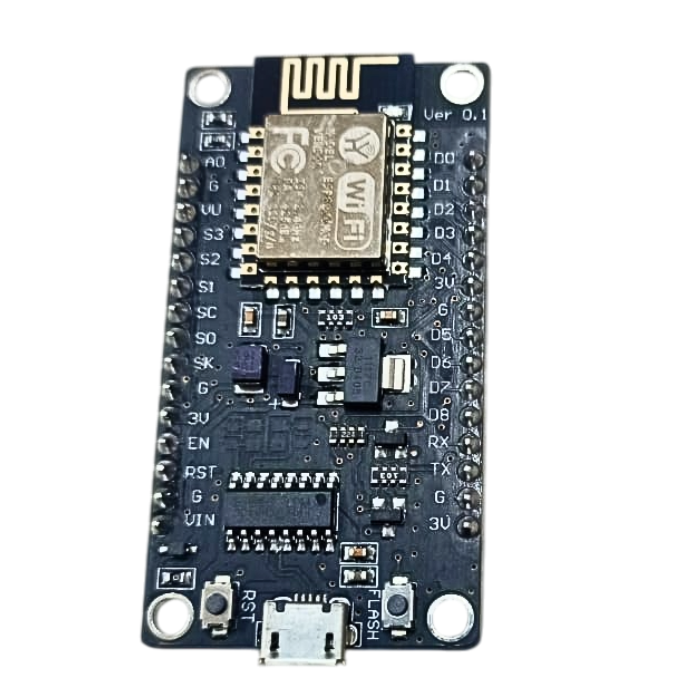
NodeMCU ESP8266 WiFi Development Board (V3 Lolin CH340)
Low-cost ESP8266 WiFi board with CH340 USB, breadboard-friendly; extremely popular entry point for WiFi-connected sensor projects.
₹180 + 18% GST
Wifi Ble
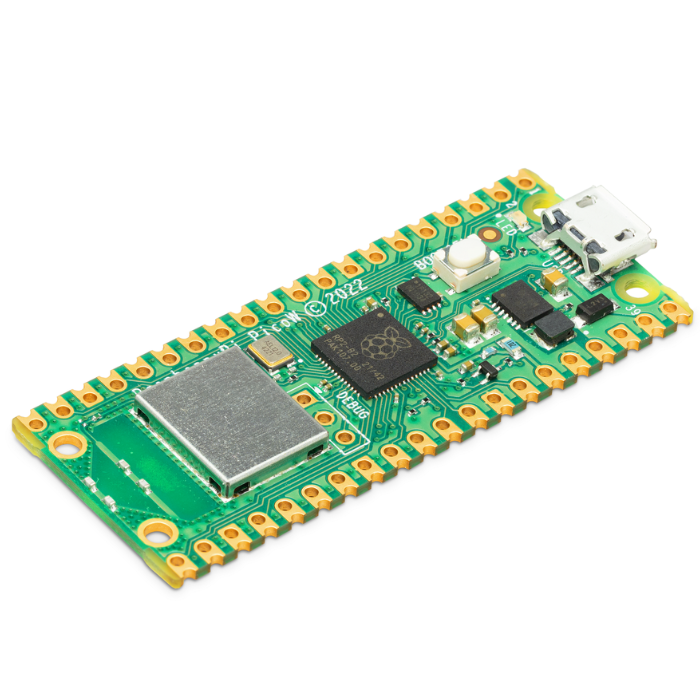
Raspberry Pi Pico W (Wireless RP2040 Microcontroller)
Official RP2040 dual-core microcontroller board with onboard 2.4GHz WiFi, programmable in MicroPython/C for IoT and hotspot applications.
₹650 + 18% GST
You may also need
Pairs well with.
Arduino Boards
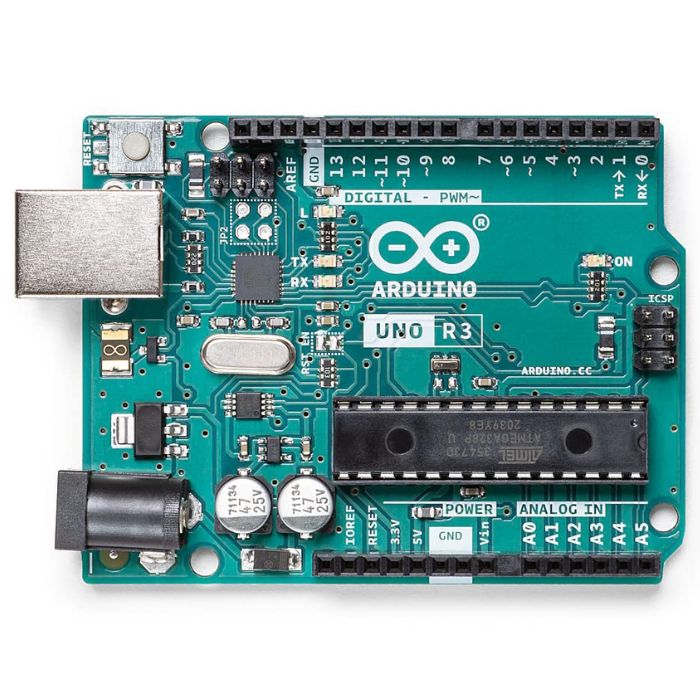
Arduino Uno R3
The classic ATmega328P 8-bit microcontroller board, a popular beginner prototyping platform with 14 digital and 6 analog I/O pins.
₹799 + 18% GST
Breadboards Jumpers
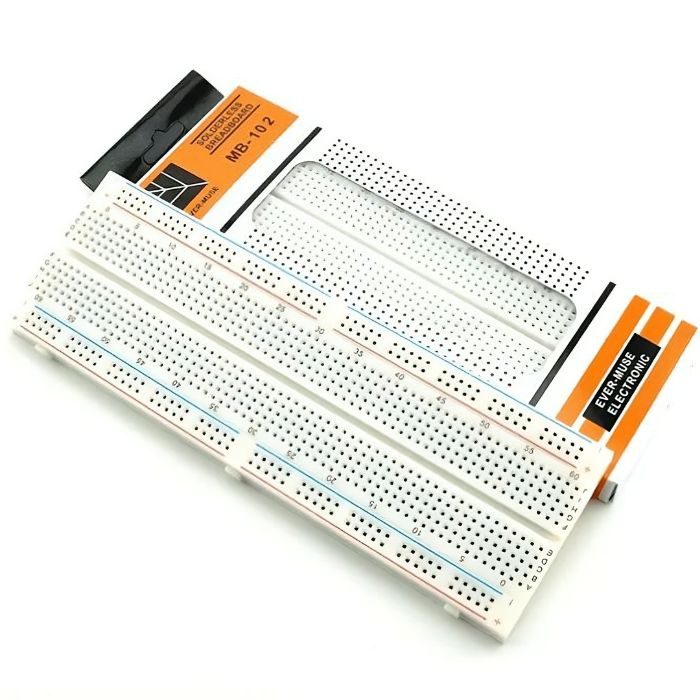
MB102 830 Points Solderless Breadboard
Full-size 830 tie-point solderless prototyping breadboard with power rails, accepts 20-29 AWG wire.
₹90 + 18% GST