WIZnet W5500 with fully hardwired TCP/IP stack (TCP, UDP, IPv4, ICMP, ARP, IGMP, PPPoE)
In stock
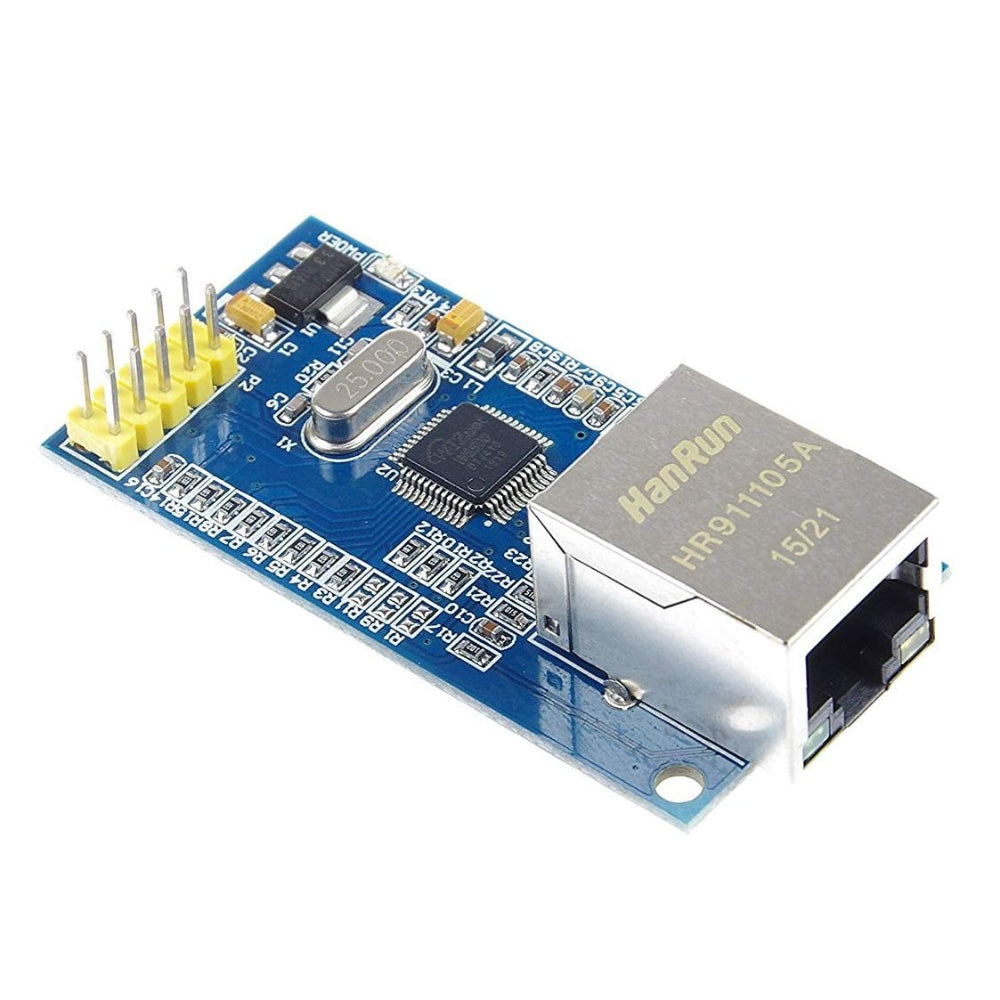
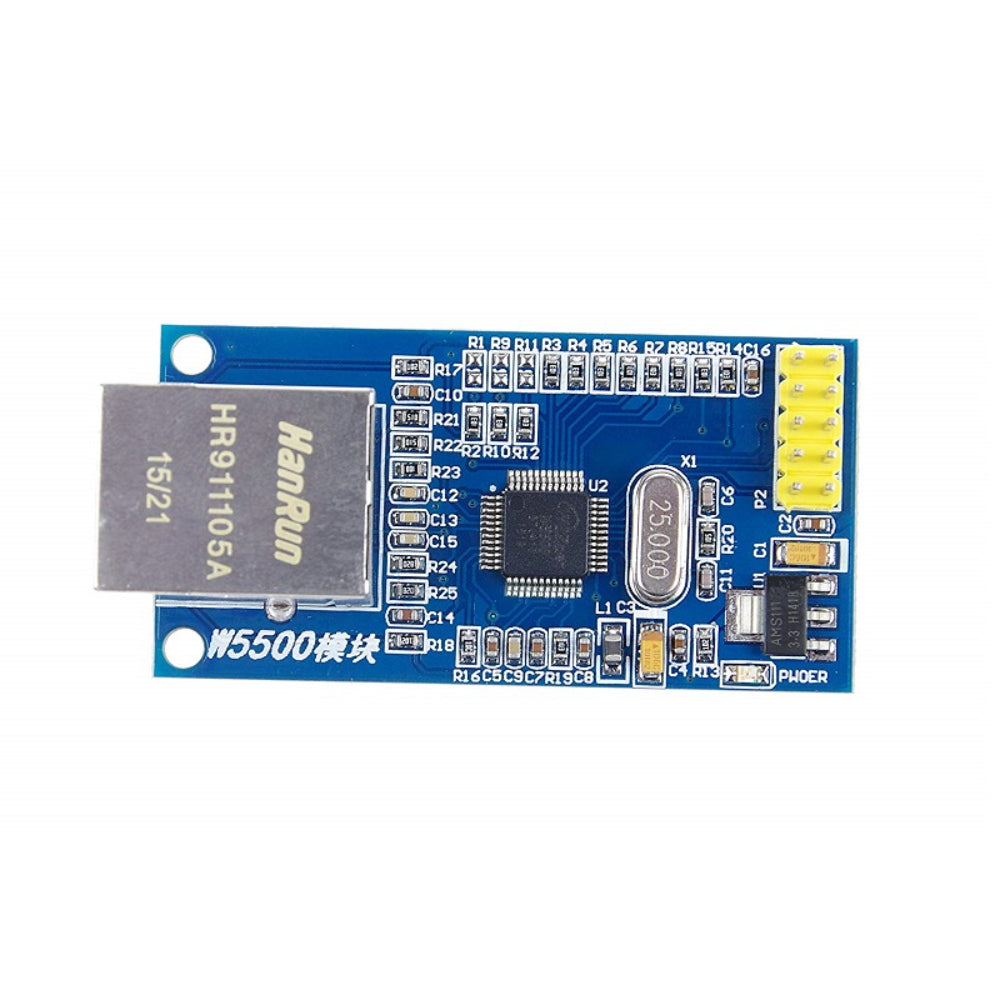
Ethernet
W5500 Ethernet Network Module (Hardware TCP/IP, SPI)
SPI-to-Ethernet module with WIZnet hardware TCP/IP stack for adding reliable wired 10/100 LAN connectivity to microcontrollers.
₹410 + 18% GST
SKU: BOTBIT-IOT-12 · Best for: Wired network connectivity for Arduino/STM32/ESP32 projects
Overview
About W5500 Ethernet Network Module (Hardware TCP/IP, SPI).
The W5500 Ethernet module adds reliable wired 10/100 Mbps LAN to any microcontroller through a simple SPI connection. Its key advantage is the WIZnet W5500 chip's fully hardwired TCP/IP stack: the silicon handles TCP, UDP, IPv4, ICMP, ARP, IGMP and PPPoE internally, so your MCU is freed from the heavy protocol processing that a software stack would demand.
It is popular with Indian developers building Ethernet-connected devices on small microcontrollers like Arduino, STM32 and ESP32, because it is far more robust and lower-overhead than software stacks. The W5500 supports up to 8 independent hardware sockets and a fast SPI interface (up to 80 MHz), and it is directly supported by the standard Arduino Ethernet library.
Because the TCP/IP work is offloaded, even an 8-bit AVR can act as a stable web server, MQTT client or Modbus/TCP node. The module exposes an RJ45 jack with integrated magnetics and a clean SPI header, making it a drop-in way to give a project wired internet where WiFi is unreliable or not allowed.
Key features
Why it stands out.
10/100 Mbps Ethernet with auto-negotiation and auto MDI/MDIX
8 independent hardware sockets for simultaneous connections
High-speed SPI interface up to 80 MHz
32 KB internal buffer for TX/RX
Supported directly by the Arduino Ethernet library
Specifications
Selection facts.
| Controller | WIZnet W5500 |
|---|---|
| Ethernet speed | 10/100 Mbps (auto-negotiation) |
| TCP/IP stack | Hardwired (TCP, UDP, IPv4, ICMP, ARP, IGMP, PPPoE) |
| Hardware sockets | 8 independent |
| Host interface | SPI (up to 80 MHz) |
| Internal buffer | 32 KB (TX/RX) |
| Supply voltage | 3.3 V (with 5 V-tolerant I/O on most boards) |
| Connector | RJ45 with integrated magnetics |
| MDI/MDIX | Auto MDI/MDIX and auto-crossover |
Applications
Where it is used.
- Wired network connectivity for Arduino/STM32/ESP32 projects
- Embedded web servers and REST endpoints on small MCUs
- MQTT and TCP/UDP clients for industrial IoT
- Modbus/TCP and SCADA nodes over Ethernet
- Reliable LAN links where WiFi is not permitted or too noisy
- Home automation hubs and data loggers needing wired uplink
Buying guide
How to choose.
Choose the W5500 when you need dependable wired Ethernet and want to offload the TCP/IP stack from a modest MCU. It is a better fit than the older W5100 (faster SPI, more sockets, lower power) and than the ENC28J60 (which needs a software stack and more MCU resources).
Pair it with an SPI-capable microcontroller: Arduino Uno/Mega/Nano, STM32, ESP32 or similar. Power VCC from 3.3V; most breakout boards include level shifting so 5V Arduino SPI works, but confirm your specific board. It supports up to 8 sockets, so plan how many simultaneous connections your firmware needs.
Use the standard Arduino Ethernet library (which targets WIZnet chips) or WIZnet's ioLibrary for bare-metal projects. Add a standard patch cable to your router or switch; the auto MDI/MDIX means either straight or crossover cabling works.
FAQ
Common questions.
Does the W5500 work with the standard Arduino Ethernet library?
Yes. The official Arduino Ethernet library supports WIZnet W5100/W5200/W5500 chips, so most Ethernet example sketches (web server, web client, UDP) work with minimal changes. WIZnet's ioLibrary is available for non-Arduino MCUs.
How is it better than the ENC28J60?
The W5500 has a hardwired TCP/IP stack, so the chip handles the protocol work and the MCU stays light. The ENC28J60 is only a MAC/PHY and needs a software stack (like UIP), consuming far more flash and RAM and running slower on small MCUs.
Is it 5V tolerant, and how do I wire it?
The W5500 core runs at 3.3V, but most breakout modules add level shifting so 5V Arduino SPI signals are safe. Connect SPI (SCLK, MOSI, MISO, SCS) plus VCC (3.3V) and GND; check your board's markings before assuming 5V tolerance.
How many connections can it handle at once?
Up to 8 independent hardware sockets, so you can run multiple TCP/UDP connections simultaneously (for example a web server plus an MQTT client), limited by your firmware's design.
Can a small 8-bit Arduino really serve web pages with it?
Yes. Because the TCP/IP stack is in the W5500 silicon, even an 8-bit AVR can run a stable web server or MQTT client, which would be hard with a software stack.
What is in the box?
The W5500 Ethernet module with an RJ45 jack and SPI header. You supply the Ethernet patch cable and the host microcontroller.
More in IoT & Wireless
Related hardware.
Camera Modules
ESP32-CAM Development Board with OV2640 Camera
ESP32-based WiFi+Bluetooth board with 2MP OV2640 camera and microSD slot for low-cost video/image capture and IoT vision projects.
₹450 + 18% GST
Wifi Ble
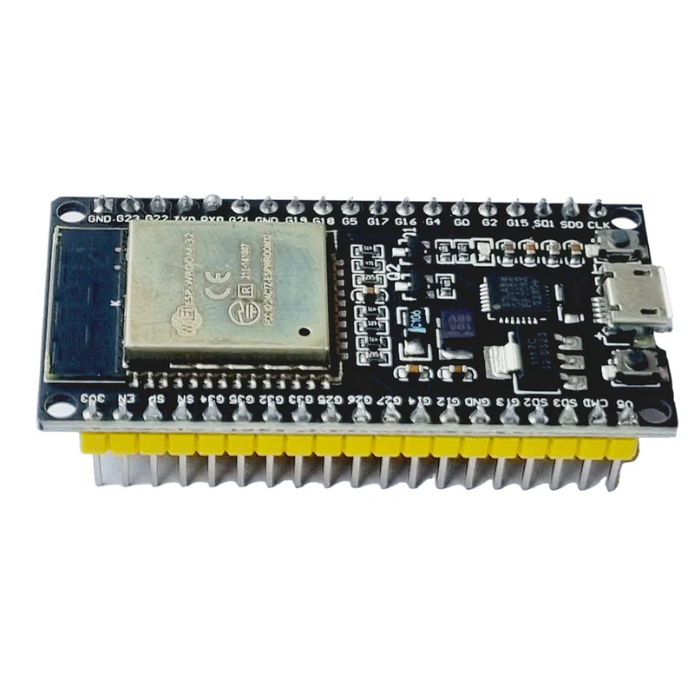
ESP32 WROOM-32 38-Pin Development Board (DevKit V1)
Dual-core ESP32-WROOM-32 board with WiFi and Bluetooth, 38 pins and USB-UART; the workhorse MCU for most Indian IoT projects.
₹320 + 18% GST
Wifi Ble
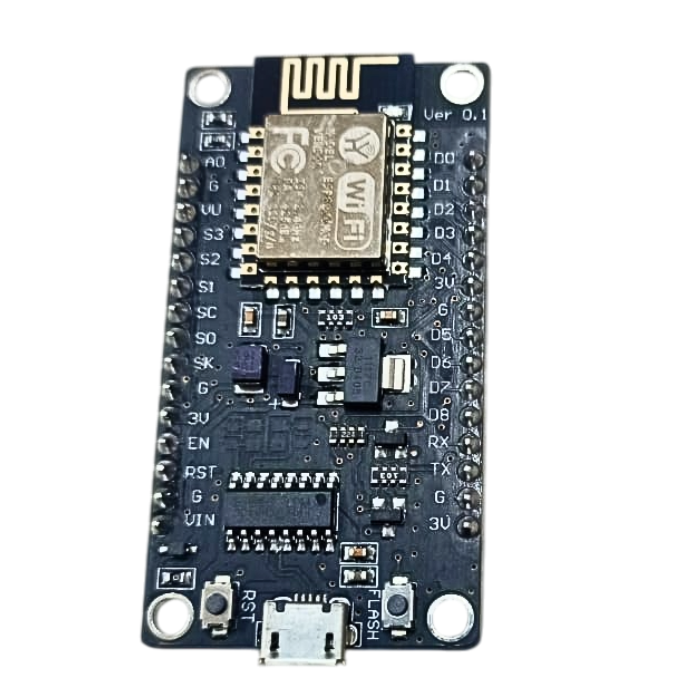
NodeMCU ESP8266 WiFi Development Board (V3 Lolin CH340)
Low-cost ESP8266 WiFi board with CH340 USB, breadboard-friendly; extremely popular entry point for WiFi-connected sensor projects.
₹180 + 18% GST
Wifi Ble
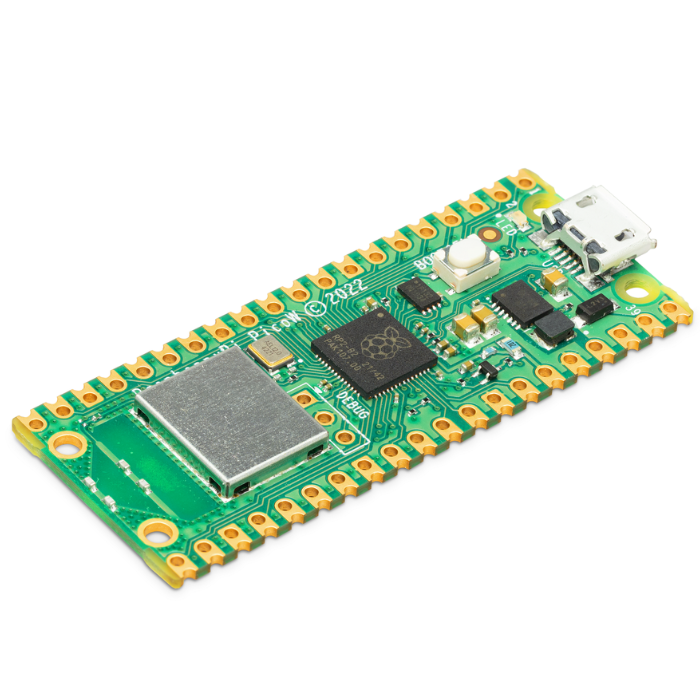
Raspberry Pi Pico W (Wireless RP2040 Microcontroller)
Official RP2040 dual-core microcontroller board with onboard 2.4GHz WiFi, programmable in MicroPython/C for IoT and hotspot applications.
₹650 + 18% GST
You may also need
Pairs well with.
Arduino Boards
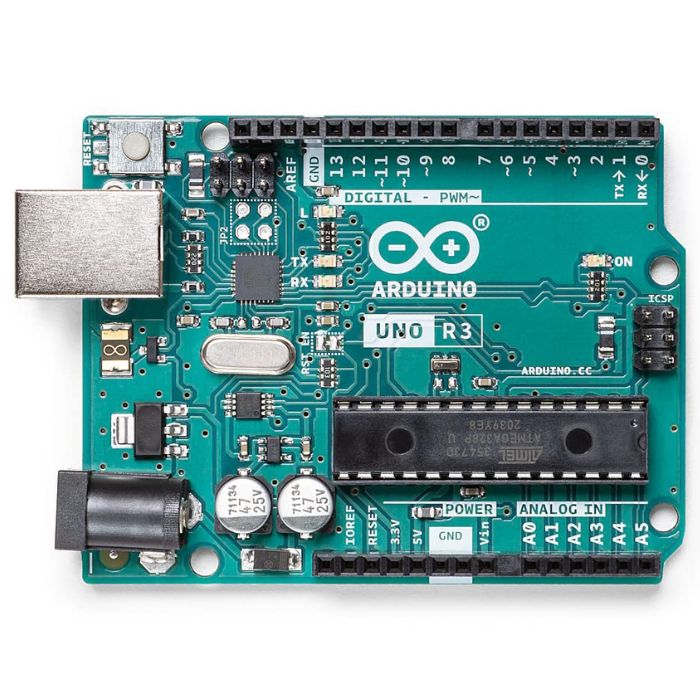
Arduino Uno R3
The classic ATmega328P 8-bit microcontroller board, a popular beginner prototyping platform with 14 digital and 6 analog I/O pins.
₹799 + 18% GST
Breadboards Jumpers
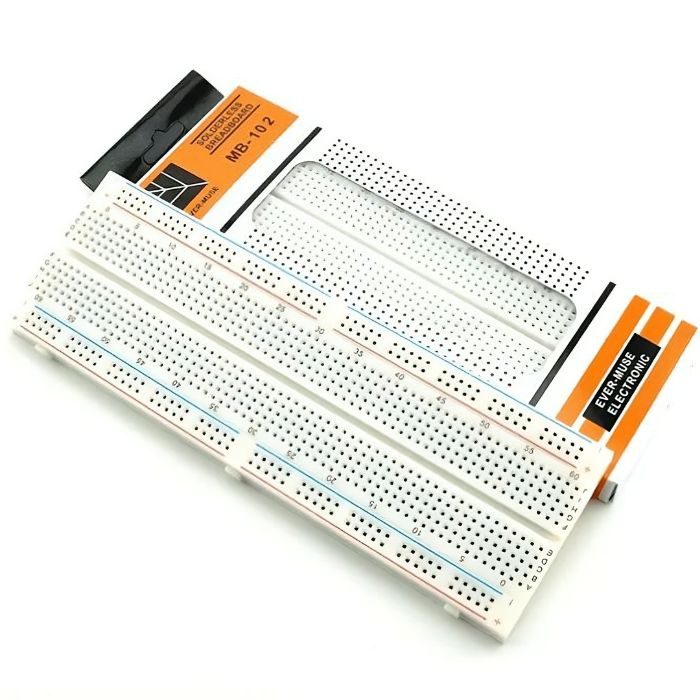
MB102 830 Points Solderless Breadboard
Full-size 830 tie-point solderless prototyping breadboard with power rails, accepts 20-29 AWG wire.
₹90 + 18% GST