433MHz ASK/OOK transmitter (FS1000A) and receiver pair
In stock
Rf 433
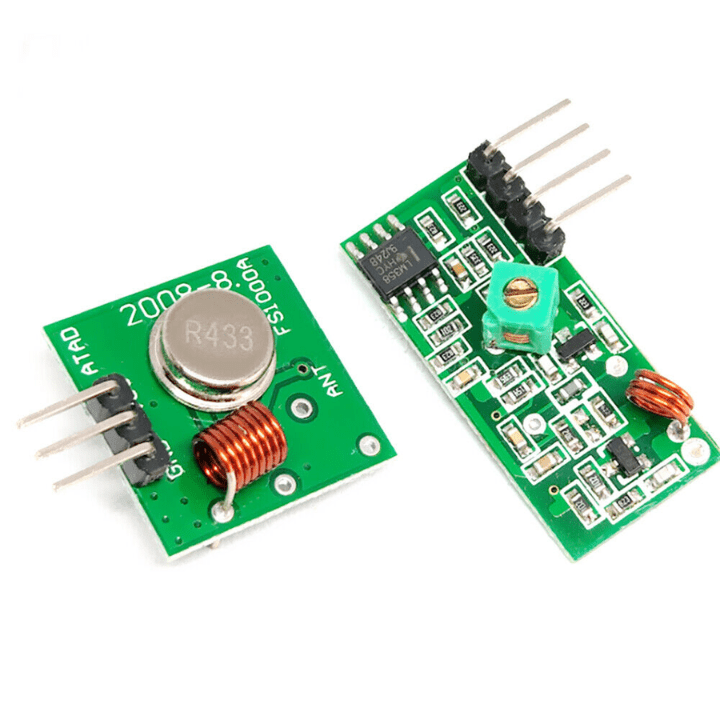
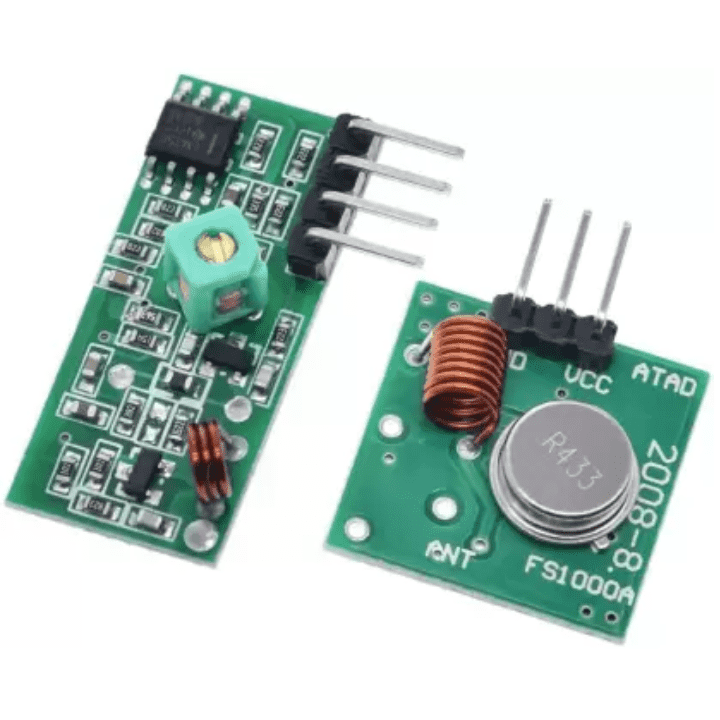
433MHz RF Wireless Transmitter and Receiver Module Pair
FS1000A-style 433MHz ASK transmitter and receiver pair for low-cost one-way wireless remote control and simple data links.
₹75 + 18% GST
SKU: BOTBIT-IOT-11 · Best for: Simple one-way wireless remote controls and switches
Overview
About 433MHz RF Wireless Transmitter and Receiver Module Pair.
This is the classic 433MHz RF transmitter and receiver pair, usually an FS1000A transmitter and an XY-MK-5V (or similar super-regenerative) receiver. They provide a very cheap, one-way ASK/OOK wireless link at 433MHz, ideal for simple remote control and low-rate data where you do not need the sophistication of LoRa or WiFi.
They are wildly popular for beginner and budget projects because a pair costs almost nothing and works with any microcontroller's digital pins. You feed serial data into the transmitter's DATA pin and read it back on the receiver, typically using a library that handles encoding, so you can send button presses or short messages across a room or a garden.
Expect modest, environment-dependent range and one-way, half-duplex operation with no built-in error correction. Soldering a simple 17.3cm wire antenna to each board dramatically improves range, and using a proper encoding library (with checksums) makes the link far more reliable than raw bit-banging.
Key features
Why it stands out.
Extremely low cost, one-way wireless link for remote control and data
Simple DATA-pin interface works with any MCU digital output/input
Transmitter runs from 3-12V; higher VCC gives more range
Works with common libraries (RadioHead, VirtualWire, RC-Switch)
Solder-on wire antenna pads to extend range
Specifications
Selection facts.
| Frequency | 433.92 MHz (ISM band) |
|---|---|
| Modulation | ASK / OOK |
| Transmitter | FS1000A (3 pins: VCC, DATA, GND) |
| Receiver | Super-regenerative (e.g. XY-MK-5V, 4 pins) |
| TX supply voltage | 3-12 V DC |
| RX supply voltage | 5 V DC |
| Data rate | Up to ~10 kbps (ASK, practical much lower) |
| Range | ~20-100 m depending on voltage/antenna/environment |
| Recommended antenna | ~17.3 cm quarter-wave wire per board |
Applications
Where it is used.
- Simple one-way wireless remote controls and switches
- Low-cost sensor data links across a room or garden
- DIY home automation triggers and doorbells
- Wireless notification/alert buttons
- Learning RF and packet encoding basics
- Cloning/experimenting with 433MHz remotes using RC-Switch
Buying guide
How to choose.
Buy this pair when you need a dirt-cheap, one-way wireless trigger or short-message link and range/reliability are not critical. If you need two-way communication, longer range, or robust data, step up to an nRF24L01 (2.4GHz) or an SX1278 LoRa module instead.
For best results, power the FS1000A transmitter at a higher voltage (up to 12V) than the logic, since range scales with TX voltage, and solder a ~17.3cm wire antenna to both the transmitter and receiver. The receiver is typically 5V; keep the DATA lines at levels your MCU can read.
Pair it with a library that adds encoding and error checking: RadioHead (RH_ASK) or the older VirtualWire for arbitrary data, or RC-Switch when working with 433MHz remotes and mains-socket controllers. Always buy transmitter and receiver together as a matched pair.
FAQ
Common questions.
What range can I actually get?
Bare boards without antennas manage only a few metres. With a 17.3cm quarter-wave wire antenna on each board and the transmitter run at a higher voltage, you can reach tens of metres, sometimes ~100m in the open. Walls and interference reduce this significantly.
Do I need a library, or can I send raw data?
You can bit-bang, but it is unreliable. Use RadioHead's RH_ASK (or legacy VirtualWire) for general data with built-in encoding and checksums, or RC-Switch for controlling/decoding 433MHz remote sockets and remotes.
Is communication two-way?
No. This is a one-way (simplex) link: the FS1000A only transmits and the receiver only receives. For bidirectional communication you would need a pair in each direction or a true transceiver like nRF24L01 or LoRa.
What voltage should I use?
The receiver is typically 5V. The transmitter works from 3-12V, and running it at a higher voltage (e.g. 12V) noticeably increases range. Make sure the DATA signal levels are compatible with your microcontroller.
Why is my link picking up noise or false data?
Super-regenerative receivers output noise when no signal is present, which is why an encoding library with checksums is essential. Adding antennas, keeping the boards apart from noisy electronics, and a stable supply all help.
What is in the box?
One 433MHz transmitter (FS1000A) and one matching receiver module. Antenna wires are usually not attached, so solder your own ~17.3cm wire to each for usable range.
More in IoT & Wireless
Related hardware.
Camera Modules
ESP32-CAM Development Board with OV2640 Camera
ESP32-based WiFi+Bluetooth board with 2MP OV2640 camera and microSD slot for low-cost video/image capture and IoT vision projects.
₹450 + 18% GST
Wifi Ble
ESP32 WROOM-32 38-Pin Development Board (DevKit V1)
Dual-core ESP32-WROOM-32 board with WiFi and Bluetooth, 38 pins and USB-UART; the workhorse MCU for most Indian IoT projects.
₹320 + 18% GST
Wifi Ble
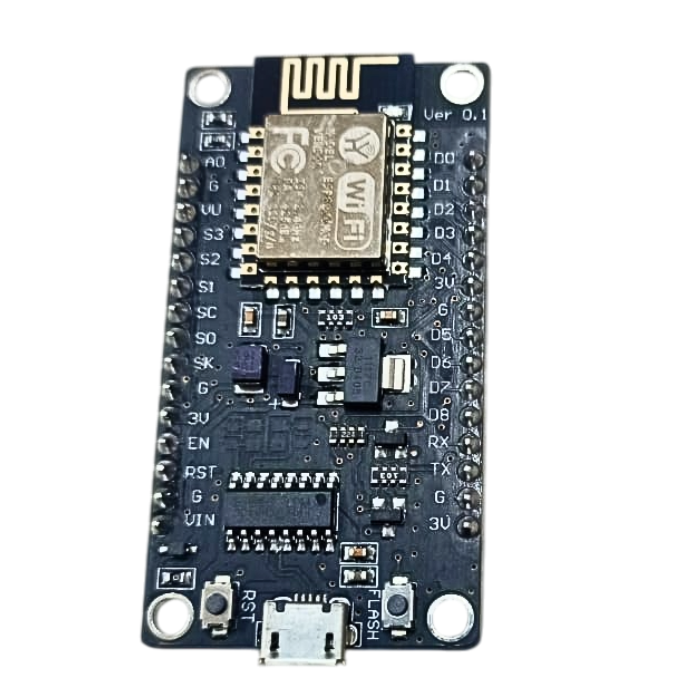
NodeMCU ESP8266 WiFi Development Board (V3 Lolin CH340)
Low-cost ESP8266 WiFi board with CH340 USB, breadboard-friendly; extremely popular entry point for WiFi-connected sensor projects.
₹180 + 18% GST
Wifi Ble
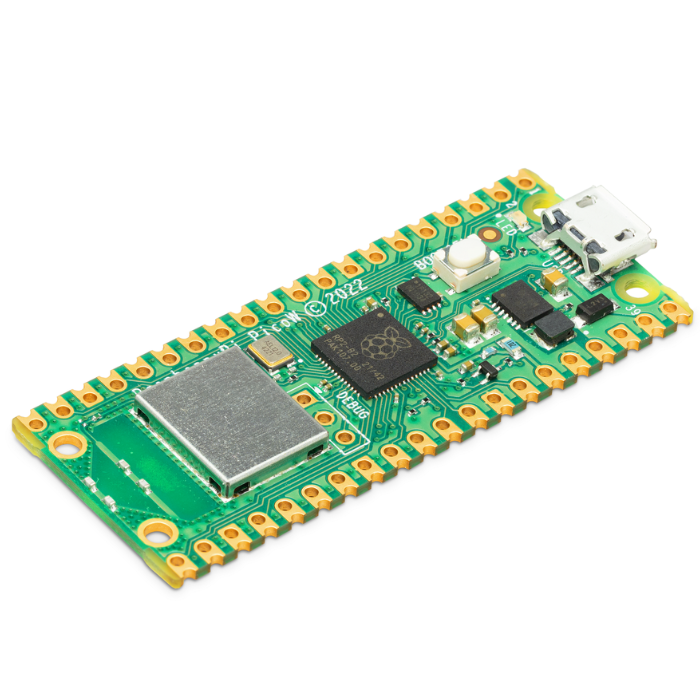
Raspberry Pi Pico W (Wireless RP2040 Microcontroller)
Official RP2040 dual-core microcontroller board with onboard 2.4GHz WiFi, programmable in MicroPython/C for IoT and hotspot applications.
₹650 + 18% GST
You may also need
Pairs well with.
Arduino Boards
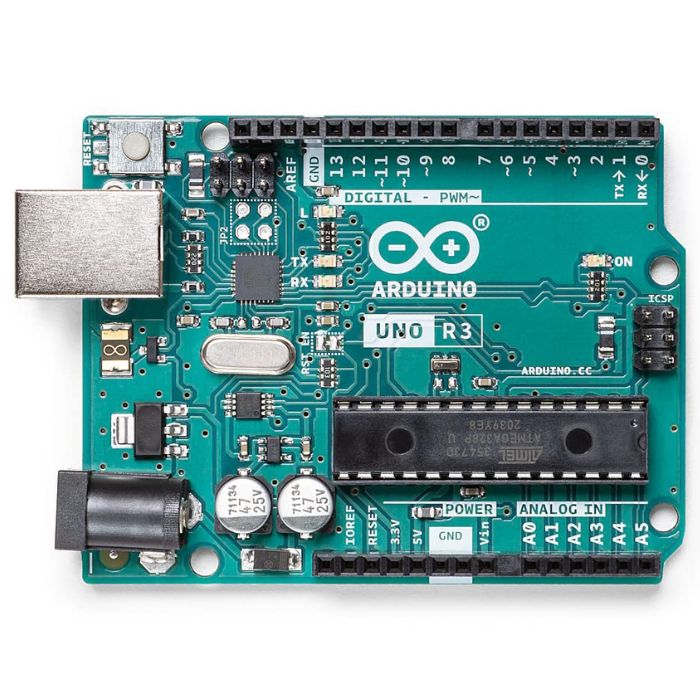
Arduino Uno R3
The classic ATmega328P 8-bit microcontroller board, a popular beginner prototyping platform with 14 digital and 6 analog I/O pins.
₹799 + 18% GST
Breadboards Jumpers
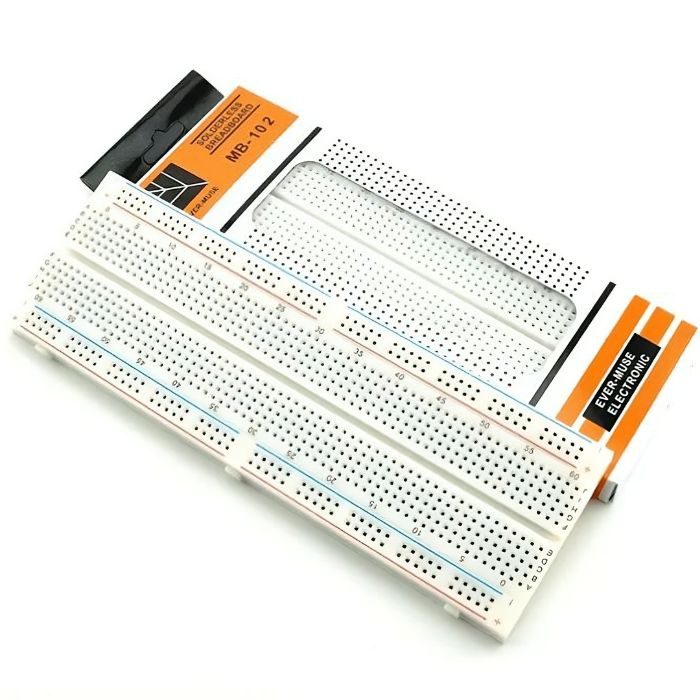
MB102 830 Points Solderless Breadboard
Full-size 830 tie-point solderless prototyping breadboard with power rails, accepts 20-29 AWG wire.
₹90 + 18% GST