Semtech SX1278 LoRa transceiver operating in the 433MHz ISM band
In stock
Lora
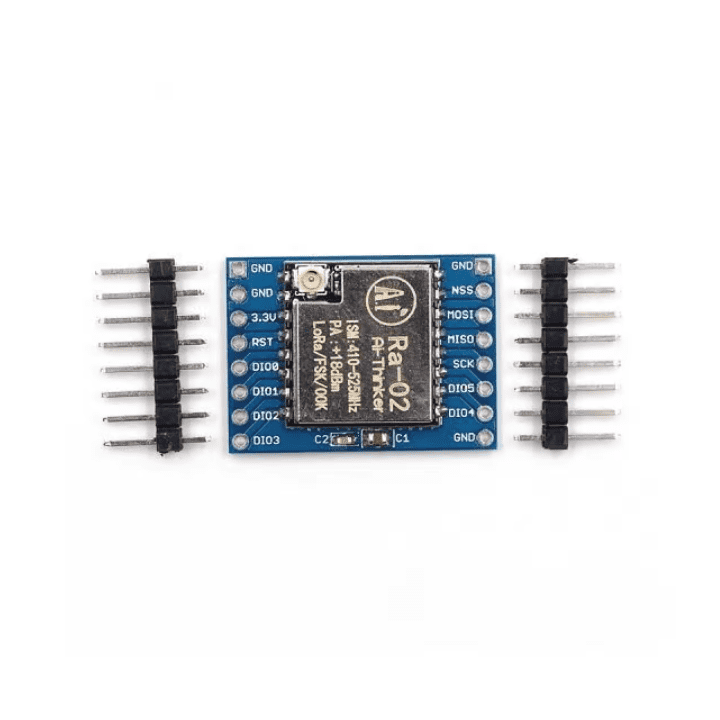
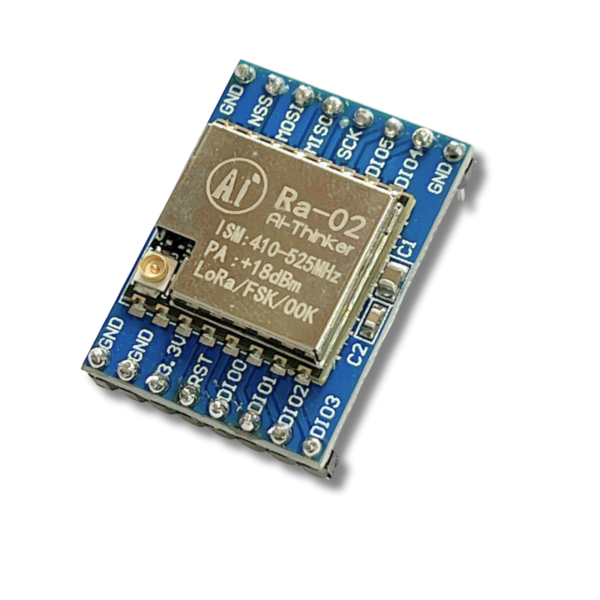
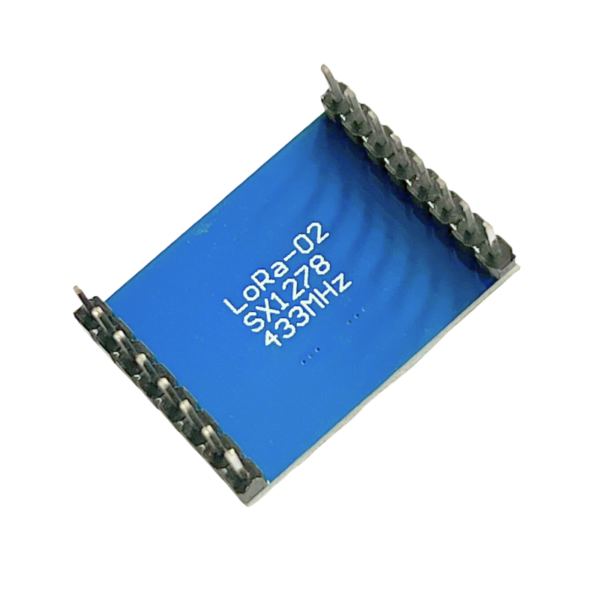
SX1278 LoRa Ra-02 433MHz Wireless Module
Long-range 433MHz LoRa spread-spectrum transceiver with high sensitivity for km-range low-power IoT telemetry over SPI.
₹400 + 18% GST
SKU: BOTBIT-IOT-08 · Best for: Long-range wireless sensor telemetry (soil, weather, tank level) in fields and remote sites
Overview
About SX1278 LoRa Ra-02 433MHz Wireless Module.
The Ra-02 is a compact LoRa module built around Semtech's SX1278 transceiver, tuned for the 433MHz ISM band that is license-free for low-power use in India. It uses LoRa spread-spectrum modulation to trade data rate for range and link robustness, letting you push small telemetry packets several kilometres in open terrain while running on very little power. Communication with a host MCU is over a standard 4-wire SPI bus plus a few DIO/reset lines.
It is one of the most popular long-range radios among Indian makers and IoT developers because it is cheap, well documented, and works out of the box with mature Arduino and ESP32 libraries. Compared to cheap ASK 433MHz modules, the SX1278 gives you real link-level features: configurable spreading factor, bandwidth and coding rate, CRC, addressing and a receiver sensitivity down to around -148 dBm.
The Ai-Thinker Ra-02 board breaks out the SX1278 on a small PCB with an IPEX/U.FL antenna connector, so you must fit a 433MHz antenna (spring or SMA pigtail) before transmitting. It is a bare transceiver, not a plug-and-play LoRaWAN node, so you drive the radio and protocol yourself in firmware.
Key features
Why it stands out.
LoRa spread-spectrum with configurable spreading factor, bandwidth and coding rate for long range
High receiver sensitivity down to about -148 dBm and up to +20 dBm (100mW) transmit power
Standard 4-wire SPI interface plus RESET and DIO0-DIO5 lines for easy MCU connection
IPEX/U.FL antenna connector (external 433MHz antenna required)
Low power operation with sleep/idle modes suited to battery telemetry nodes
Specifications
Selection facts.
| Chipset | Semtech SX1278 |
|---|---|
| Frequency band | 410-525 MHz (433 MHz ISM typical) |
| Modulation | LoRa spread spectrum, also FSK/GFSK/OOK |
| Max transmit power | +20 dBm (100 mW) |
| Receiver sensitivity | Down to -148 dBm |
| Host interface | SPI (up to 10 Mbps) + DIO/RESET |
| Supply voltage | 1.8-3.7 V (3.3 V typical) |
| Antenna connector | IPEX / U.FL |
| Line-of-sight range | Up to ~5-10 km in open terrain |
| Logic level | 3.3 V (not 5 V tolerant) |
Applications
Where it is used.
- Long-range wireless sensor telemetry (soil, weather, tank level) in fields and remote sites
- Point-to-point or star LoRa links between microcontroller nodes
- Battery-powered IoT nodes needing km-range at low data rate
- Home-brew LoRaWAN nodes with a suitable stack (e.g. LMIC)
- Remote metering, gate/pump control and asset monitoring
- Hobby projects like long-range remote sensors and mesh experiments
Buying guide
How to choose.
Choose the Ra-02 (433MHz) if you want the longest range and best obstacle penetration and your region/application allows 433MHz; pick a 868/915MHz LoRa module instead if you specifically need LoRaWAN gateway compatibility on those bands. The SX1278 is the 433MHz-family part, while its SX1276 sibling covers 868/915MHz.
Pair it with a 3.3V-logic MCU such as an ESP32, ESP8266, STM32 or a 3.3V Arduino. If you use a 5V Arduino (Uno/Nano), you must level-shift the SPI and DIO lines, since the module is not 5V tolerant. Always connect a matched 433MHz antenna before powering up, or you risk damaging the PA.
Buy two units minimum for any point-to-point link, and add an SMA pigtail plus antenna if you need better range than a spring wire. For a plug-and-play cellular-free long-range link, this is the go-to budget radio in India.
FAQ
Common questions.
Is the Ra-02 5V tolerant or do I need level shifting?
No, it runs at 3.3V and its pins are not 5V tolerant. With a 3.3V board (ESP32, ESP8266, STM32) you can wire it directly. With a 5V Arduino you must level-shift the SPI (SCK, MOSI, NSS) and DIO0 lines and power VCC from 3.3V.
Which library should I use with Arduino or ESP32?
The popular choices are the Sandeep Mistry 'LoRa' library for simple point-to-point links, or RadioHead's RH_RF95 driver. For LoRaWAN you would use the MCCI LMIC library. All of these support the SX1278 on SPI.
Do I need an antenna, and what happens without one?
Yes, you must fit a 433MHz antenna via the IPEX/U.FL connector before transmitting. Running the transmitter with no antenna reflects power back into the PA and can damage the module.
Can it do LoRaWAN and talk to a public gateway?
The chip supports LoRaWAN, but this 433MHz version is not compatible with the common Indian/EU 865-867/868MHz LoRaWAN gateways. Use it for private point-to-point links, or use an 868MHz module for LoRaWAN.
What real-world range can I expect?
In clear line of sight with a good antenna, high spreading factor and low data rate, several kilometres is realistic (5-10 km reported). In urban or indoor settings expect a few hundred metres, depending on obstacles and antenna placement.
What is in the box?
Typically just the Ra-02 module. Many Indian sellers do not include an antenna, so confirm the listing and order a 433MHz spring antenna or SMA pigtail separately if one is not bundled.
More in IoT & Wireless
Related hardware.
Camera Modules
ESP32-CAM Development Board with OV2640 Camera
ESP32-based WiFi+Bluetooth board with 2MP OV2640 camera and microSD slot for low-cost video/image capture and IoT vision projects.
₹450 + 18% GST
Wifi Ble
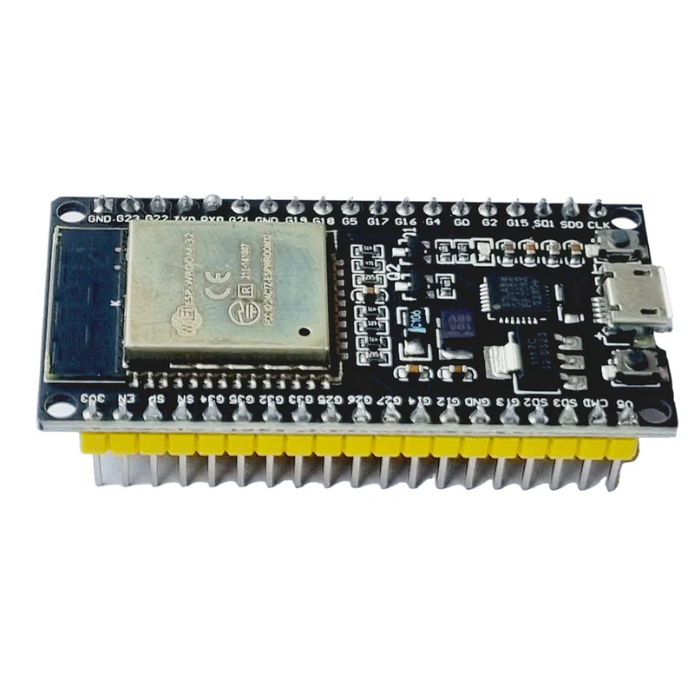
ESP32 WROOM-32 38-Pin Development Board (DevKit V1)
Dual-core ESP32-WROOM-32 board with WiFi and Bluetooth, 38 pins and USB-UART; the workhorse MCU for most Indian IoT projects.
₹320 + 18% GST
Wifi Ble
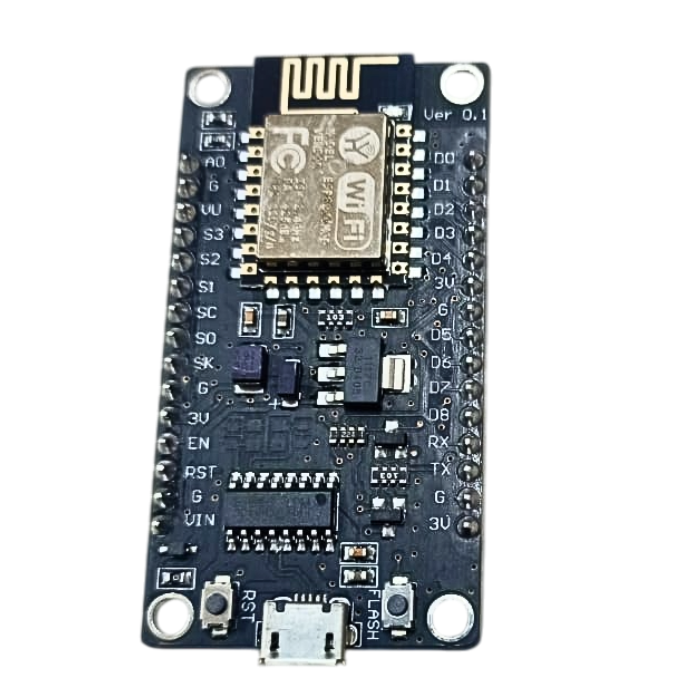
NodeMCU ESP8266 WiFi Development Board (V3 Lolin CH340)
Low-cost ESP8266 WiFi board with CH340 USB, breadboard-friendly; extremely popular entry point for WiFi-connected sensor projects.
₹180 + 18% GST
Wifi Ble
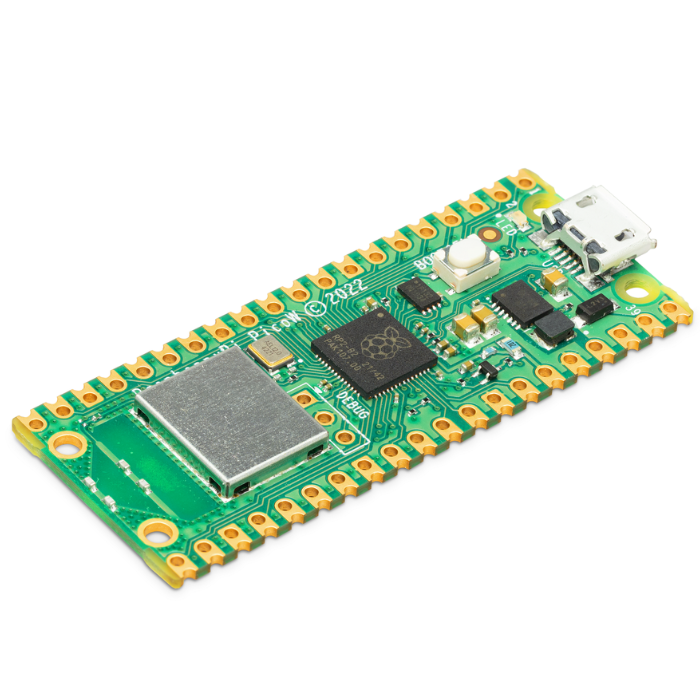
Raspberry Pi Pico W (Wireless RP2040 Microcontroller)
Official RP2040 dual-core microcontroller board with onboard 2.4GHz WiFi, programmable in MicroPython/C for IoT and hotspot applications.
₹650 + 18% GST
You may also need
Pairs well with.
Arduino Boards
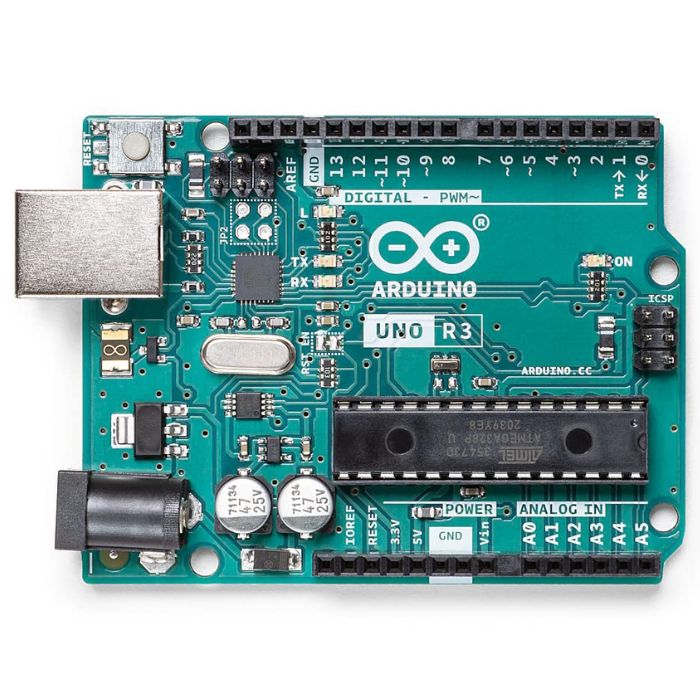
Arduino Uno R3
The classic ATmega328P 8-bit microcontroller board, a popular beginner prototyping platform with 14 digital and 6 analog I/O pins.
₹799 + 18% GST
Breadboards Jumpers
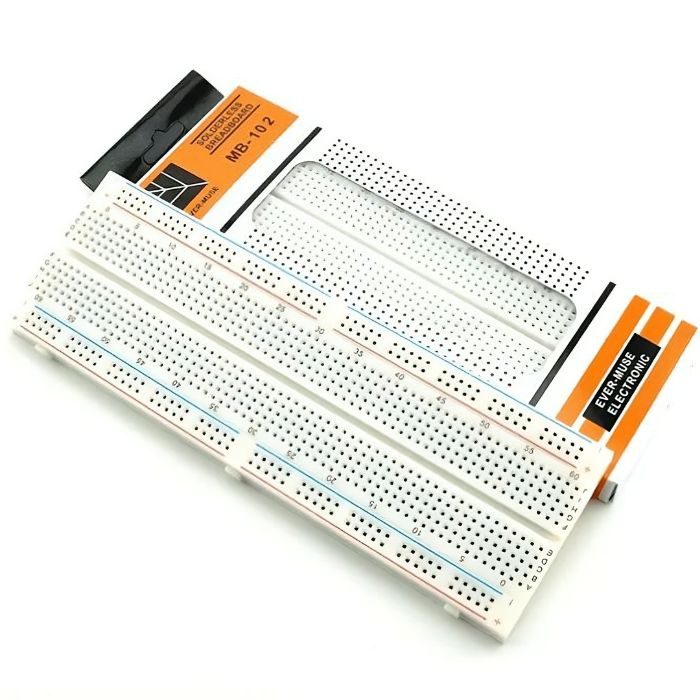
MB102 830 Points Solderless Breadboard
Full-size 830 tie-point solderless prototyping breadboard with power rails, accepts 20-29 AWG wire.
₹90 + 18% GST