STM32F103C8T6 Arm Cortex-M3 running at up to 72MHz
In stock
Stm32 Boards
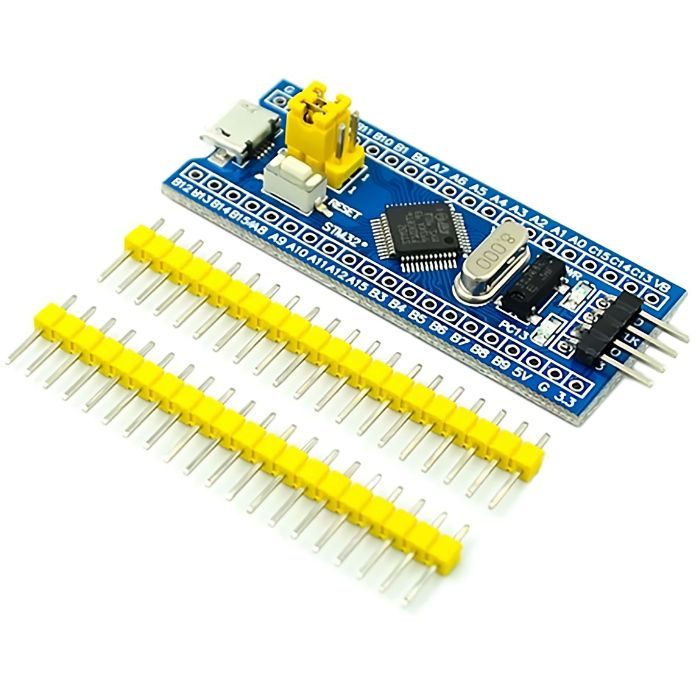
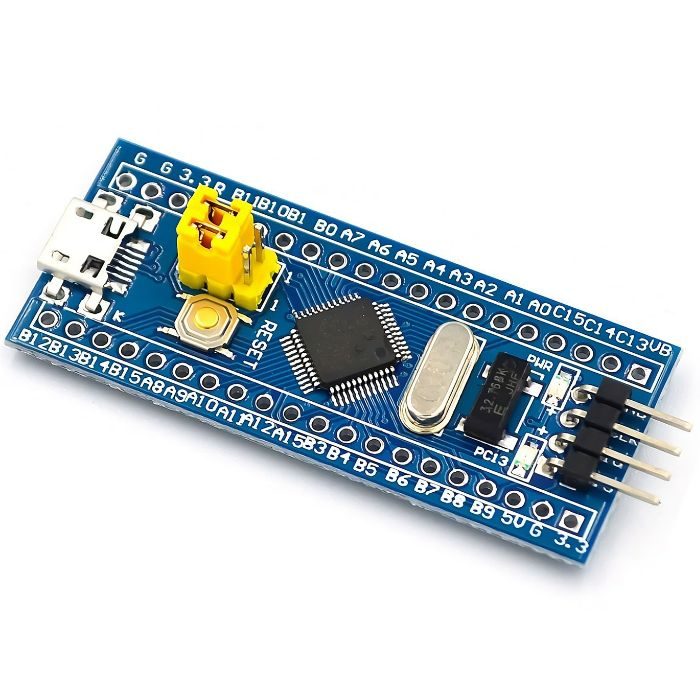
STM32F103C8T6 Blue Pill
Compact 32-bit ARM Cortex-M3 board running at 72MHz, a low-cost yet powerful STM32 alternative to 8-bit AVR boards.
₹299 + 18% GST
SKU: BOTBIT-DEV-13 · Best for: Upgrading Arduino projects that need more speed and timers
Overview
About STM32F103C8T6 Blue Pill.
The STM32F103C8T6 'Blue Pill' is a compact and famously cheap 32-bit development board based on STMicroelectronics' STM32F103C8T6, an Arm Cortex-M3 microcontroller running at 72MHz. It gives you real 32-bit ARM performance, hardware peripherals and plenty of I/O at a price that rivals 8-bit AVR boards, which is why it has been a hobbyist favourite for years.
The chip offers 64KB of flash (many parts accept 128KB in practice) and 20KB of SRAM, along with a rich peripheral set: multiple timers, two 12-bit ADCs, USART/SPI/I2C interfaces, PWM outputs and native USB. The board itself is breadboard-friendly with 37 usable GPIO, a reset button and boot jumpers, and it runs on 3.3V logic while tolerating 5V on many pins.
For India buyers, the Blue Pill is the classic upgrade from Arduino Uno when you need more speed, more timers and true 32-bit maths without spending much. Note that it does not have an onboard USB programmer, so you flash it using a low-cost ST-Link V2 dongle, a USB-TTL adapter, or the USB bootloader.
Key features
Why it stands out.
64KB flash and 20KB SRAM with a rich on-chip peripheral set
37 usable GPIO, many 5V-tolerant, on a breadboard-friendly board
Dual 12-bit ADCs, multiple 16-bit timers and PWM channels
Multiple communication interfaces: USART, SPI, I2C, CAN and USB
Programmable via Arduino IDE (STM32duino), STM32CubeIDE, PlatformIME or ST-Link
Specifications
Selection facts.
| Microcontroller | STM32F103C8T6 (Arm Cortex-M3) |
|---|---|
| Clock speed | 72MHz max |
| Flash memory | 64KB |
| SRAM | 20KB |
| GPIO | 37 usable I/O pins (many 5V-tolerant) |
| ADC | 2x 12-bit ADC, up to 10 external channels |
| Timers | Multiple 16-bit timers with PWM |
| Interfaces | 3x USART, 2x SPI, 2x I2C, CAN, USB 2.0 full-speed |
| Operating voltage | 3.3V core; powered via 5V USB or 3.3V pin |
| Programming | ST-Link V2, USB-TTL serial or USB DFU bootloader |
Applications
Where it is used.
- Upgrading Arduino projects that need more speed and timers
- Motor control, robotics and real-time control loops
- Sensor data acquisition using dual 12-bit ADCs
- USB HID devices, CDC serial gadgets and custom peripherals
- CAN bus experiments and automotive/industrial learning projects
- Learning bare-metal and RTOS embedded programming on Cortex-M3
Buying guide
How to choose.
Choose the Blue Pill when you have outgrown 8-bit Arduinos and want genuine 32-bit ARM performance, more timers and ADC resolution at a very low cost. If you want onboard USB flashing and a simpler beginner path, an ESP32 or Arduino may be easier; the Blue Pill rewards those willing to learn the STM32 toolchain.
It usually needs an external programmer, so pair it with an inexpensive ST-Link V2 clone (the most reliable route) or a USB-TTL adapter for the serial bootloader. Some boards have an incorrect USB pull-up resistor (R10) which can hamper native USB DFU; ST-Link avoids this issue entirely.
You can program it in the Arduino IDE via the STM32duino core, or use STM32CubeIDE / PlatformIO for full control. Pair it with an ST-Link, breadboard, jumper wires and 3.3V-compatible sensors. Watch pin voltage levels: the core is 3.3V, though many GPIO tolerate 5V input.
FAQ
Common questions.
How do I program the Blue Pill?
The easiest way is a cheap ST-Link V2 dongle connected to the 4-pin SWD header, using the Arduino IDE (STM32duino core) or STM32CubeIDE. You can also use the serial bootloader with a USB-TTL adapter, or the USB DFU bootloader on boards with correct hardware.
Does it work with the Arduino IDE?
Yes. Install the STM32duino (STM32 Cores by STMicroelectronics) board package, select the Blue Pill / Generic STM32F103C8 board and your upload method (ST-Link, serial or DFU), and you can use much of the Arduino API and many libraries.
Is it 5V tolerant?
The core runs at 3.3V, but many (not all) GPIO pins are 5V-tolerant on input. Analog pins and some specific pins are not, so check the datasheet before feeding 5V signals to a given pin.
Why won't native USB flashing work on my board?
Many clones ship with the wrong USB pull-up resistor (R10, often 10k instead of 1.5k). This causes the PC to not always detect USB DFU. Using an ST-Link V2 sidesteps the problem completely and is the recommended method.
Is it available in India and what programmer do I need?
Yes, it is widely and cheaply stocked in India. Buy an ST-Link V2 clone alongside it (also inexpensive) for the most reliable flashing experience.
What comes in the box?
Typically just the Blue Pill board, often with header pins loose or pre-soldered. The ST-Link programmer and USB cable are sold separately.
More in Development Boards
Related hardware.
Arduino Boards
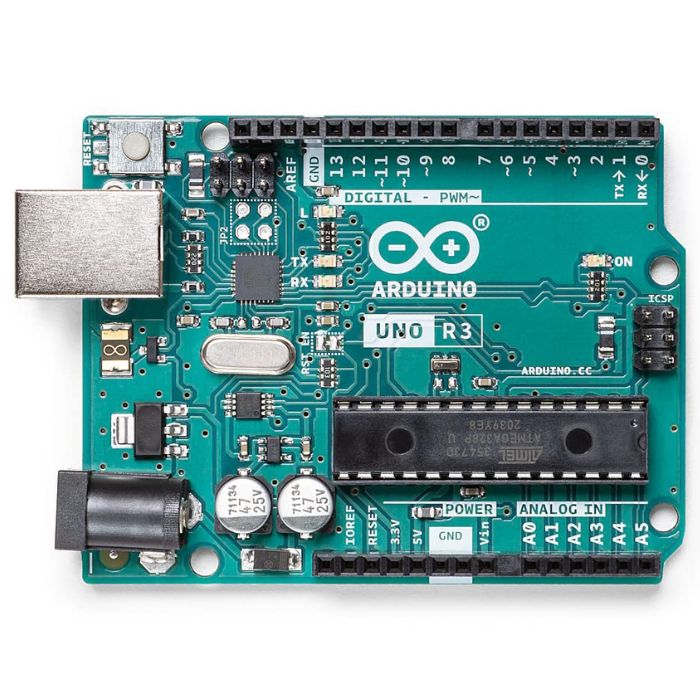
Arduino Uno R3
The classic ATmega328P 8-bit microcontroller board, a popular beginner prototyping platform with 14 digital and 6 analog I/O pins.
₹799 + 18% GST
Arduino Boards
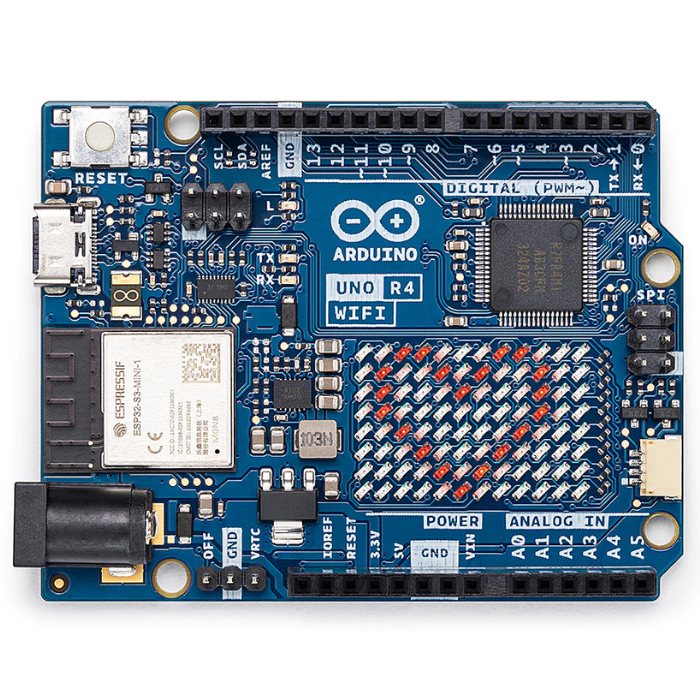
Arduino Uno R4 WiFi
Next-gen Uno with 32-bit Renesas RA4M1 Arm Cortex-M4 MCU, ESP32-S3 WiFi/Bluetooth and a built-in 12x8 LED matrix.
₹2,199 + 18% GST
Arduino Boards
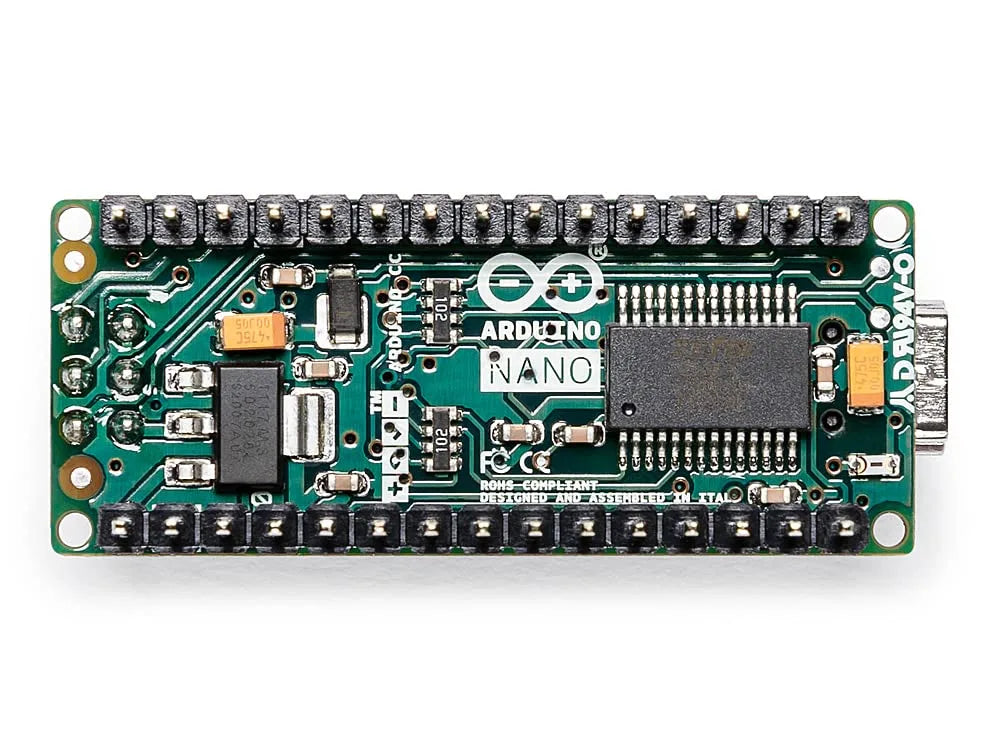
Arduino Nano
Compact breadboard-friendly ATmega328P board with the same core as the Uno in a tiny DIP-mountable form factor.
₹1,499 + 18% GST
Arduino Boards
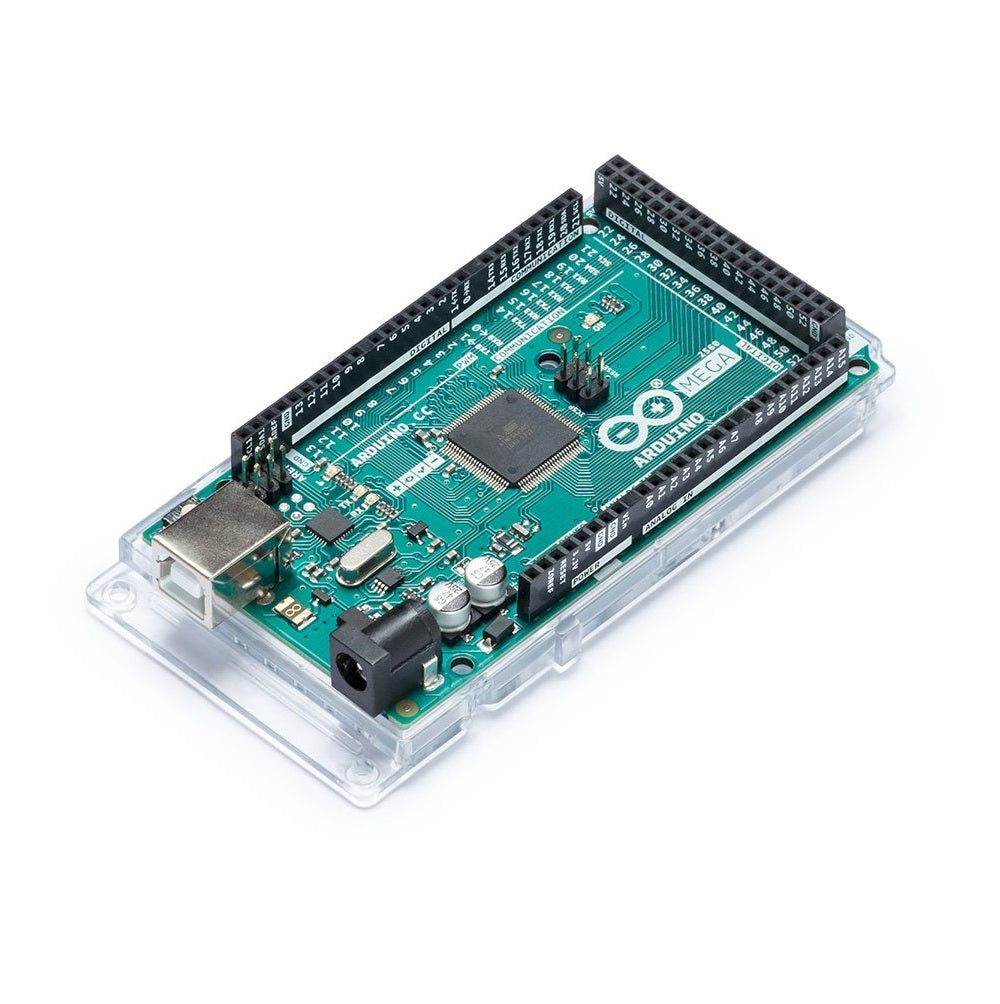
Arduino Mega 2560 R3
High-pin-count ATmega2560 board with 54 digital I/O and 16 analog inputs for larger projects needing many peripherals.
₹2,999 + 18% GST
You may also need
Pairs well with.
Environment
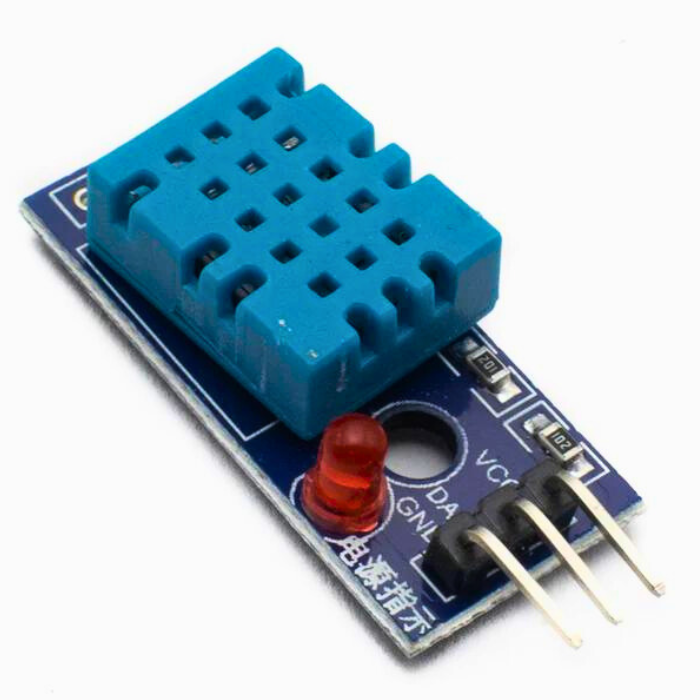
DHT11 Digital Temperature and Humidity Sensor Module
Low-cost single-wire digital temperature (0-50C) and humidity (20-90% RH) sensor, the default beginner Arduino sensor.
₹60 + 18% GST
Breadboards Jumpers
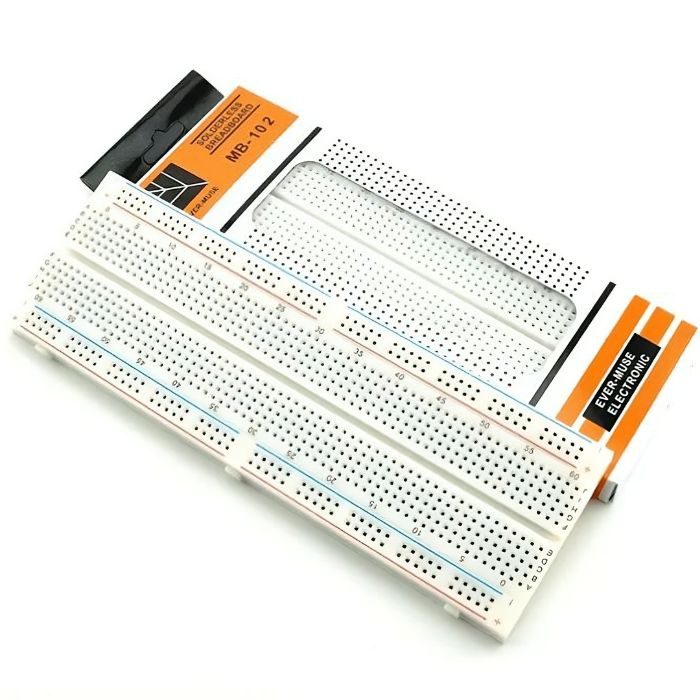
MB102 830 Points Solderless Breadboard
Full-size 830 tie-point solderless prototyping breadboard with power rails, accepts 20-29 AWG wire.
₹90 + 18% GST