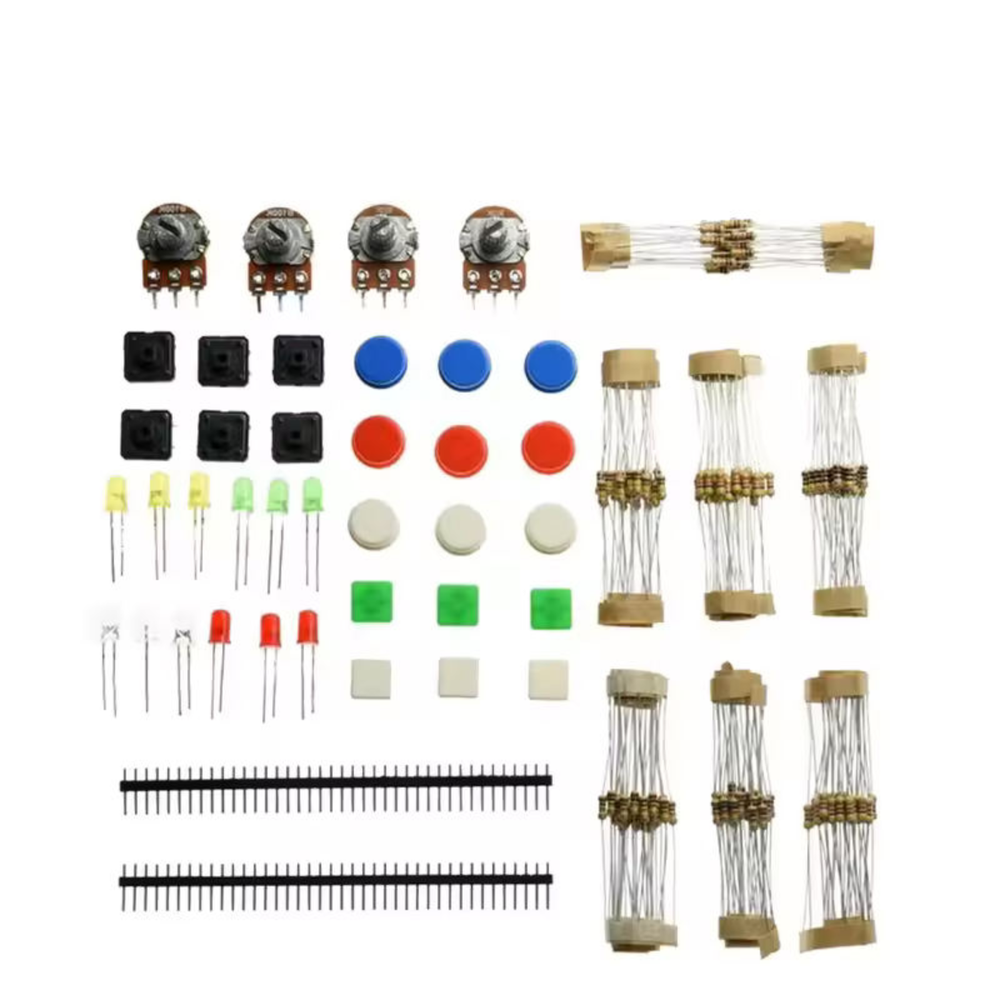
All-in-one assortment: resistors, ceramic and electrolytic capacitors, 5mm LEDs, transistors, diodes, potentiometers and tactile switches in a single box
In stock
Proto Components
Universal Electronic Component Starter Kit (Resistors, Capacitors, LEDs)
Assorted resistors, capacitors, LEDs, transistors, diodes, potentiometers and switches for prototyping.
₹200 + 18% GST
SKU: BOTBIT-PWR-16 · Best for: Building status and indicator circuits with LEDs and current-limiting resistors on Arduino, ESP32 or Raspberry Pi projects
Overview
About Universal Electronic Component Starter Kit (Resistors, Capacitors, LEDs).
The Universal Electronic Component Starter Kit is an assorted collection of the most commonly used through-hole passive and active components, packed into one box so you never have to stop a project to hunt for a single 10k resistor or a 100nF capacitor. It bundles a range of resistor values, ceramic and electrolytic capacitors, standard 5mm LEDs, general-purpose transistors, signal diodes, trimmer/rotary potentiometers and tactile push switches into labelled compartments or taped strips. Because every part uses standard 0.1-inch (2.54mm) lead spacing, everything drops straight into a solderless breadboard or perfboard.
It is popular in India because it is the cheapest way for a beginner, hobbyist or student to get a working parts inventory without buying each value individually. Buying resistors, capacitors and semiconductors one-by-one from a local shop costs more in travel and minimum-order fees than a single kit, and the kit removes the guesswork of which values to keep on hand. For Arduino, ESP32, Raspberry Pi and general electronics learning, this is the standard companion buy.
What makes a good kit is breadth of coverage and clear labelling. A well-assembled kit covers the E12 resistor decade from 10 ohm up to 1M ohm, the everyday capacitor values (10pF to 470uF), the workhorse semiconductors (2N2222/BC547 NPN, 1N4148 signal and 1N4007 rectifier diodes) and the parts you reach for constantly when prototyping (LEDs for status, pots for tuning, tact switches for input).
Key features
Why it stands out.
Standard through-hole (DIP) parts with 2.54mm / 0.1-inch lead pitch that plug directly into any solderless breadboard or perfboard
Wide resistor coverage across the E12 series, typically 1/4W 5% carbon-film from 10 ohm to 1M ohm
Mixed capacitor set: multilayer ceramic (pF to nF range) plus radial aluminium electrolytics (uF range, typically up to 470uF/50V)
Common semiconductors included: general-purpose NPN transistors, 1N4148 signal diodes and 1N4007 rectifier diodes
Labelled compartments / taped-and-reeled strips so values are easy to identify and restock
Specifications
Selection facts.
| Kit type | Assorted through-hole electronic components starter kit |
|---|---|
| Resistors | 1/4W (0.25W) 5% carbon film, E12 values 10 ohm to 1M ohm |
| Ceramic capacitors | Multilayer / disc, ~10pF to 100nF (0.1uF), 50V rated |
| Electrolytic capacitors | Radial aluminium, ~1uF to 470uF, 16V/25V/50V |
| LEDs | 5mm through-hole, assorted colours (red, green, yellow, blue, white), ~1.8-3.2V forward |
| Transistors | General-purpose NPN (e.g. 2N2222 / BC547), TO-92 package |
| Diodes | 1N4148 signal diodes and 1N4007 (1A/1000V) rectifier diodes |
| Potentiometers | Rotary and/or trimmer (e.g. 10k), single-turn |
| Switches | Tactile momentary push buttons (typically 6x6mm) |
| Lead pitch / mounting | 2.54mm (0.1 inch), breadboard and perfboard compatible |
Applications
Where it is used.
- Building status and indicator circuits with LEDs and current-limiting resistors on Arduino, ESP32 or Raspberry Pi projects
- Prototyping RC filters, timing networks and decoupling using the mixed resistor and capacitor values
- Learning transistor fundamentals: switching a load, building a simple NPN switch or amplifier stage
- Adding user input to projects with tactile push buttons (with pull-up/pull-down resistors) and tuning with potentiometers
- Power-supply and rectifier experiments using 1N4007 diodes and electrolytic smoothing capacitors
- School, college and lab electronics coursework and breadboard exercises
Buying guide
How to choose.
This kit is ideal for absolute beginners, students starting electronics or robotics, and anyone building an Arduino/ESP32 project who needs a baseline stock of common parts. If you already have a stocked bench, buy it only if you are running low on the everyday values; otherwise a targeted resistor/capacitor book may suit you better.
When choosing between kits, check that the resistor range spans the full E12 decade (10 ohm to 1M ohm) rather than only a handful of values, and confirm the capacitor set includes both small ceramics (for decoupling and timing) and larger electrolytics (for smoothing). More expensive kits add a component storage box, a resistor colour-code card and higher piece counts. Because exact contents vary by supplier at this price point, treat the listed values as representative.
Pair this kit with a solderless breadboard, a set of male-to-male jumper wires, a multimeter and an Arduino Uno or ESP32 board to have everything you need to start prototyping. A basic soldering iron and some perfboard let you move finished circuits off the breadboard for permanent builds.
FAQ
Common questions.
Will these components work with Arduino, ESP32 and Raspberry Pi?
Yes. These are standard 5V/3.3V-friendly through-hole parts. LEDs (with a series resistor, typically 220-330 ohm), push buttons, resistors, capacitors and transistors are exactly the components used in most beginner Arduino and ESP32 tutorials. Remember Raspberry Pi GPIO is 3.3V, so size LED resistors and never feed 5V into its pins.
What resistor value do I use to light an LED safely?
For a standard LED on a 5V supply, a 220 ohm or 330 ohm 1/4W resistor in series is the safe, common choice and both are included in the kit. On 3.3V (ESP32 / Raspberry Pi), 220 ohm works well. Always put the resistor in series with the LED, and connect the LED with the correct polarity (longer leg is the anode/positive).
How do I read the resistor values?
The resistors use the standard 4-band colour code (three bands for value plus a gold 5% tolerance band). If the kit does not include a colour-code card, any online resistor colour calculator or a multimeter set to ohms will confirm the value quickly.
Are these parts solderable, or only for breadboards?
Both. They are through-hole components with tinned leads, so they push into a breadboard for testing and can also be soldered onto perfboard or a PCB for a permanent build. No surface-mount soldering skills are required.
Do the transistors need any driver library or code?
No. Resistors, capacitors, diodes, LEDs and transistors are passive/discrete analog parts with no firmware. You only write code for the microcontroller controlling them (for example toggling an Arduino pin), not for the components themselves.
Is this available in India and what exactly is in the box?
Yes, BotBit ships within India. The box contains an assortment of resistors, ceramic and electrolytic capacitors, 5mm LEDs, NPN transistors, signal and rectifier diodes, at least one potentiometer and tactile push switches. Exact per-value quantities vary by batch at this price, so use the listing specs as a representative guide.
More in Power & Prototyping
Related hardware.
Breadboards Jumpers
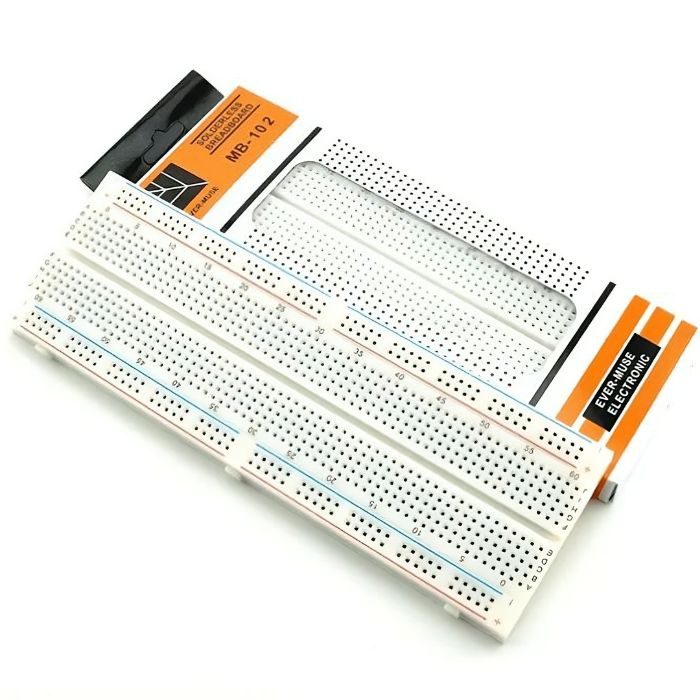
MB102 830 Points Solderless Breadboard
Full-size 830 tie-point solderless prototyping breadboard with power rails, accepts 20-29 AWG wire.
₹90 + 18% GST
Breadboards Jumpers
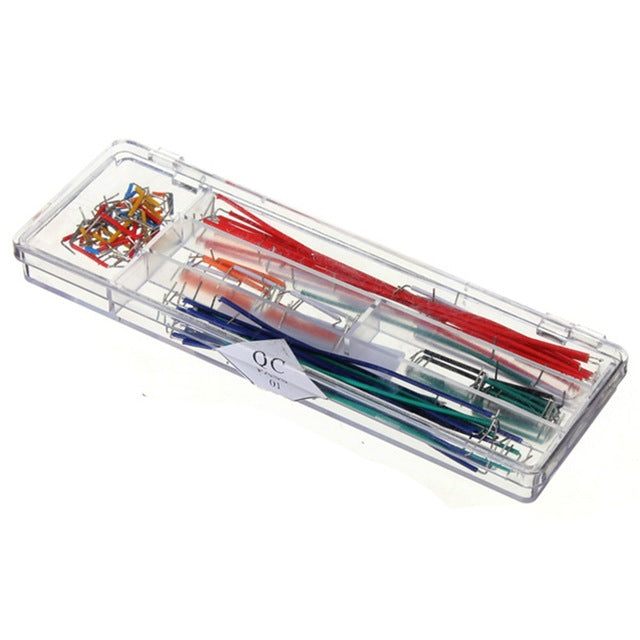
140pcs U-Shape Solderless Breadboard Jumper Wire Kit
140 pre-formed solid-core jumper wires in 14 lengths for clean breadboard wiring.
₹130 + 18% GST
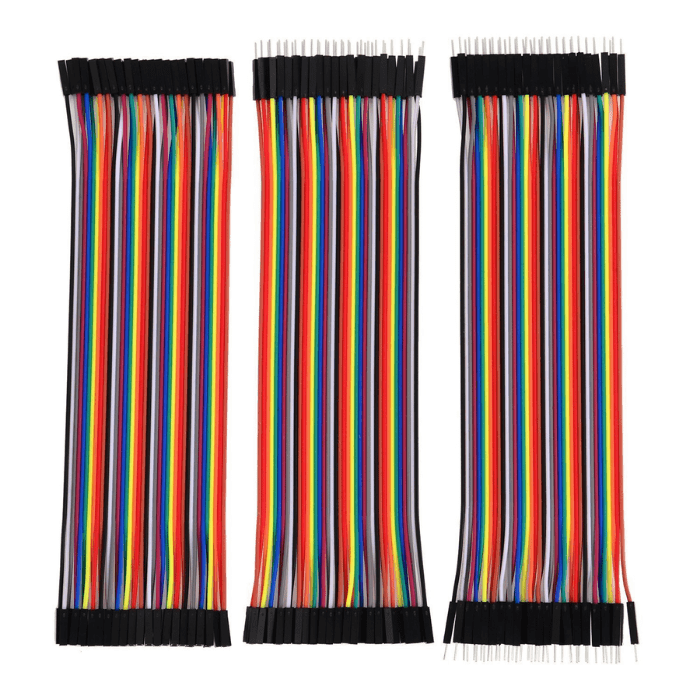
Breadboards Jumpers
120pcs Dupont Jumper Wire Set (M-M, M-F, F-F)
40pcs each of male-male, male-female, female-female flexible jumper cables for Arduino/breadboard.
₹150 + 18% GST
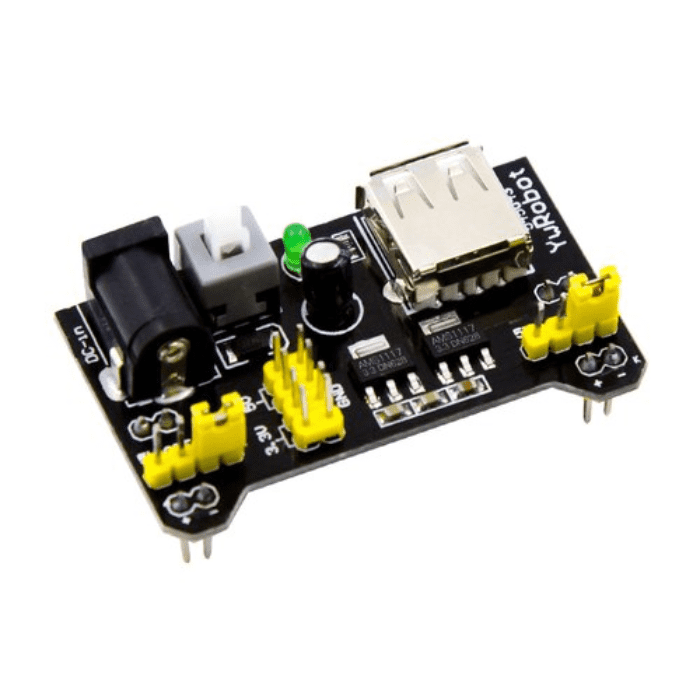
Breadboards Jumpers
MB102 Breadboard Power Supply Module (3.3V/5V)
Dual-rail 3.3V/5V breadboard power module with USB output, 7-12V DC input, up to 700mA.
₹60 + 18% GST
You may also need
Pairs well with.
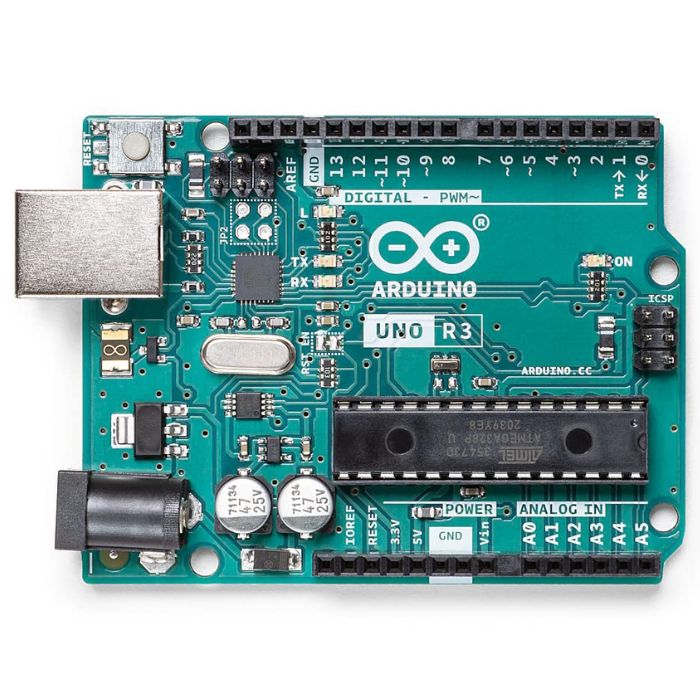
Arduino Boards
Arduino Uno R3
The classic ATmega328P 8-bit microcontroller board, a popular beginner prototyping platform with 14 digital and 6 analog I/O pins.
₹799 + 18% GST
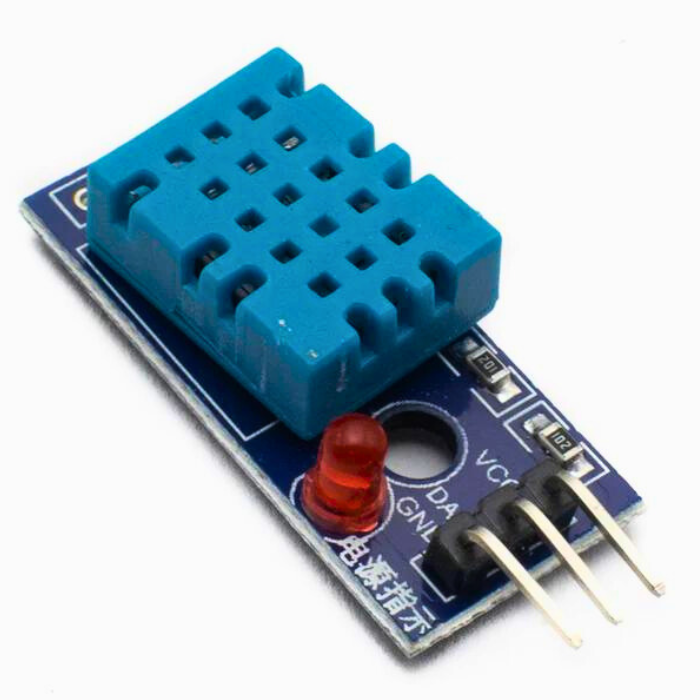
Environment
DHT11 Digital Temperature and Humidity Sensor Module
Low-cost single-wire digital temperature (0-50C) and humidity (20-90% RH) sensor, the default beginner Arduino sensor.
₹60 + 18% GST