ESP32-WROOM-32 dual-core Xtensa LX6 at up to 240MHz
In stock
Esp Boards
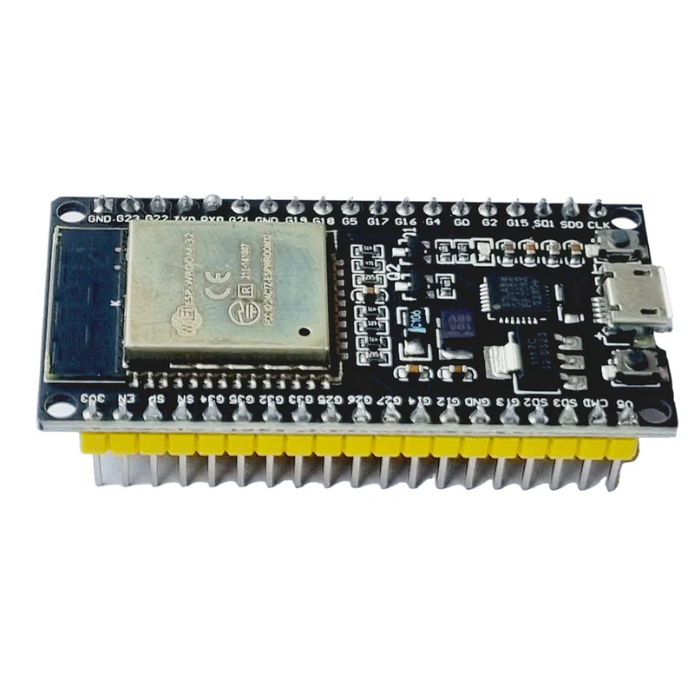
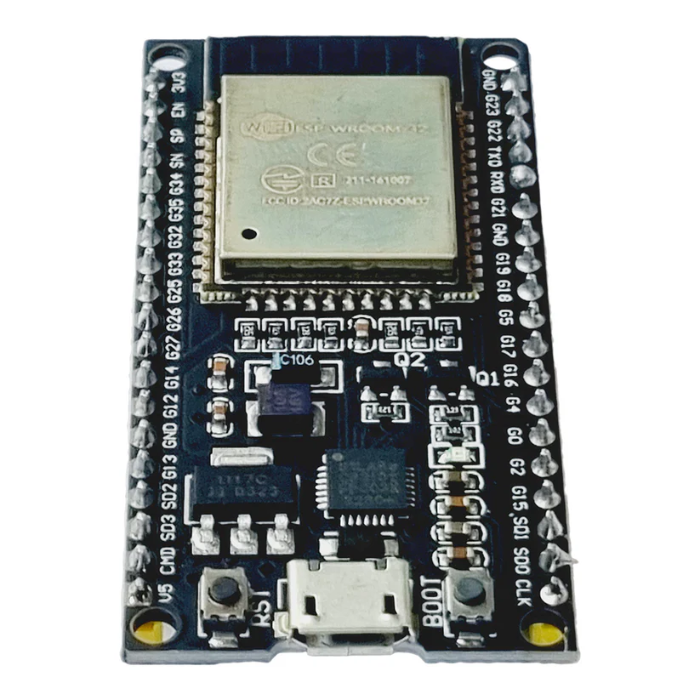
ESP32 DevKit V1 (38-pin)
ESP32-WROOM-32 dual-core board with integrated WiFi and Bluetooth, the go-to low-cost IoT microcontroller.
₹349 + 18% GST
SKU: BOTBIT-DEV-10 · Best for: WiFi and Bluetooth IoT projects and cloud-connected sensors
Overview
About ESP32 DevKit V1 (38-pin).
The ESP32 DevKit V1 is the go-to low-cost IoT development board, built around Espressif's ESP32-WROOM-32 module. It combines a dual-core Xtensa LX6 processor with integrated 2.4GHz WiFi and Bluetooth (Classic + BLE) on a single board, all breadboard-friendly with a 38-pin layout and onboard USB-to-serial and voltage regulator.
The ESP32 runs at up to 240MHz with 520KB of internal SRAM and typically 4MB of SPI flash, giving it far more processing power than an 8-bit Arduino while staying extremely affordable. It exposes a rich set of peripherals: many GPIO, two I2C, multiple SPI/UART, PWM, DAC, touch inputs and a large number of ADC channels, all programmable from the familiar Arduino IDE, ESP-IDF or MicroPython.
For India buyers, the 38-pin DevKit V1 is the default choice for almost any WiFi or Bluetooth hobby and prototyping project. It is cheap, widely stocked, extremely well documented and supported by a huge community, making it the safest starting point for connected projects.
Key features
Why it stands out.
Integrated 2.4GHz WiFi (802.11 b/g/n) and Bluetooth 4.2 Classic + BLE
Onboard CP2102 (or CH340) USB-to-UART bridge for direct programming
38-pin breadboard-friendly layout with onboard 3.3V regulator
Rich peripherals: ADC, DAC, touch sensors, PWM, I2C, SPI, UART
Programmable with Arduino IDE, Espressif ESP-IDF and MicroPython
Specifications
Selection facts.
| Module | ESP32-WROOM-32 |
|---|---|
| CPU | Dual-core Xtensa LX6, up to 240MHz |
| SRAM | 520KB internal |
| Flash memory | 4MB SPI flash (typical) |
| Wireless | 2.4GHz WiFi 802.11 b/g/n + Bluetooth 4.2 (Classic & BLE) |
| GPIO | Up to 25 usable GPIO on the 38-pin board |
| ADC | Up to 18 channels, 12-bit SAR ADC |
| DAC / Touch | 2x 8-bit DAC, 10 capacitive touch inputs |
| USB interface | CP2102 (or CH340) USB-to-serial |
| Operating voltage | 3.3V logic; powered via 5V micro-USB or VIN |
Applications
Where it is used.
- WiFi and Bluetooth IoT projects and cloud-connected sensors
- Home automation nodes, smart plugs and MQTT / Home Assistant devices
- Web servers and REST APIs served directly from the board
- BLE beacons, wearables and phone-to-device communication
- Robotics and motor control with real-time WiFi telemetry
- Data logging and edge projects using the dual cores for parallel tasks
Buying guide
How to choose.
The 38-pin DevKit V1 is the best default ESP32 board for most makers: it breaks out more pins than the 30-pin version and fits standard breadboards. Choose it when you need WiFi and/or Bluetooth with plenty of GPIO and strong community support.
Check whether the listing uses a CP2102 or CH340 USB bridge; both work, but you may need the matching driver on Windows. A data-capable micro-USB cable is required. If you need a camera, choose the ESP32-CAM instead; if you only need simple WiFi, the cheaper ESP8266/NodeMCU may suffice.
It runs on 3.3V logic (not 5V tolerant), so use level shifters for 5V peripherals. Pair it with sensor modules (DHT22, BMP280, MPU6050), relays, OLED displays or motor drivers to build complete IoT and robotics projects.
FAQ
Common questions.
How do I program the ESP32 DevKit V1?
Install the ESP32 board package in the Arduino IDE (or use ESP-IDF / MicroPython), select the 'DOIT ESP32 DevKit V1' board, choose the correct COM port and upload over USB. Some clones need you to hold the BOOT button while uploading starts.
Do I need to install a driver?
Usually yes. Install the CP2102 (Silicon Labs) or CH340 driver depending on the USB chip your board uses, so the COM port appears. Many recent OS versions include these drivers automatically.
Is the ESP32 5V tolerant?
No. GPIO operate at 3.3V and are not 5V tolerant. Use a logic level shifter when connecting 5V sensors or logic to protect the board.
Can it do both WiFi and Bluetooth at the same time?
It supports both WiFi and Bluetooth (Classic and BLE), and can coexist, though heavy simultaneous use shares the radio and can reduce throughput. For most sensor and control projects this is not an issue.
Is it available in India and Arduino-compatible?
Yes, it is one of the most stocked boards in India and is fully supported by the Arduino IDE via Espressif's board package, plus thousands of community tutorials and libraries.
What comes in the box?
Typically just the ESP32 DevKit V1 board, often with pin headers already soldered. A USB cable is usually not included unless stated.
More in Development Boards
Related hardware.

Esp Boards
ESP32-CAM Development Board
ESP32 board with OV2640 camera and microSD slot for low-cost WiFi image capture and video streaming projects.
₹499 + 18% GST
Esp Boards
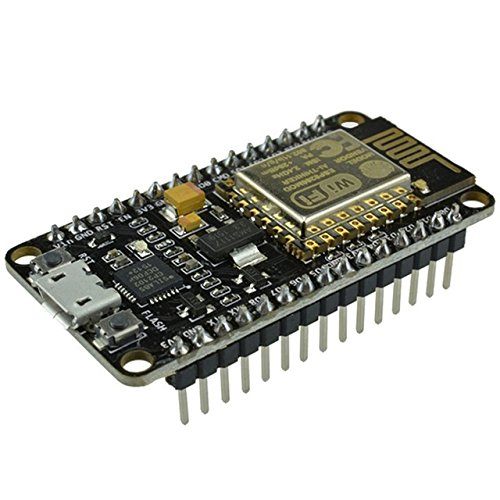
NodeMCU ESP8266 (CP2102)
Budget WiFi microcontroller board based on the ESP8266, widely used for simple IoT and home automation projects.
₹279 + 18% GST
Arduino Boards
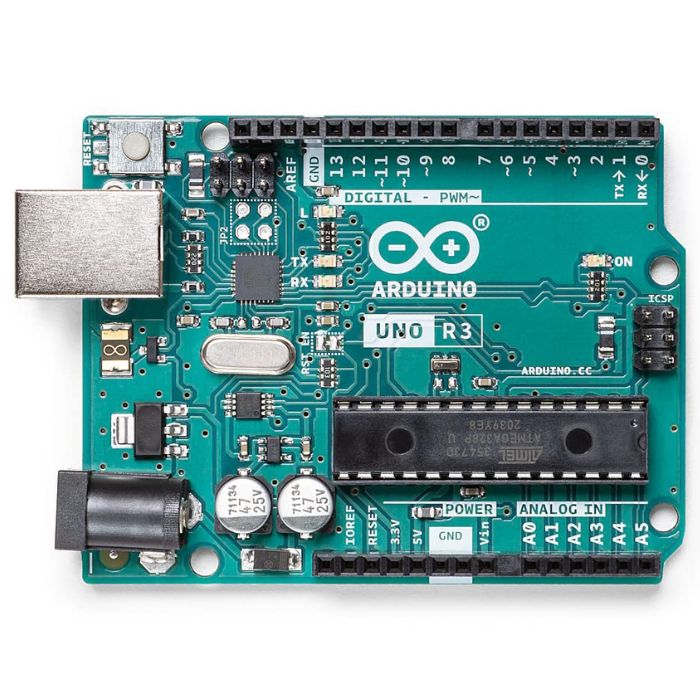
Arduino Uno R3
The classic ATmega328P 8-bit microcontroller board, a popular beginner prototyping platform with 14 digital and 6 analog I/O pins.
₹799 + 18% GST
Arduino Boards
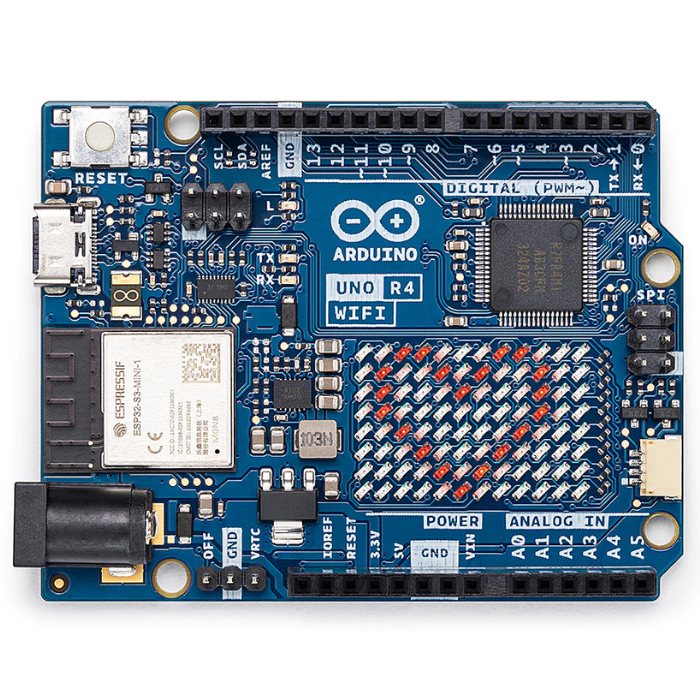
Arduino Uno R4 WiFi
Next-gen Uno with 32-bit Renesas RA4M1 Arm Cortex-M4 MCU, ESP32-S3 WiFi/Bluetooth and a built-in 12x8 LED matrix.
₹2,199 + 18% GST
You may also need
Pairs well with.
Environment
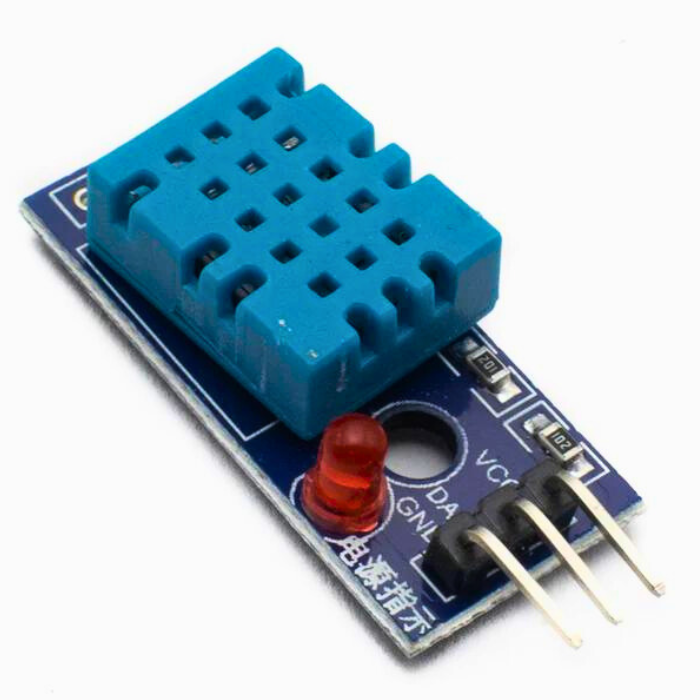
DHT11 Digital Temperature and Humidity Sensor Module
Low-cost single-wire digital temperature (0-50C) and humidity (20-90% RH) sensor, the default beginner Arduino sensor.
₹60 + 18% GST
Breadboards Jumpers
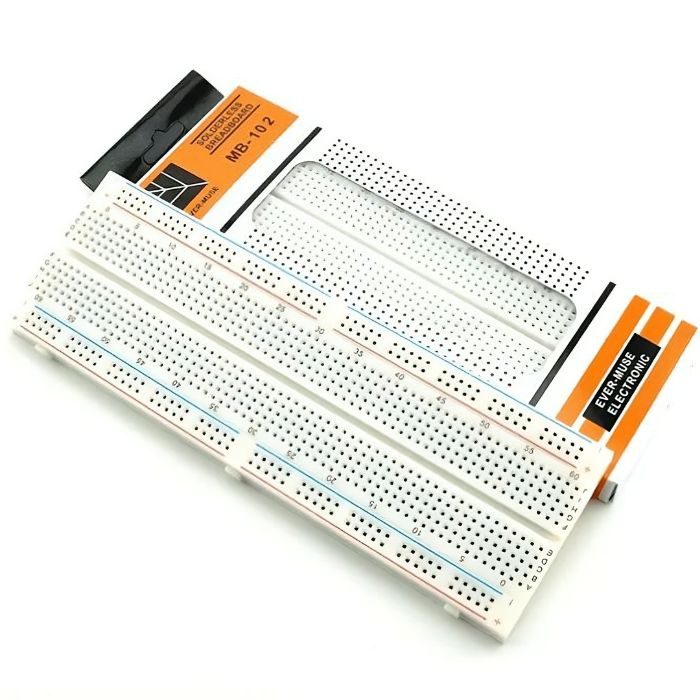
MB102 830 Points Solderless Breadboard
Full-size 830 tie-point solderless prototyping breadboard with power rails, accepts 20-29 AWG wire.
₹90 + 18% GST