Laser Time-of-Flight ranging up to 2 metres with millimetre-resolution output over I2C
In stock
Distance Proximity
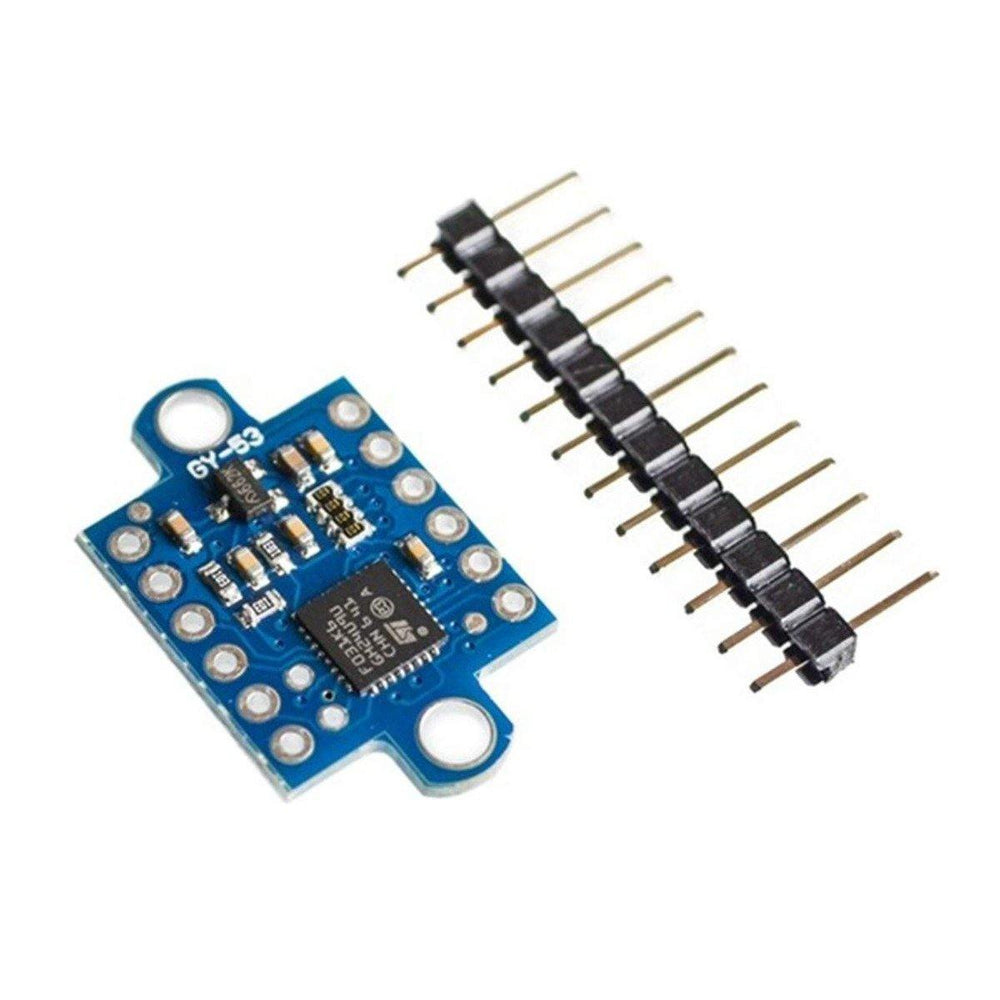
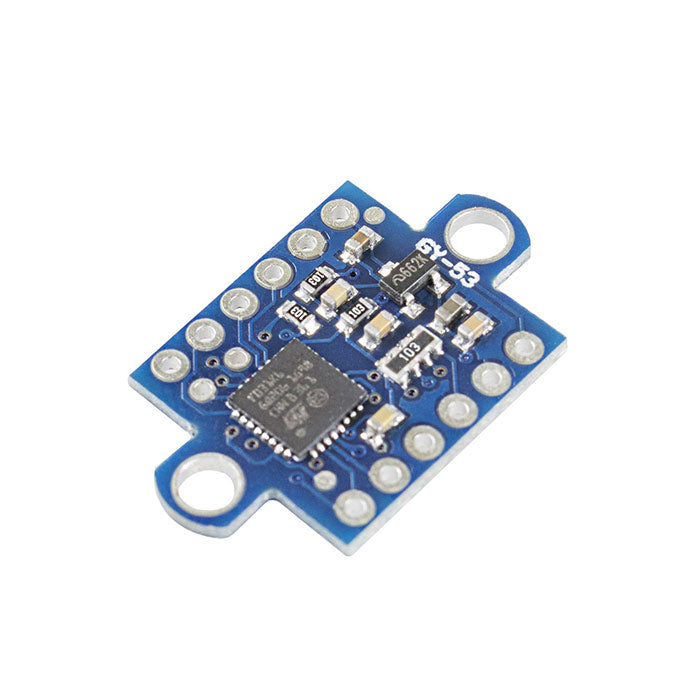
VL53L0X Time-of-Flight (ToF) Laser Ranging Sensor Module
Laser ToF sensor giving accurate short-range distance up to 2m over I2C, immune to target colour/reflectance.
₹126 + 18% GST
SKU: BOTBIT-SEN-07 · Best for: Obstacle detection and collision avoidance on small robots and drones
Overview
About VL53L0X Time-of-Flight (ToF) Laser Ranging Sensor Module.
The VL53L0X is a laser Time-of-Flight (ToF) ranging sensor from STMicroelectronics that measures absolute distance by timing how long an invisible 940nm laser pulse takes to bounce back from a target. Unlike ultrasonic or IR-reflectance sensors, its reading does not depend on the colour or reflectivity of the target surface, so a black object and a white object at the same distance report almost the same value. It communicates over I2C and returns distance directly in millimetres, up to about 2 metres.
This breakout module is one of the most popular short-range distance sensors among Indian makers because it packs true LiDAR-style ranging into a tiny footprint at a very low price. It is a favourite for robotics obstacle detection, gesture/proximity triggers, liquid level sensing and 3D-scanning experiments where the accuracy and immunity to target colour of a laser sensor matter more than the long reach of an ultrasonic module.
Because it is a genuine ST part on a well-supported breakout, it works out of the box with Arduino, ESP32, ESP8266 and Raspberry Pi using freely available libraries, making it beginner-friendly while still being accurate enough for serious projects.
Key features
Why it stands out.
940nm Class 1 VCSEL emitter that is eye-safe and invisible, unaffected by ambient light in most conditions
Distance reading is independent of target colour and reflectance, unlike IR reflectance sensors
Fast measurement with ranging times as low as ~20ms and selectable accuracy/speed modes (default, high-accuracy, long-range, high-speed)
Onboard 2.8V regulator and I2C level-shifting so it runs directly from a 3.3V or 5V microcontroller
Tiny 25° field of view for a focused, well-defined measurement spot
Specifications
Selection facts.
| Sensor / IC | STMicroelectronics VL53L0X |
|---|---|
| Ranging technology | Laser Time-of-Flight (ToF) |
| Light source | 940nm invisible Class 1 VCSEL laser |
| Max range | Up to 2 m (2000 mm) |
| Field of view | 25° |
| Interface | I2C (up to 400 kHz), default address 0x29 |
| Ranging time | As fast as ~20 ms (mode dependent) |
| Module supply voltage | 2.8 V to 5 V (onboard regulator) |
| Sensor core voltage | 2.8 V |
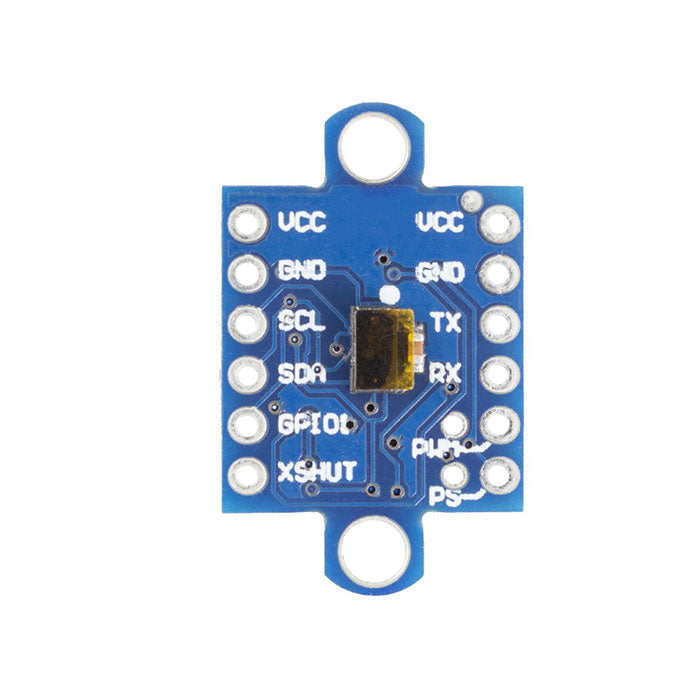
| Interrupt | GPIO1 data-ready / threshold interrupt pin |
Applications
Where it is used.
- Obstacle detection and collision avoidance on small robots and drones
- Contactless liquid or material level sensing in tanks and bins
- Gesture and proximity triggers for touchless switches and displays
- 1D distance measurement for automation and pick-and-place setups
- Wall/edge detection for mobile robots where surface colour varies
- Hobby 3D scanning and mapping experiments
Buying guide
How to choose.
Choose the VL53L0X if you need accurate short-range distance (under ~2 m) that does not care about target colour, and you want a compact I2C sensor. If you need to measure much longer distances (3-4 m+), an HC-SR04 ultrasonic or the newer VL53L1X (up to ~4 m) is a better fit. If you only need simple present/not-present obstacle detection, a cheaper IR obstacle module will do.
Pair it with any 3.3V or 5V microcontroller such as Arduino Uno/Nano, ESP32, ESP8266 or Raspberry Pi. The module already has I2C level-shifting, so no extra logic converter is needed. To run several VL53L0X units on one I2C bus, use the XSHUT pin to bring them up one at a time and reassign each a unique address in software.
For clean readings, keep the tiny lens window clean and unobstructed, and avoid pointing it through glass or at highly angled shiny surfaces, which can scatter the laser return.
FAQ
Common questions.
Which library should I use with Arduino?
The two most common are Pololu's VL53L0X library and Adafruit's VL53L0X library, both installable from the Arduino Library Manager. Both give you distance in millimetres in just a few lines of code.
How do I wire it to an Arduino or ESP32?
It is I2C, so connect VIN to 5V (or 3.3V on ESP32), GND to GND, SDA to the board's SDA pin and SCL to the board's SCL pin. On an Uno that is A4 (SDA) and A5 (SCL); on ESP32 the default is GPIO21 (SDA) and GPIO22 (SCL).
Does the target colour affect the reading?
No. Because it measures the time-of-flight of a laser pulse rather than reflected intensity, a black and a white object at the same distance read almost identically, which is the main advantage over IR reflectance sensors.
Can I use more than one on the same bus?
Yes. All units power up at address 0x29, so use each module's XSHUT pin to enable them one at a time and assign each a new I2C address in your code before enabling the next.
Is it available in India?
Yes, the VL53L0X breakout is widely stocked by Indian electronics retailers and ships across India. It is a standard maker part.
What is in the box?
You receive one VL53L0X ToF sensor breakout module. A header strip may be included but is often unsoldered, so you may need to solder the pin header yourself.
More in Sensors & Modules
Related hardware.
Distance Proximity
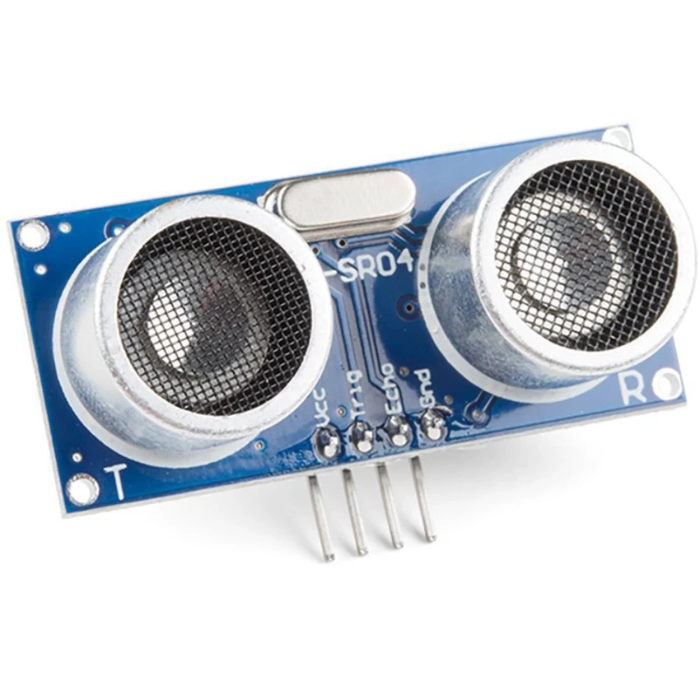
HC-SR04 Ultrasonic Distance Sensor Module
Non-contact ultrasonic ranging sensor measuring 2-400cm, the most common distance sensor for robotics.
₹75 + 18% GST
Distance Proximity
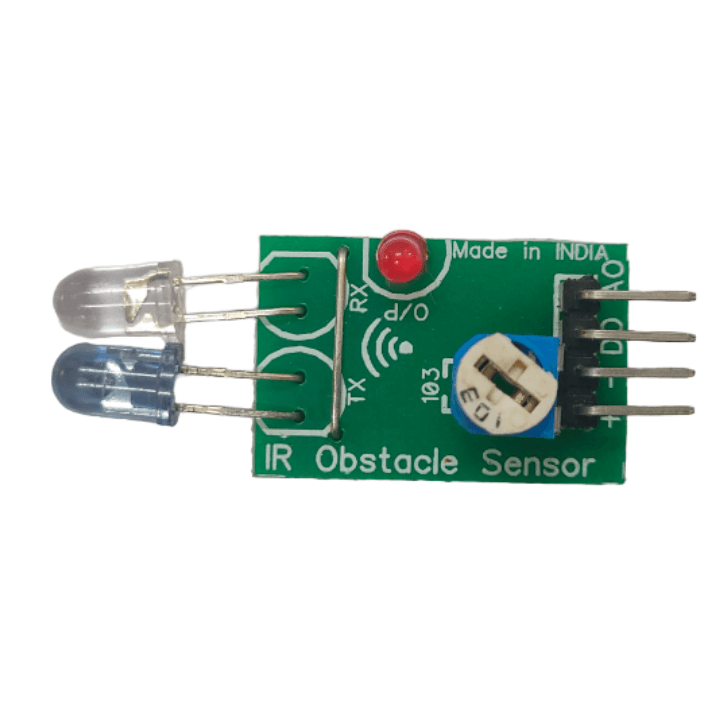
IR Infrared Obstacle Avoidance Sensor Module
IR transmitter-receiver module with adjustable range giving digital output on obstacle detection, used in line-following robots.
₹45 + 18% GST
Environment
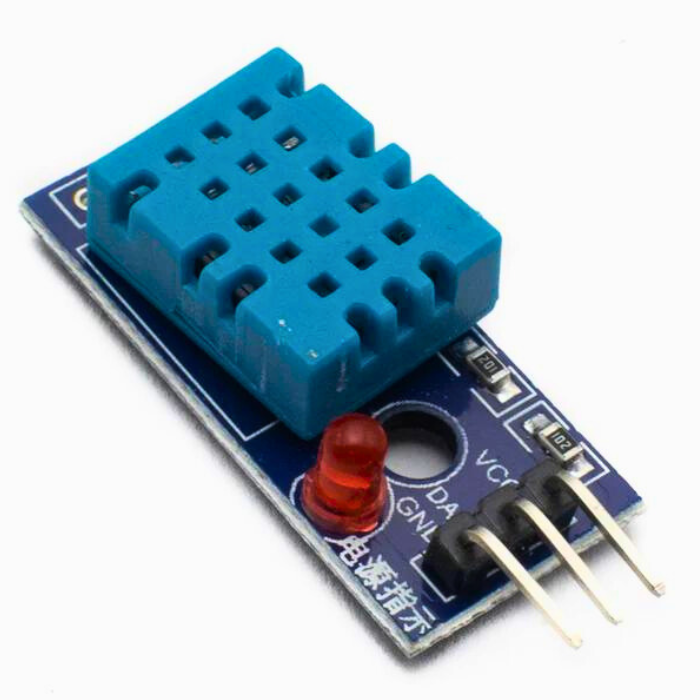
DHT11 Digital Temperature and Humidity Sensor Module
Low-cost single-wire digital temperature (0-50C) and humidity (20-90% RH) sensor, the default beginner Arduino sensor.
₹60 + 18% GST
Environment
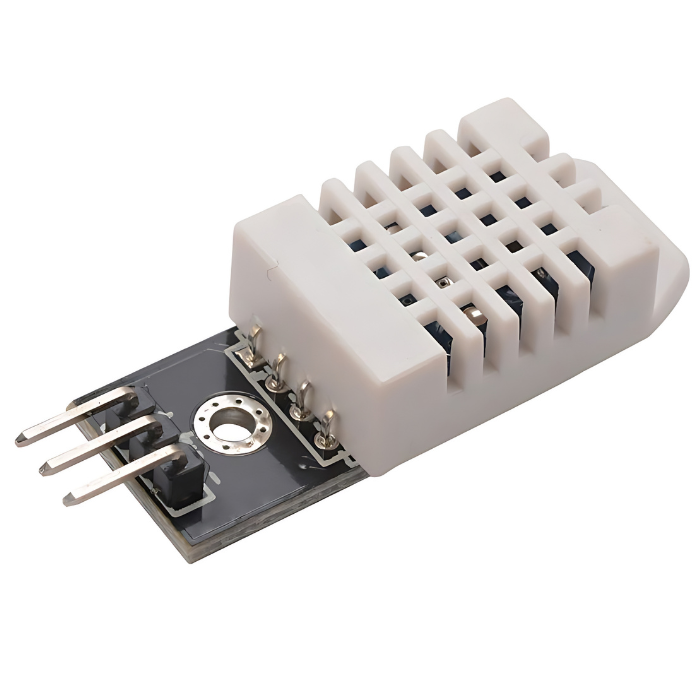
DHT22 / AM2302 Temperature and Humidity Sensor Module
Higher-accuracy digital temperature (-40 to 80C) and humidity (0-100% RH) sensor, upgrade over DHT11.
₹199 + 18% GST
You may also need
Pairs well with.
Arduino Boards
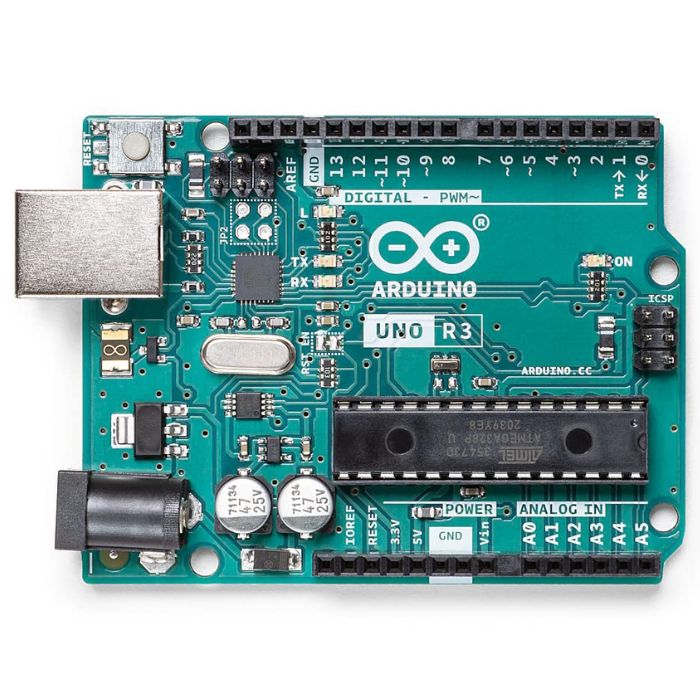
Arduino Uno R3
The classic ATmega328P 8-bit microcontroller board, a popular beginner prototyping platform with 14 digital and 6 analog I/O pins.
₹799 + 18% GST
Breadboards Jumpers
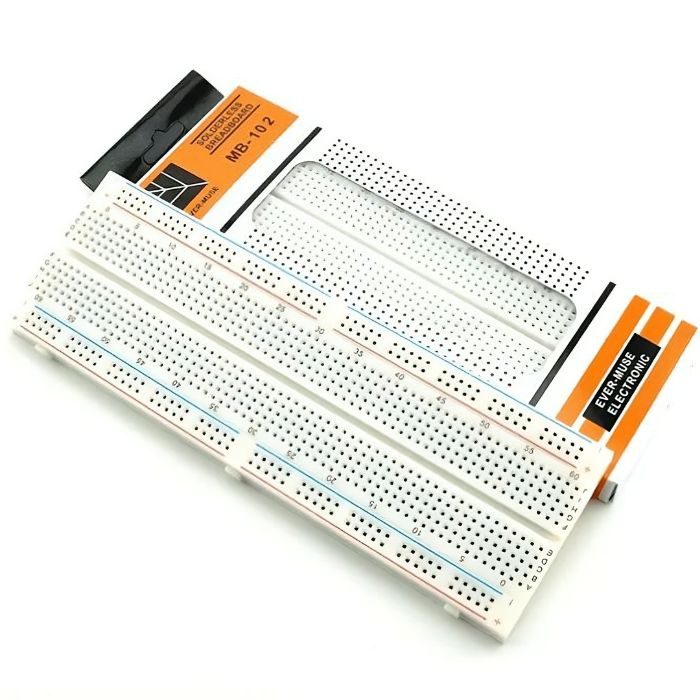
MB102 830 Points Solderless Breadboard
Full-size 830 tie-point solderless prototyping breadboard with power rails, accepts 20-29 AWG wire.
₹90 + 18% GST