Drives up to 4 DC motors, or 2 stepper motors, plus 2 hobby servos
In stock
Motor Drivers
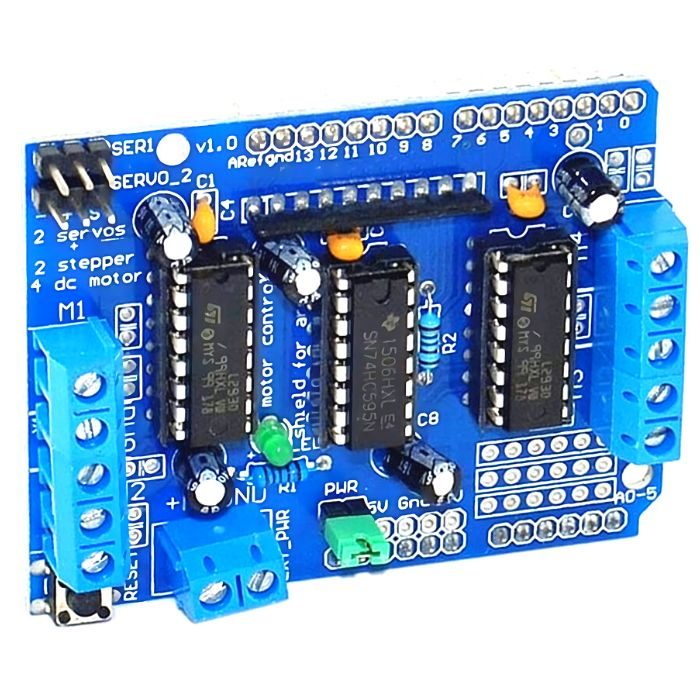
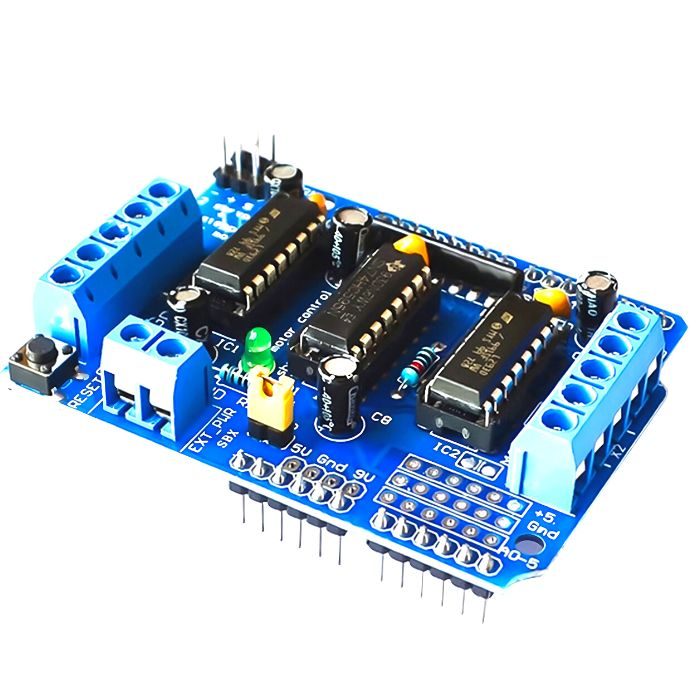
L293D Motor Driver Shield for Arduino
Arduino Uno shield driving up to 4 DC motors, 2 steppers and 2 servos via L293D ICs.
₹180 + 18% GST
SKU: BOTBIT-MOT-10 · Best for: Four-motor and two-motor Arduino robot cars
Overview
About L293D Motor Driver Shield for Arduino.
The L293D Motor Driver Shield (often called the Adafruit-style Motor Shield v1 or L293D shield) plugs directly onto an Arduino Uno and lets you drive up to four DC motors, or two stepper motors, plus two hobby servos -- all from one board. It uses two L293D H-bridge ICs and a 74HC595 shift register so it controls many motors while using only a handful of Arduino pins.
It is popular in India for robot cars, walking robots and multi-motor projects where wiring individual drivers would be tedious. Everything connects via screw terminals, and the classic AFMotor / Adafruit Motor Shield library (or newer AccelStepper-compatible forks) makes programming straightforward. Two dedicated servo headers tie to the Arduino's hardware PWM pins for jitter-free servo control.
Because it stacks on the Uno, it is compact and beginner-friendly, though the L293D ICs are modest in current (roughly 0.6A continuous, ~1.2A peak per channel), so it suits small hobby motors rather than high-power drives.
Key features
Why it stands out.
Stacks directly on an Arduino Uno/Mega -- no jumper wiring for control
Uses a 74HC595 shift register so many motors run on few Arduino pins
Screw terminals for motors and external motor power
Two servo headers wired to Arduino hardware PWM pins
Supported by the classic AFMotor / Adafruit Motor Shield library
Specifications
Selection facts.
| Driver ICs | 2 x L293D (quad half-bridge) |
|---|---|
| DC motor channels | 4 (M1-M4) |
| Stepper capacity | Up to 2 bipolar steppers |
| Servo outputs | 2 (on Arduino pins 9 and 10) |
| Motor supply voltage | ~4.5 - 25V DC (typical 5-12V for hobby motors) |
| Current per channel | ~0.6A continuous, ~1.2A peak per L293D channel |
| Control method | 74HC595 shift register (few Arduino pins used) |
| Form factor | Arduino Uno / Mega shield |
| Library | AFMotor / Adafruit Motor Shield library |
Applications
Where it is used.
- Four-motor and two-motor Arduino robot cars
- Multi-legged / walking robots using several small motors and servos
- Small robotic arms mixing DC motors, steppers and servos
- Educational and STEM robotics kits on the Arduino Uno
- Any Uno project needing several low-power motors from one board
Buying guide
How to choose.
Buy this shield when you want to control several small motors -- up to four DC motors or two steppers plus two servos -- from an Arduino Uno without wiring individual drivers. It is ideal for classroom robots and multi-motor hobby builds. If you only need one or two motors at higher current, a standalone L298N or TB6612FNG will be more powerful and efficient.
Mind the current limit: each L293D channel handles only about 0.6A continuous, so use small hobby DC motors and don't stall them. Provide a separate motor power supply into the shield's screw terminal (do not draw motor current through the Arduino's regulator) and connect grounds together.
Pair it with an Arduino Uno or Mega, small 3-9V DC motors or NEMA-08/small steppers, up to two SG90/MG90 servos, and install the AFMotor (Adafruit Motor Shield v1) library. For smooth stepper acceleration, use an AccelStepper-compatible wrapper.
FAQ
Common questions.
How many motors can it really drive at once?
Up to 4 DC motors, OR 2 stepper motors, plus 2 servos. You cannot get all four DC motors and two steppers simultaneously -- steppers use the same M1-M4 channels in pairs. Servos are independent on pins 9 and 10.
Which library do I use?
The classic AFMotor / Adafruit Motor Shield v1 library. Install it in the Arduino IDE, then use AF_DCMotor and AF_Stepper objects. For servos, use the standard Servo library on pins 9 and 10.
Do I need a separate motor power supply?
Yes for anything beyond tiny motors. Feed motor power into the shield's EXT_PWR screw terminal and connect its ground to the Arduino ground. Do not power motors through the Arduino's onboard regulator, which cannot supply the current.
How much current can each motor draw?
Each L293D channel is good for roughly 0.6A continuous (about 1.2A peak). Keep to small hobby motors; high-current or stalled motors will overheat the ICs, which are soldered to the board.
Will it fit an Arduino Mega?
Yes, it stacks on the Uno and is compatible with the Mega form factor. The servo pins and shift-register control lines line up with both boards.
Is it available in India and what is included?
Yes, it is widely stocked in India. The package is the assembled shield with two L293D ICs, 74HC595, screw terminals and servo headers; motors, servos, battery and Arduino are separate.
More in Motors & Drivers
Related hardware.
Motor Drivers
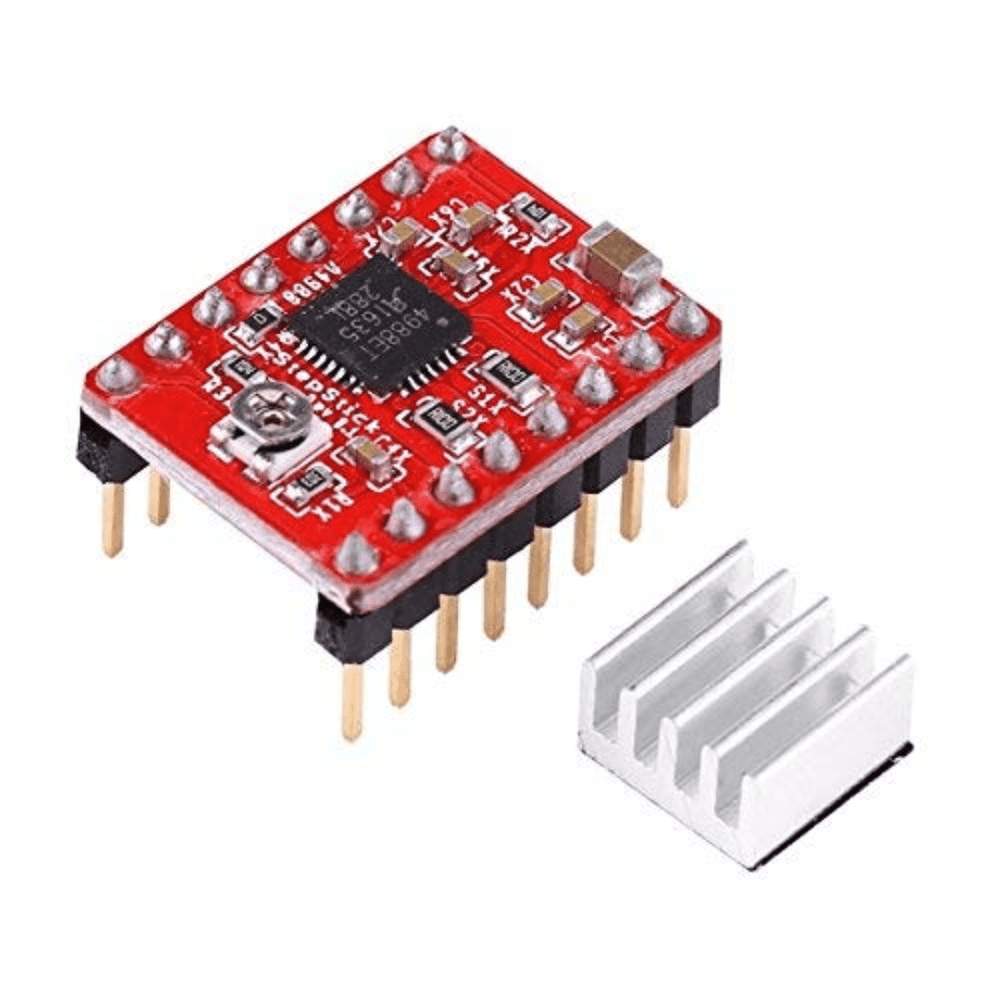
A4988 Stepper Motor Driver Module with Heat Sink
Microstepping bipolar stepper driver (up to 1/16), 8-35V, standard RAMPS/3D-printer StepStick.
₹85 + 18% GST
Motor Drivers
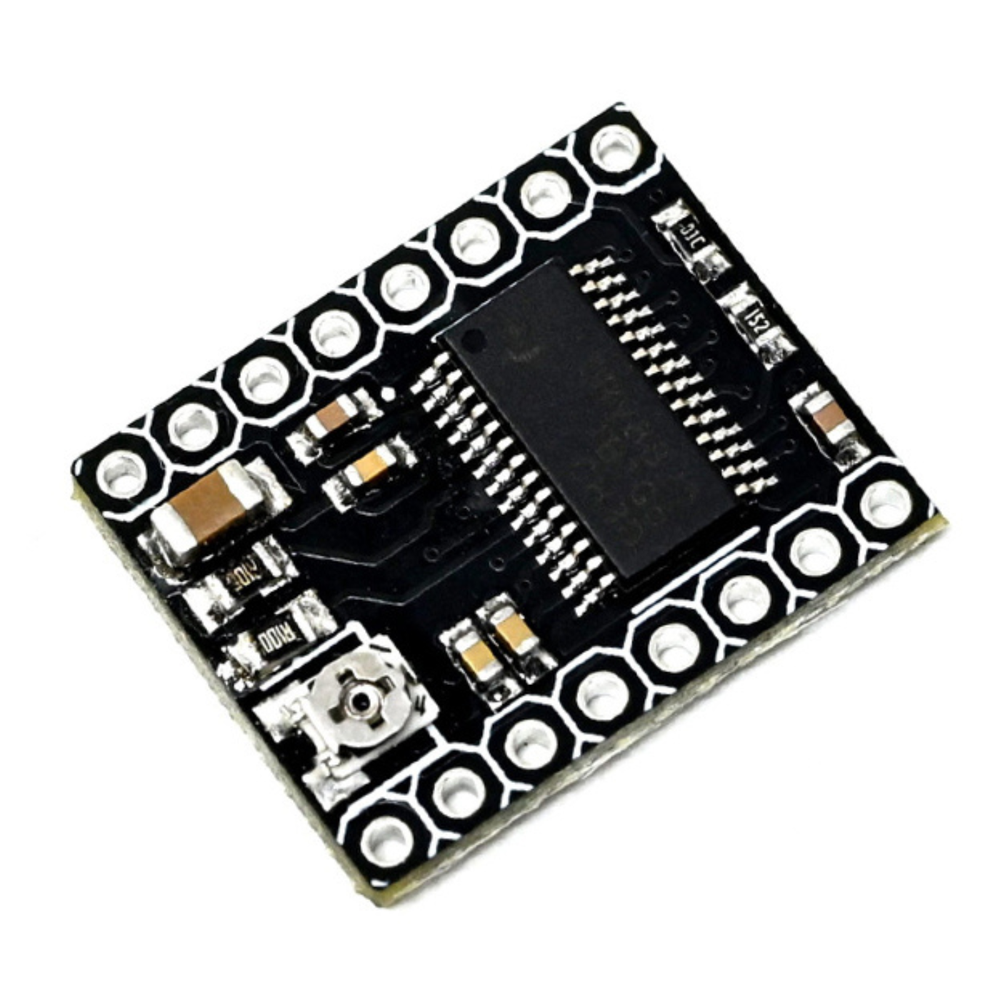
DRV8825 Stepper Motor Driver Module with Heat Sink
Bipolar stepper driver up to 1/32 microstepping, ~2.2A peak, higher-current A4988 alternative.
₹140 + 18% GST
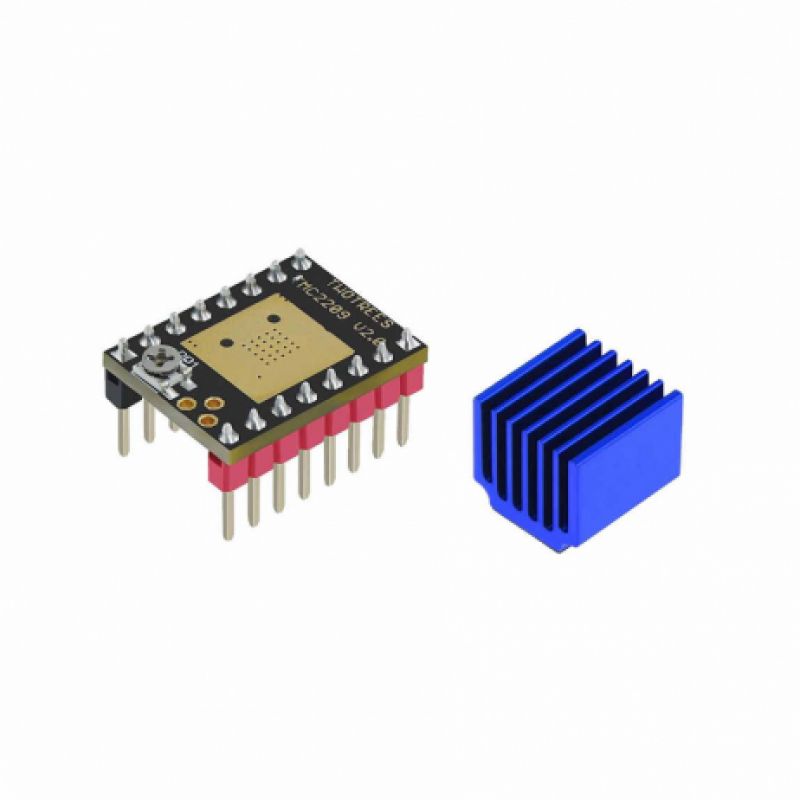
Motor Drivers
TMC2209 Stepper Motor Driver Module
Silent StealthChop stepper driver up to 1/256 microstep with UART, popular 3D-printer upgrade.
₹320 + 18% GST
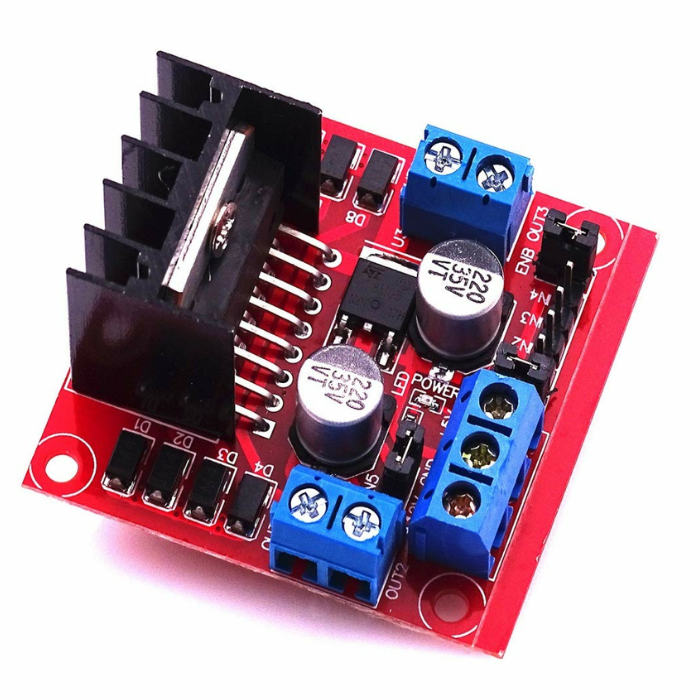
Motor Drivers
L298N Dual H-Bridge Motor Driver Module
Dual H-bridge driver, 5-35V up to 2A/channel, controls two DC motors or one stepper; widely used module.
₹170 + 18% GST
You may also need
Pairs well with.
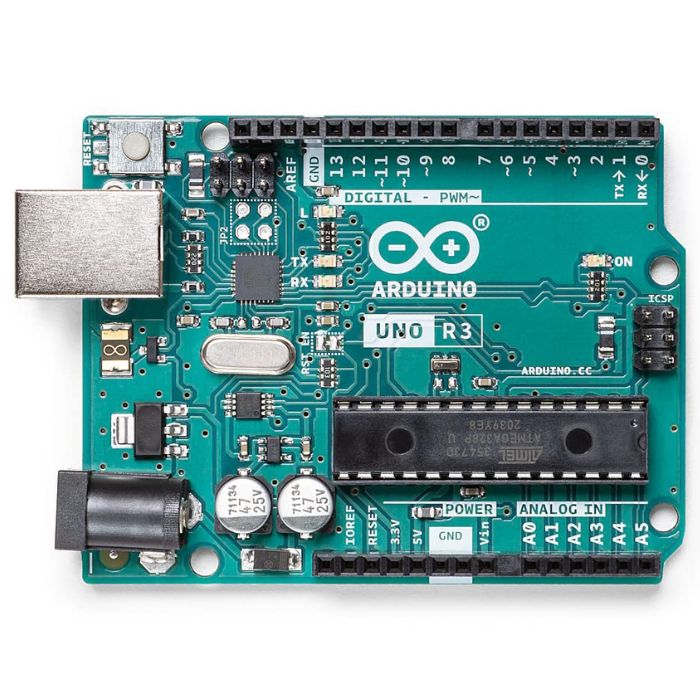
Arduino Boards
Arduino Uno R3
The classic ATmega328P 8-bit microcontroller board, a popular beginner prototyping platform with 14 digital and 6 analog I/O pins.
₹799 + 18% GST
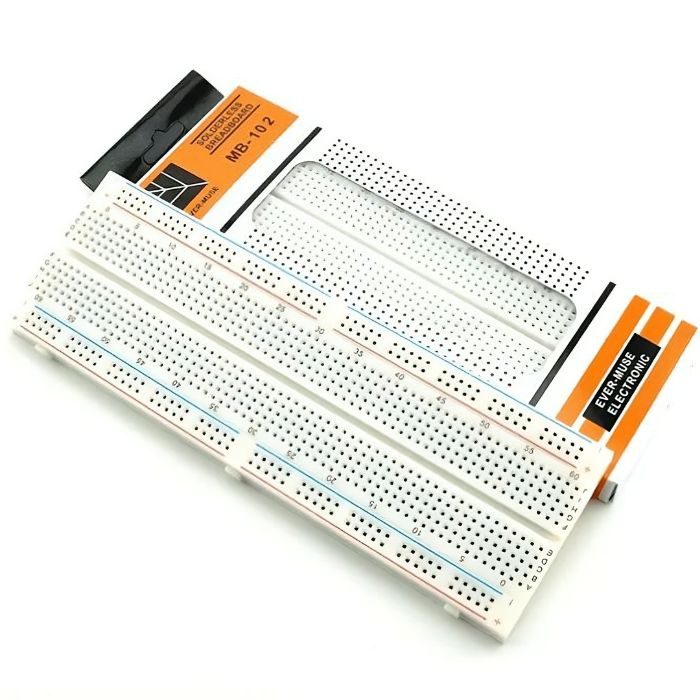
Breadboards Jumpers
MB102 830 Points Solderless Breadboard
Full-size 830 tie-point solderless prototyping breadboard with power rails, accepts 20-29 AWG wire.
₹90 + 18% GST