Dual H-bridge: drives two DC motors independently, or one bipolar stepper
In stock
Motor Drivers
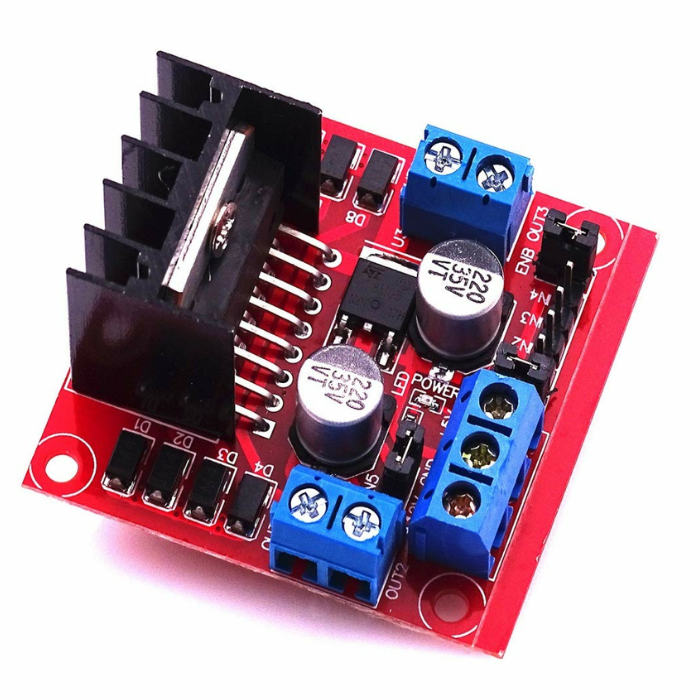
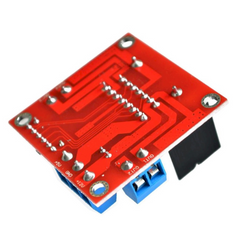
L298N Dual H-Bridge Motor Driver Module
Dual H-bridge driver, 5-35V up to 2A/channel, controls two DC motors or one stepper; widely used module.
₹170 + 18% GST
SKU: BOTBIT-MOT-09 · Best for: Two-wheel-drive and four-wheel-drive Arduino robot cars
Overview
About L298N Dual H-Bridge Motor Driver Module.
The L298N dual H-bridge module is one of the most widely used motor-driver boards in hobby electronics and a staple of Indian robotics kits. Built around the STMicroelectronics L298N dual full-bridge IC, it can drive two DC motors independently (direction and speed) or one bipolar stepper, at 5-35V and up to 2A per channel. Its large heat sink, screw terminals and onboard 5V regulator make it rugged and beginner-friendly.
It is popular because it is cheap, tolerant of abuse, and works with almost any microcontroller. The board exposes enable pins for PWM speed control and input pins for direction, plus a jumper that enables the onboard 5V regulator so a single battery can power both the motors and your Arduino logic. This makes it the default choice for two-wheel-drive robot cars, tank chassis and pumps.
Note the L298N is an older bipolar-transistor design, so it drops roughly 2V across the bridge and is less efficient than modern MOSFET drivers like the TB6612FNG. It is chosen for robustness and availability rather than efficiency, and the onboard heat sink handles the resulting heat.
Key features
Why it stands out.
Up to 2A per channel, motor supply 5-35V
PWM speed control via ENA/ENB enable pins, direction via IN1-IN4
Onboard 5V regulator (jumper-enabled) can power your microcontroller logic
Large heat sink and screw terminals for motors and power
Works with Arduino, ESP32, Raspberry Pi and virtually any 3.3-5V logic
Specifications
Selection facts.
| Driver IC | STMicroelectronics L298N (dual full-bridge) |
|---|---|
| Motor supply voltage | 5 - 35V DC |
| Continuous current per channel | Up to 2A |
| Peak current | 3A (non-repetitive) |
| Logic supply voltage | 5V (onboard regulator provides 5V when jumper fitted) |
| Control inputs | IN1-IN4 (direction) + ENA/ENB (PWM enable) |
| Voltage drop across bridge | ~2V (bipolar design), so motor sees supply minus ~2V |
| Max power dissipation | ~25W (with heat sink) |
| Onboard regulator note | Remove 5V-enable jumper if motor supply exceeds 12V |
Applications
Where it is used.
- Two-wheel-drive and four-wheel-drive Arduino robot cars
- Tank-track and differential-drive robot chassis
- Driving small DC water pumps, fans and linear actuators
- Running a single bipolar stepper in basic projects
- Conveyor, gate and simple automation motor control
Buying guide
How to choose.
Buy the L298N when you need a robust, forgiving driver for two DC motors up to about 2A each and efficiency is not critical -- for example a beginner robot car. It tolerates wiring mistakes better than delicate MOSFET boards, which is why it dominates learner kits. If you need efficiency, higher current or a smaller board, choose the TB6612FNG instead.
Watch the ~2V bridge drop: a 6V motor supply delivers only ~4V to the motors, so size your battery a couple of volts higher than the motor rating. Keep the onboard 5V-regulator jumper fitted only when the motor supply is 12V or below; above that, remove it and power your logic separately to avoid burning the regulator.
Pair it with a 6-12V battery pack for typical hobby motors, an Arduino/ESP32 for control, and use the ENA/ENB pins with analogWrite/PWM for speed. Connect motor power ground and logic ground together. Buy heavier gauge wire for the motor terminals if you run near 2A.
FAQ
Common questions.
How do I control motor speed?
Feed a PWM signal to the ENA (motor A) and ENB (motor B) enable pins using analogWrite on Arduino, and set direction with IN1/IN2 and IN3/IN4. Remove the ENA/ENB jumpers first so your PWM controls them instead of them being tied high.
Can it power my Arduino too?
Yes, when the 5V-enable jumper is fitted the onboard regulator outputs 5V you can feed to your Arduino, but only when the motor supply is 12V or lower. Above 12V, remove the jumper and power the Arduino separately.
Why do my motors run slow or weak?
The L298N drops about 2V across its bridge, so the motors receive roughly 2V less than your supply. Use a battery a couple of volts higher than the motor's rated voltage to compensate.
Can it drive a stepper motor?
Yes, it can drive one bipolar (4-wire) stepper by treating the two channels as the two coils and sequencing IN1-IN4. For dedicated stepper work an A4988 or DRV8825 is usually better.
What is in the box and is it available in India?
The board ships as a single L298N module with heat sink and screw terminals; wires, motors and battery are separate. It is one of the most widely stocked motor drivers in India.
L298N or TB6612FNG -- which should I pick?
Pick the L298N for ruggedness, higher voltage headroom and beginner tolerance. Pick the TB6612FNG for much higher efficiency, far less heat, a smaller board and lower voltage drop, at slightly lower peak current.
More in Motors & Drivers
Related hardware.
Motor Drivers
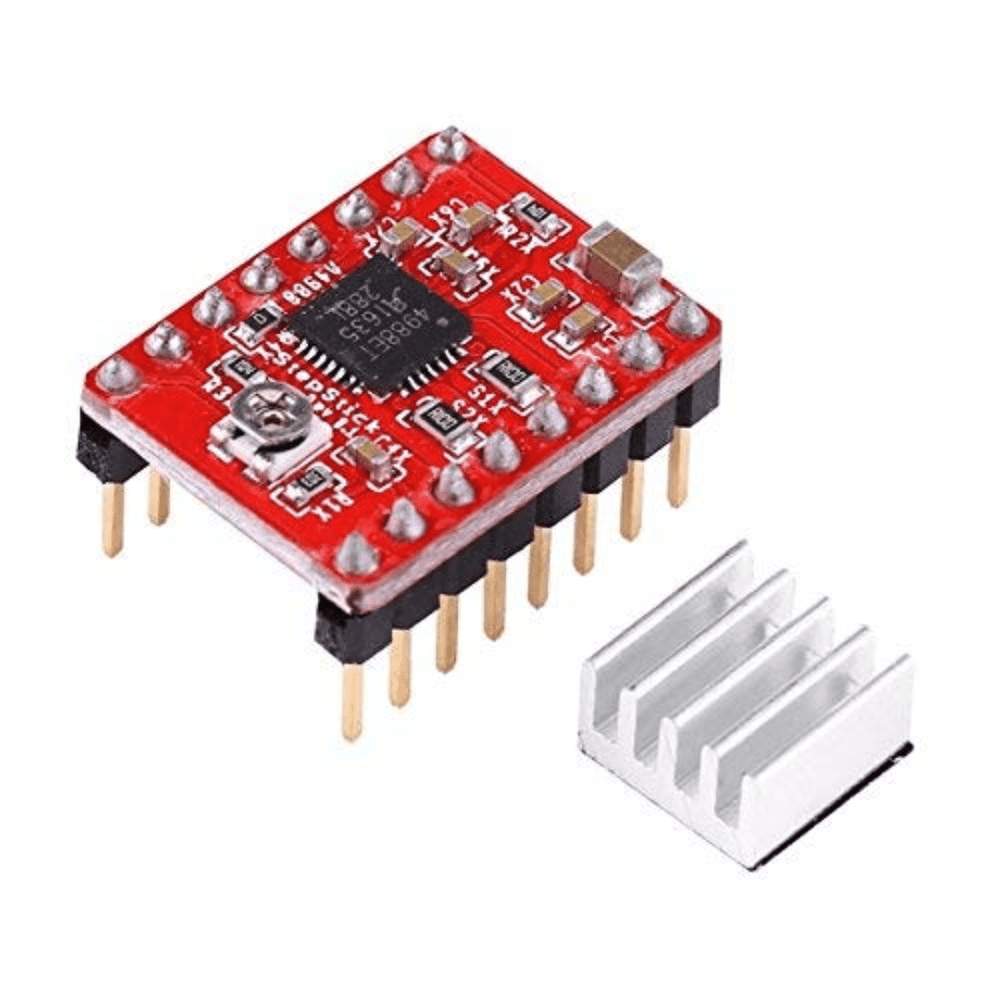
A4988 Stepper Motor Driver Module with Heat Sink
Microstepping bipolar stepper driver (up to 1/16), 8-35V, standard RAMPS/3D-printer StepStick.
₹85 + 18% GST
Motor Drivers
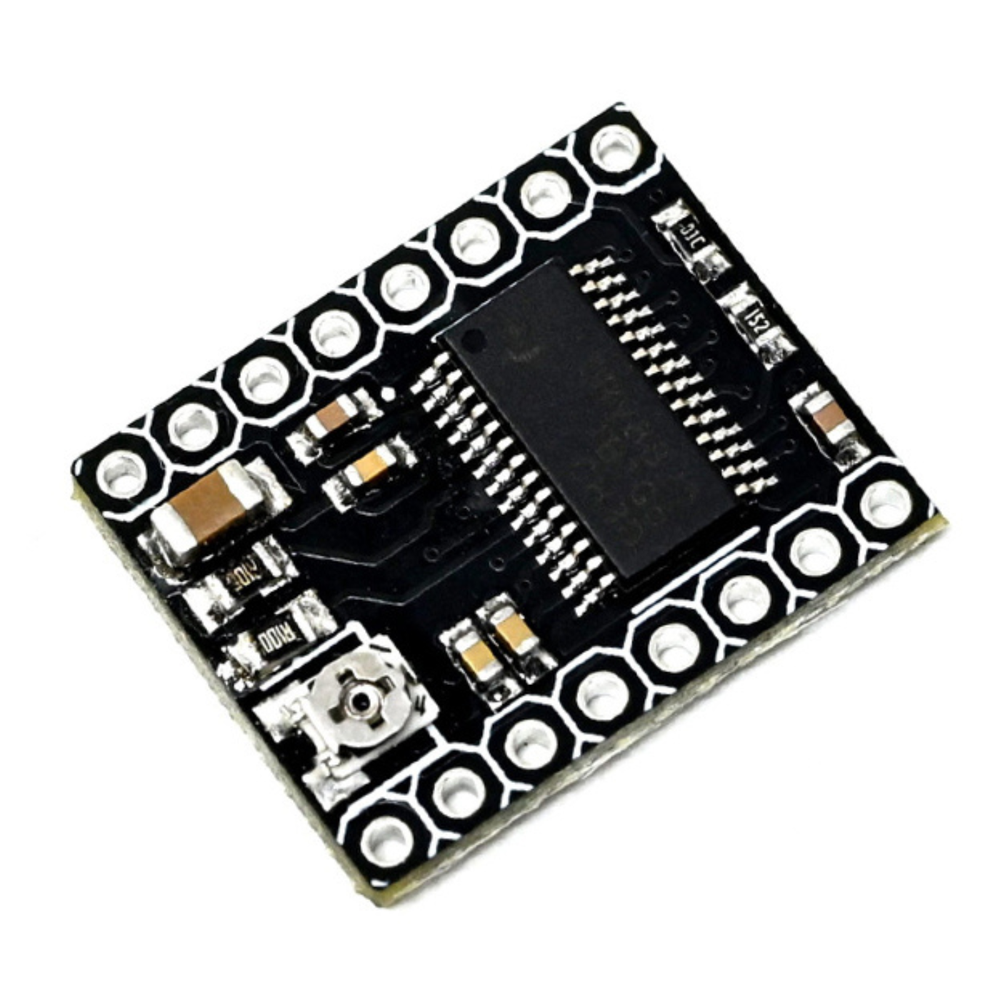
DRV8825 Stepper Motor Driver Module with Heat Sink
Bipolar stepper driver up to 1/32 microstepping, ~2.2A peak, higher-current A4988 alternative.
₹140 + 18% GST
Motor Drivers
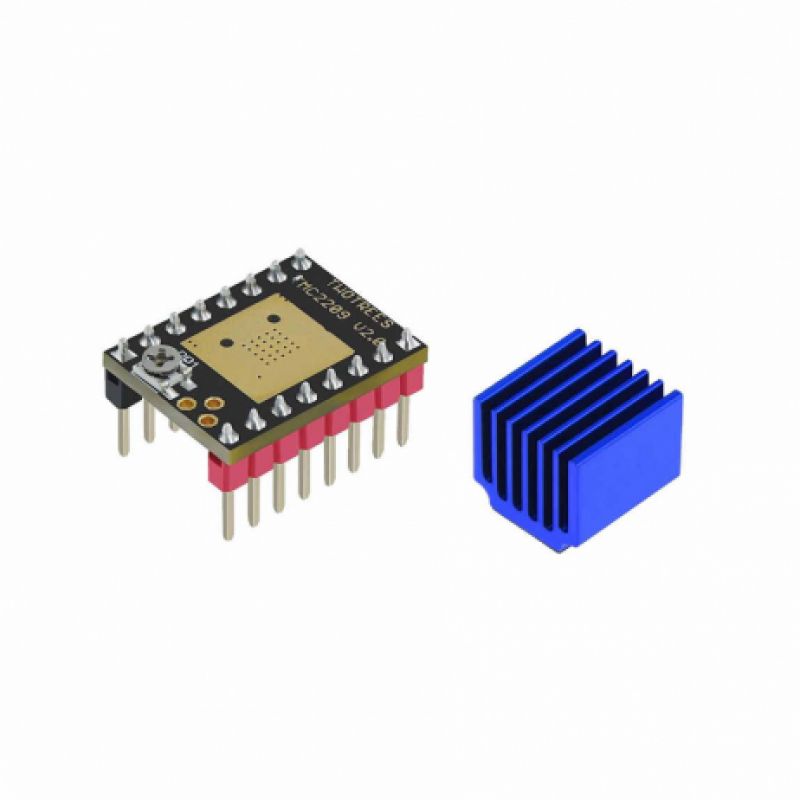
TMC2209 Stepper Motor Driver Module
Silent StealthChop stepper driver up to 1/256 microstep with UART, popular 3D-printer upgrade.
₹320 + 18% GST
Motor Drivers
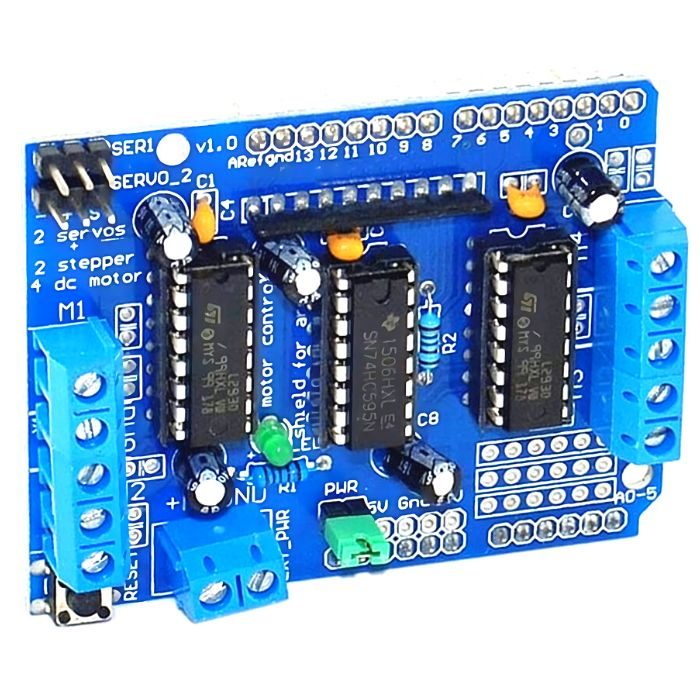
L293D Motor Driver Shield for Arduino
Arduino Uno shield driving up to 4 DC motors, 2 steppers and 2 servos via L293D ICs.
₹180 + 18% GST
You may also need
Pairs well with.
Arduino Boards
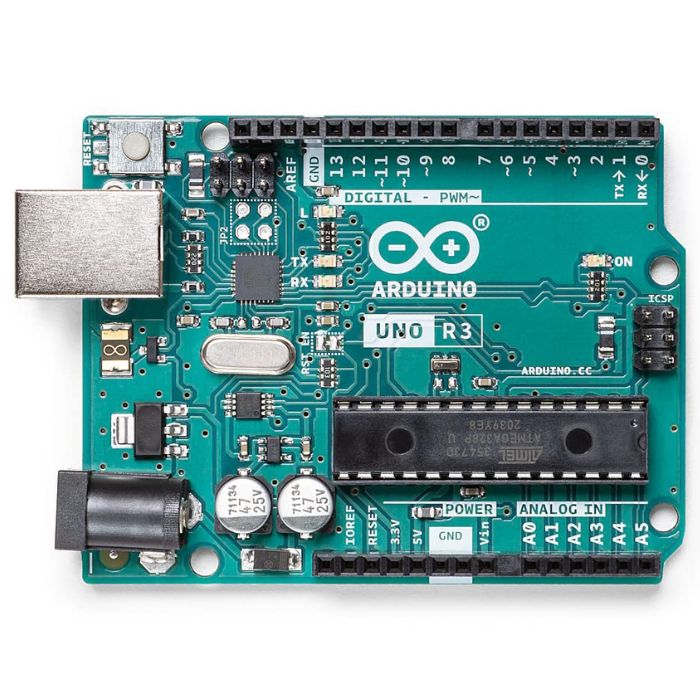
Arduino Uno R3
The classic ATmega328P 8-bit microcontroller board, a popular beginner prototyping platform with 14 digital and 6 analog I/O pins.
₹799 + 18% GST
Breadboards Jumpers
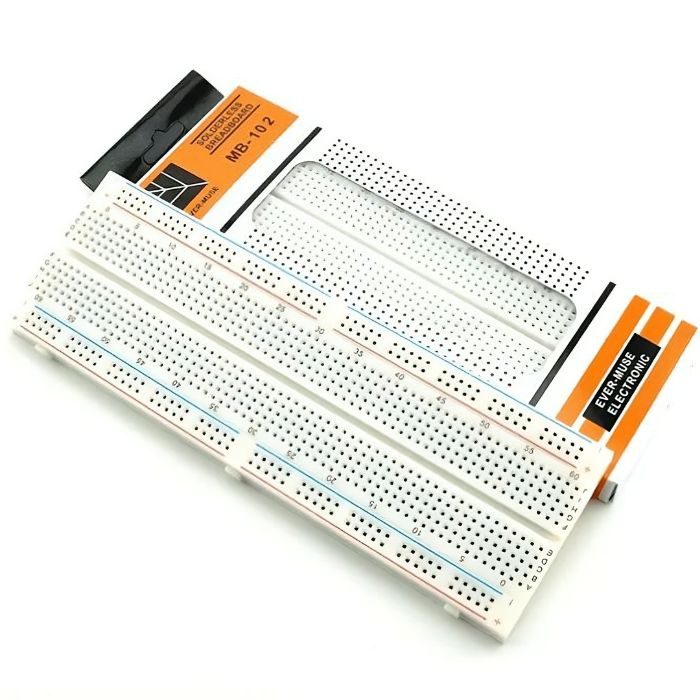
MB102 830 Points Solderless Breadboard
Full-size 830 tie-point solderless prototyping breadboard with power rails, accepts 20-29 AWG wire.
₹90 + 18% GST