Multi-band coverage of the 433/868/915MHz ISM bands for LoRa and telemetry use
In stock
Telemetry Antennas
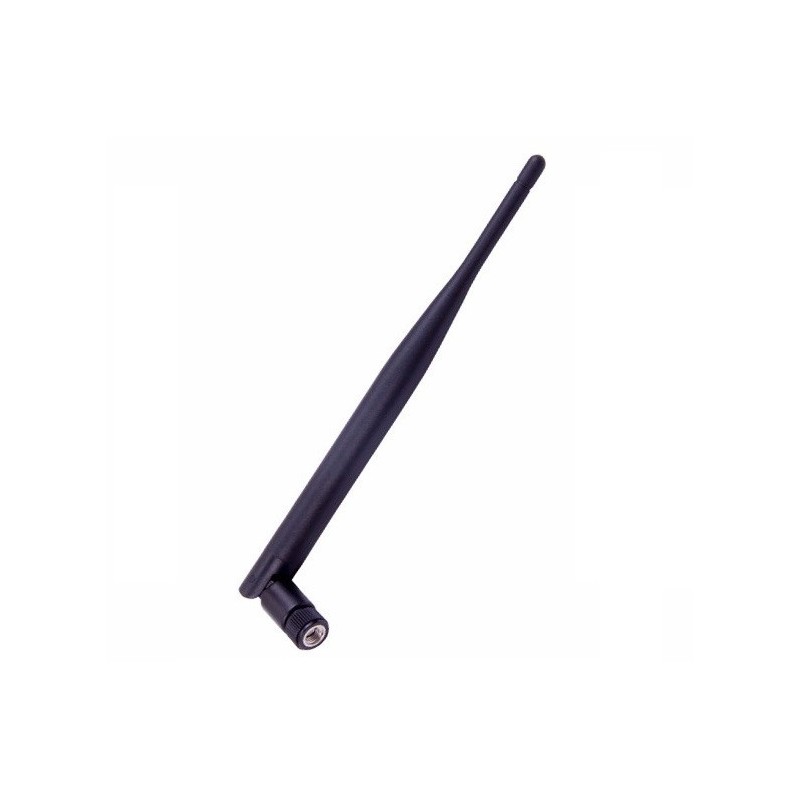
LoRa 433/868/915MHz 5dBi SMA Antenna
This Generic LoRa 5dBi SMA antenna is a multi-band omnidirectional whip antenna covering the 433MHz, 868MHz and 915MHz ISM bands used by LoRa, telemetry radios and IoT links.
₹899 + 18% GST
SKU: BOTBIT-TEL-06 · Best for: Ground-station antenna for SiK and 900MHz telemetry radios
Overview
About LoRa 433/868/915MHz 5dBi SMA Antenna.
This Generic LoRa 5dBi SMA antenna is a multi-band omnidirectional whip antenna covering the 433MHz, 868MHz and 915MHz ISM bands used by LoRa, telemetry radios and IoT links. With 5dBi of gain over a standard dipole, a 50-ohm impedance and vertical polarisation, it provides an affordable upgrade over the short stock antennas that ship with most radios, improving both transmit reach and receive sensitivity for ground stations and base nodes.
It terminates in a standard SMA connector and typically uses a hinged/swivel base so it can be angled for best coverage, making it a practical fit for telemetry ground modules, LoRa gateways, Meshtastic nodes and base stations. Because it is omnidirectional it radiates evenly in the horizontal plane, which suits applications where the remote node can be in any direction, unlike a directional antenna that must be aimed.
It is aimed at makers, IoT developers and drone operators who want a low-cost, broadband antenna for the ground side of a SiK, LoRa or 900MHz telemetry link, or for fixed sensor and gateway installations. Verify the SMA polarity (SMA vs RP-SMA) required by your specific radio before ordering.
Key features
Why it stands out.
5dBi gain improves range and receive sensitivity over short stock whip antennas
Omnidirectional radiation covers nodes in any horizontal direction without aiming
Standard 50-ohm SMA connector suits common telemetry radios, gateways and IoT nodes
Swivel/hinged base lets you angle the antenna for the best coverage on a ground unit
Specifications
Selection facts.
| Frequency bands | 433 / 868 / 915 MHz |
|---|---|
| Gain | 5 dBi |
| Impedance | 50 ohm |
| VSWR | <= 2.0 |
| Polarization | Vertical |
| Radiation pattern | Omnidirectional |
| Connector | SMA |
Applications
Where it is used.
- Ground-station antenna for SiK and 900MHz telemetry radios
- LoRa and LoRaWAN gateway and node antenna upgrades
- Meshtastic and long-range IoT mesh deployments
- Fixed sensor and base-station installations
- Replacement for damaged or short stock whip antennas
- Bench and development setups for 433/868/915MHz radios
Buying guide
How to choose.
Before ordering, confirm the connector polarity your radio needs. Many telemetry radios (such as the Holybro SiK and RFD900-series) use RP-SMA, while some modules use standard SMA; the centre-pin arrangement differs and the wrong polarity will not mate correctly. Match the band of the antenna to your radio's band (433, 868 or 915MHz) for best efficiency.
Use an omnidirectional 5dBi antenna like this on the ground station when remote aircraft or nodes can be in any direction and you want a simple, no-aim upgrade over the stock whip. For maximum point-to-point range to a known direction, a directional (Yagi or patch) antenna will outperform an omni, at the cost of needing to be aimed.
Gain on an omni comes from flattening the vertical pattern, so a high-gain antenna can underperform if the remote node is far above or below the horizon. For typical ground-to-air telemetry over open terrain, 5dBi is a sensible, versatile choice; mount it as high and clear of obstructions as practical.
FAQ
Common questions.
Will this antenna fit my telemetry radio?
It uses a standard SMA connector, but many telemetry radios use RP-SMA, which has a different centre-pin arrangement. Check whether your radio is SMA or RP-SMA before ordering; an inexpensive SMA-to-RP-SMA adapter can bridge a mismatch if needed.
Does it really cover 433, 868 and 915MHz?
Yes, it is a broadband whip tuned to work across the 433, 868 and 915MHz ISM bands. For best efficiency, match the antenna's band to the band your radio actually transmits on, since performance is optimised within those ranges.
What does 5dBi gain mean for range?
5dBi means the antenna concentrates energy slightly more toward the horizon than a basic dipole, improving horizontal range. Real-world improvement depends on mounting height, line of sight and the antenna at the other end of the link.
Is it directional or omnidirectional?
It is omnidirectional, radiating evenly in the horizontal plane so it covers nodes in any direction without aiming. For the longest range to a single known direction, a directional antenna such as a Yagi or patch would be more effective.
Should I use this on the drone or the ground?
It is best used on the ground station or a fixed node. On an aircraft, a lighter, lower-profile whip is usually preferred for weight and pattern reasons; reserve the higher-gain omni for the ground side of the link.
Where should I mount it for best results?
Mount it vertically, as high as practical and clear of metal objects and obstructions. Elevation and clear line of sight matter more than gain alone for extending the usable range of a telemetry or LoRa link.
More in Drone Components
Related hardware.
Telemetry Antennas
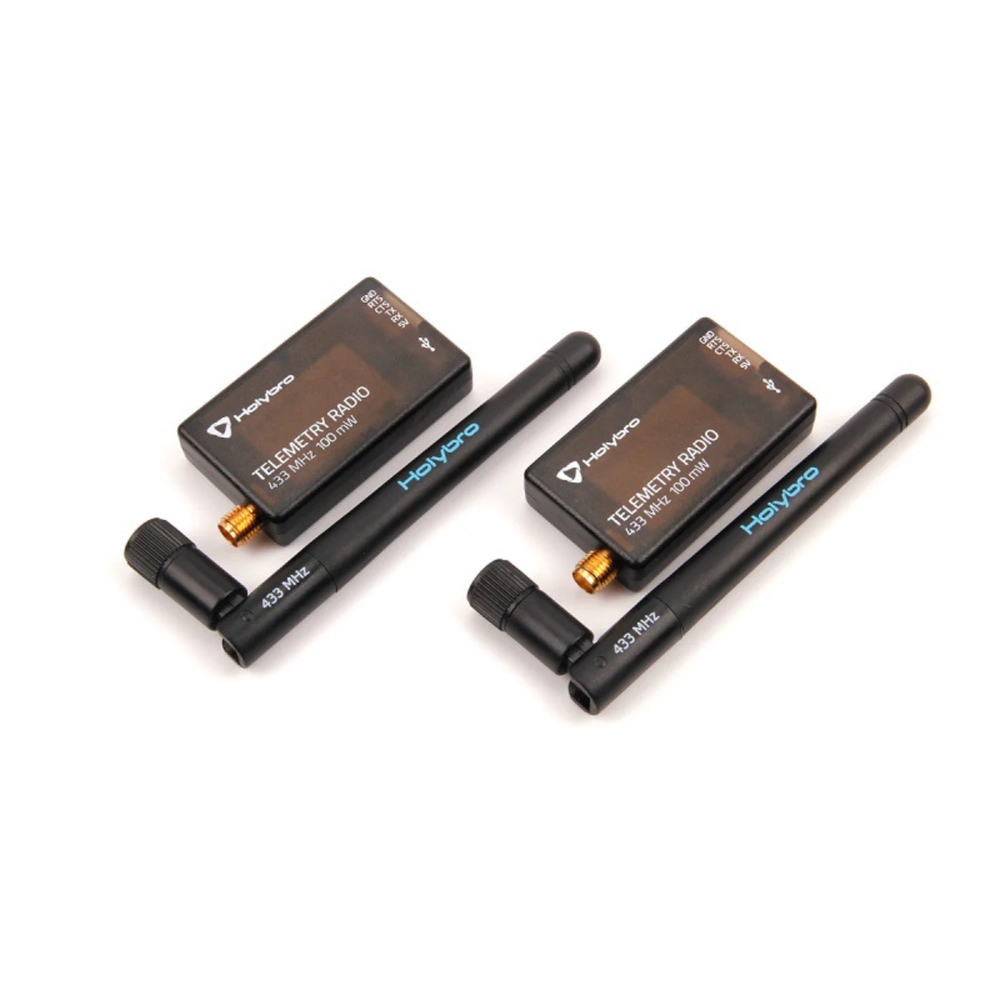
Holybro SiK Telemetry Radio V3 433MHz 100mW
The Holybro SiK Telemetry Radio V3 (433MHz, 100mW) is a plug-and-play bidirectional radio set that creates a wireless serial data link between your drone's flight controller and a ground station running Mission Planner, QGroundControl or any MAVLink GCS.
₹6,999 + 18% GST
Telemetry Antennas
Holybro SiK Telemetry Radio V3 433MHz 500mW
The Holybro SiK Telemetry Radio V3 (433MHz, 500mW) is the higher-power version of Holybro's popular plug-and-play telemetry set.
₹10,999 + 18% GST
Telemetry Antennas
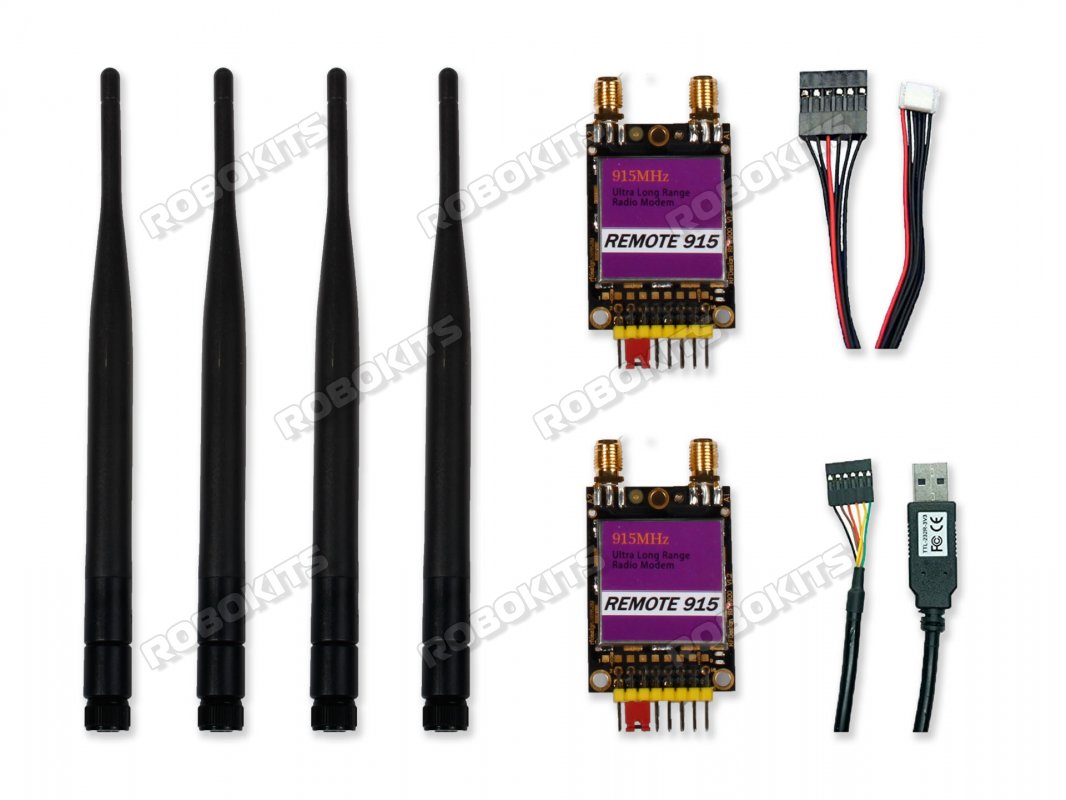
RFD900+ 915MHz Long-Range Telemetry Modem
The RFD900+ is a 1W (30dBm) long-range telemetry modem from Australian manufacturer RFDesign, designed for serious UAV and UGV operators who need a dependable command-and-telemetry link far beyond what a typical SiK radio can deliver.
₹14,499 + 18% GST
Telemetry Antennas
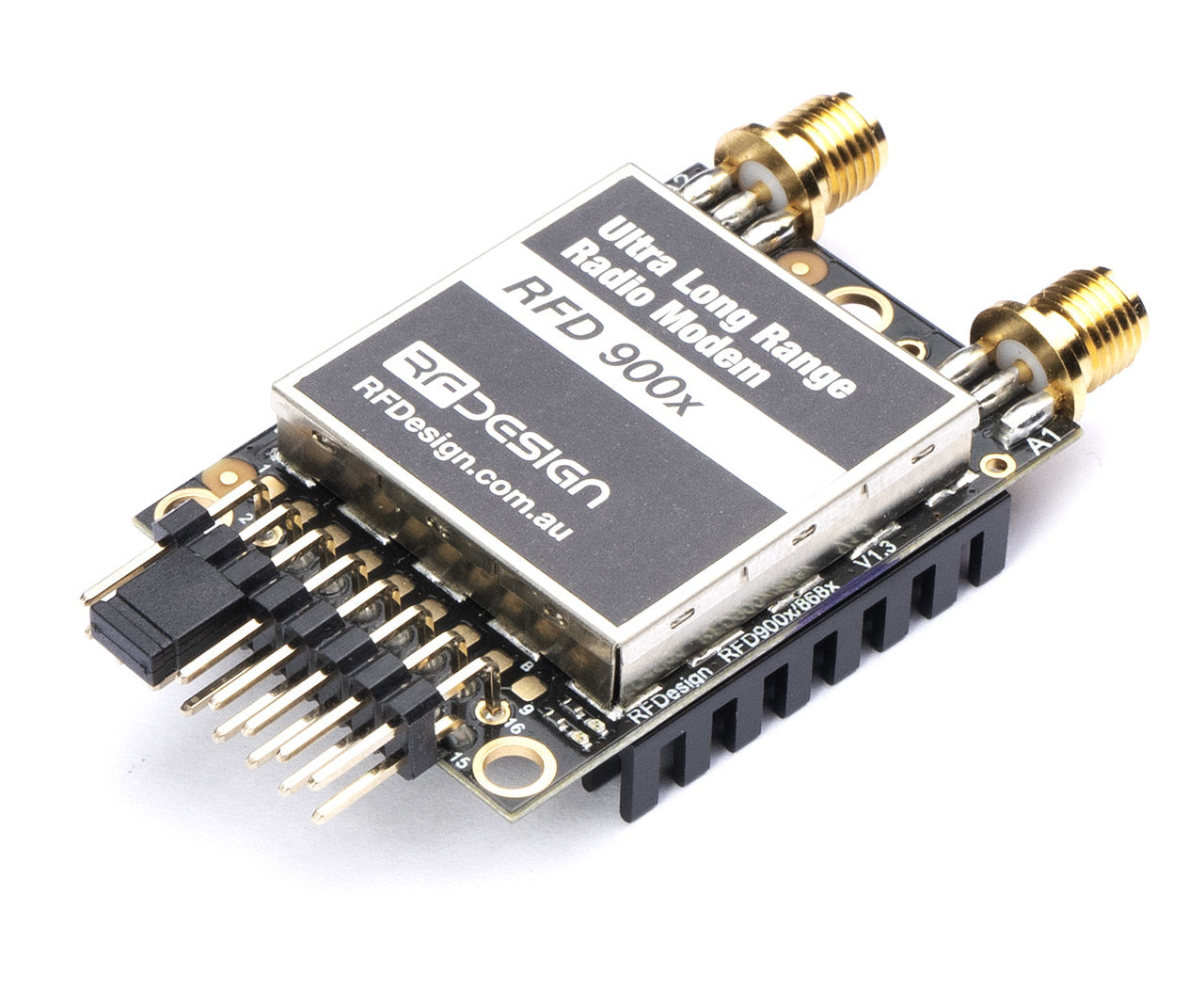
RFD900x ARM Ultra-Long-Range Telemetry Modem
The RFD900x is RFDesign's flagship ultra-long-range telemetry and control modem, built around a new ARM 32-bit core processor.
₹43,999 + 18% GST