Runs both ArduPilot and PX4 out of the box, so one board covers copters, planes, rovers and boats
In stock
Flight Controllers
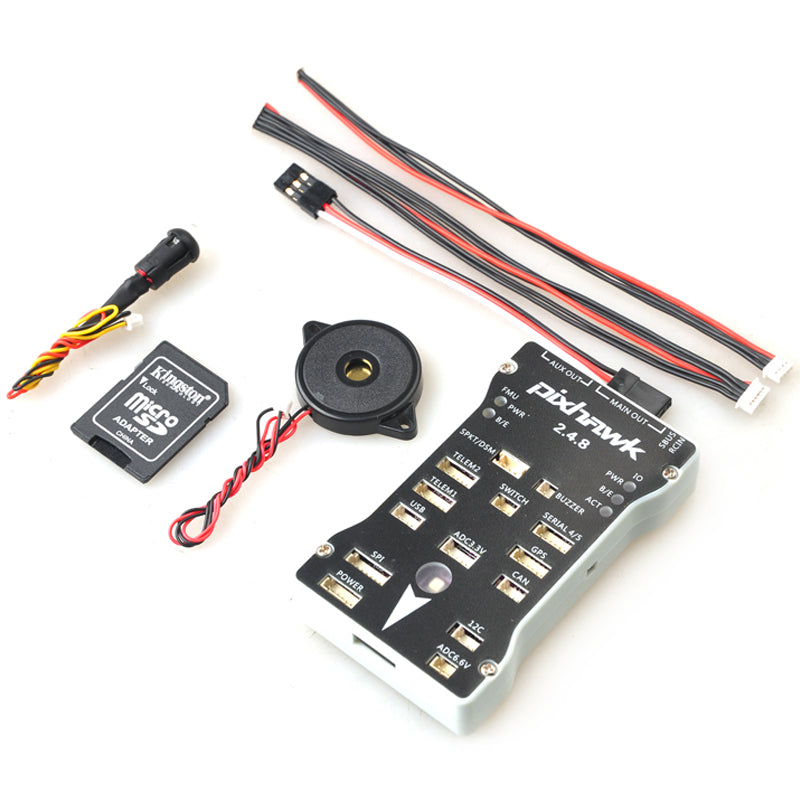
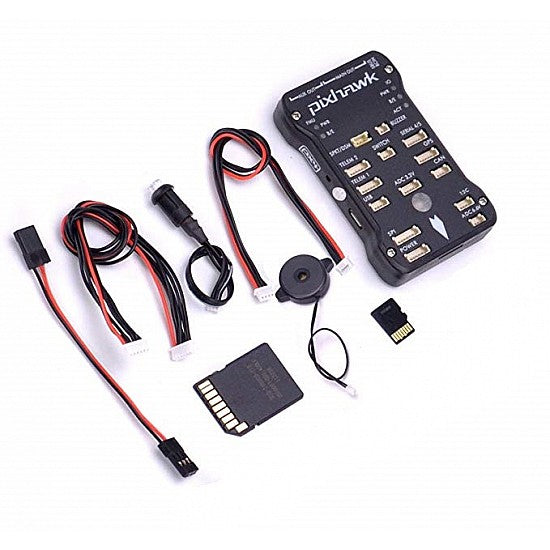
Pixhawk 2.4.8 Flight Controller (PX4/ArduPilot)
The Pixhawk 2.4.8 is a 32-bit open-source autopilot that brings full ArduPilot and PX4 flight-stack capability to hobby and academic drone builds at a very accessible price.
₹8,499 + 18% GST
SKU: BOTBIT-FC-01 · Best for: GPS waypoint and autonomous mission flights on multirotors
Overview
About Pixhawk 2.4.8 Flight Controller (PX4/ArduPilot).
The Pixhawk 2.4.8 is a 32-bit open-source autopilot that brings full ArduPilot and PX4 flight-stack capability to hobby and academic drone builds at a very accessible price. Built around a 168 MHz STM32F427 Cortex-M4 main processor with a separate STM32F103 failsafe co-processor, it runs the same firmware family used on professional-grade autopilots, so a multirotor, fixed-wing, rover or boat can all be configured from one board.
Functionally, the board fuses data from its onboard gyroscope, accelerometer, magnetometer and barometer to estimate attitude, heading and altitude, then drives motors and servos through its PWM outputs while managing GPS waypoints, return-to-home and failsafe behaviour. It is configured with free ground-station software such as Mission Planner or QGroundControl over USB or telemetry radio, giving full access to mission planning, tuning and live flight data.
It suits students, researchers, makers and budget-conscious builders who want a genuine autonomous-flight platform for learning GPS waypoint missions, autotune and sensor logging. Because the 2.4.8 is a clone of the original Pixhawk 1 (FMUv2) design, buyers should treat it as an entry-level/learning autopilot rather than a certified commercial flight controller, but it remains one of the most widely supported boards in the ArduPilot/PX4 ecosystem.
Key features
Why it stands out.
Dual-processor design pairs a 168 MHz STM32F427 with a dedicated failsafe co-processor for resilient control
Full sensor suite (gyro, accel/mag, barometer) enables stabilised flight, altitude hold and GPS missions
Rich I/O including 5 UARTs, CAN, I2C, SPI, PPM/SBUS input and 14 PWM outputs for flexible expansion
Configured free with Mission Planner or QGroundControl for waypoint planning, autotune and data logging
Specifications
Selection facts.
| Main processor | STM32F427 Cortex-M4 @ 168 MHz, FPU |
|---|---|
| Failsafe co-processor | STM32F103 |
| RAM / Flash | 256 KB RAM / 2 MB Flash |
| Gyroscope | L3GD20 (16-bit) |
| Accel / Magnetometer | LSM303D (14-bit) |
| IMU | MPU6000 (6-axis) |
| Barometer | MS5611 |
| PWM outputs | 14 PWM / servo outputs |
| Interfaces | 5x UART, 2x CAN, I2C, SPI, PPM/SBUS in |
| Firmware | ArduPilot / PX4 |
Applications
Where it is used.
- GPS waypoint and autonomous mission flights on multirotors
- Fixed-wing UAV stabilisation and return-to-home
- University and STEM robotics / autopilot coursework
- Hobby aerial photography and FPV platforms needing stabilised modes
- Autonomous ground rovers and surface boats using the same firmware
- Sensor-logging and flight-data research builds
Buying guide
How to choose.
Choose the Pixhawk 2.4.8 when you want a low-cost gateway into ArduPilot/PX4 for learning, prototyping or non-critical hobby flying. It is an FMUv2-generation (Pixhawk 1) design, so plan around its 2 MB flash limit, which caps some of the newest firmware features compared with H7-based boards like the Pixhawk 6C.
Most listings are kits: confirm whether your purchase includes the GPS (commonly an M8N), telemetry radio, power module, buzzer and safety switch, since these are required for a complete autonomous setup. Build quality varies between sellers, so buy from a reputable Indian supplier and budget for a proper GPS mast and vibration-damped mounting.
If you need redundant IMUs, higher processing headroom or long-term commercial reliability, step up to a modern Pixhawk 6C-class autopilot instead. The 2.4.8 is best understood as an affordable, well-documented learning and experimentation board.
FAQ
Common questions.
Does the Pixhawk 2.4.8 work with both ArduPilot and PX4?
Yes. The 2.4.8 follows the FMUv2 standard and accepts both ArduPilot and PX4 firmware. You flash and configure it using free ground-station software such as Mission Planner or QGroundControl over USB, then choose copter, plane, rover or boat firmware depending on your vehicle.
What is included with a Pixhawk 2.4.8 kit?
It varies by seller. Full combos typically add an M8N GPS, telemetry radio set, power module, buzzer, safety switch, SD card and cables, while the bare board ships alone. Always check the listing contents, because a GPS and power module are essential for autonomous flight.
Can it fly fixed-wing planes and rovers, not just multirotors?
Yes. Because it runs ArduPilot/PX4, the same board supports multirotors, fixed-wing aircraft, VTOLs, ground rovers and boats. You simply flash the matching firmware variant and configure the airframe, motor outputs and control surfaces in the ground-station software.
Is the 2.4.8 a genuine Pixhawk or a clone?
The 2.4.8 is a widely produced clone of the original 3DR/Pixhawk 1 (FMUv2) reference design. It uses the same processor and sensor architecture and runs official firmware, which makes it popular for learning, but build quality differs between manufacturers.
How much flash memory does it have and why does it matter?
It has 2 MB of flash. Newer ArduPilot/PX4 releases can exceed this limit, so some optional features may be trimmed on FMUv2 boards. For projects needing the latest full feature set, an H7-based autopilot such as the Pixhawk 6C is a better fit.
Do I need a GPS module to use it?
For stabilised, manual-style flight you can fly without GPS, but for position hold, waypoint missions and reliable return-to-home you need a GPS/compass module. Most users pair it with a U-blox M8N-class GPS, which many kits include.
More in Drone Components
Related hardware.
Flight Controllers
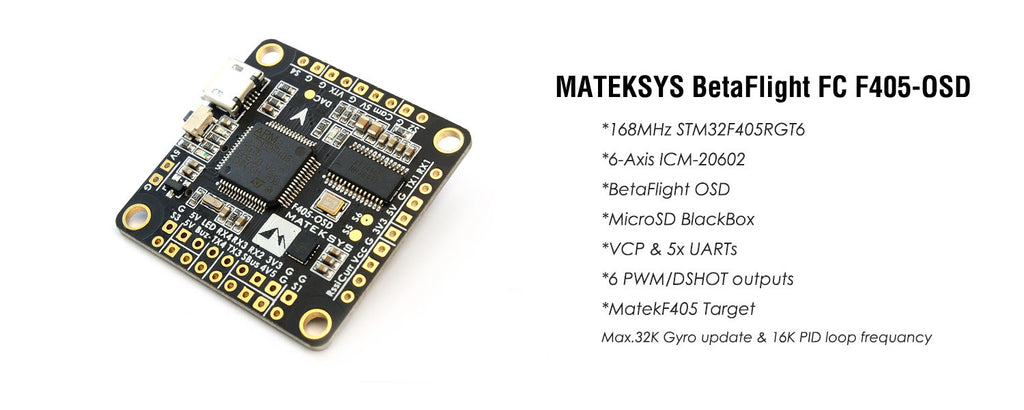
Matek F405-OSD Flight Controller
The Matek F405-OSD is a compact F4-class flight controller built for FPV racing and freestyle quadcopters, pairing a 168 MHz STM32F405 MCU with an ICM20602 gyro/accelerometer for fast, clean control loops.
₹2,999 + 18% GST
Flight Controllers
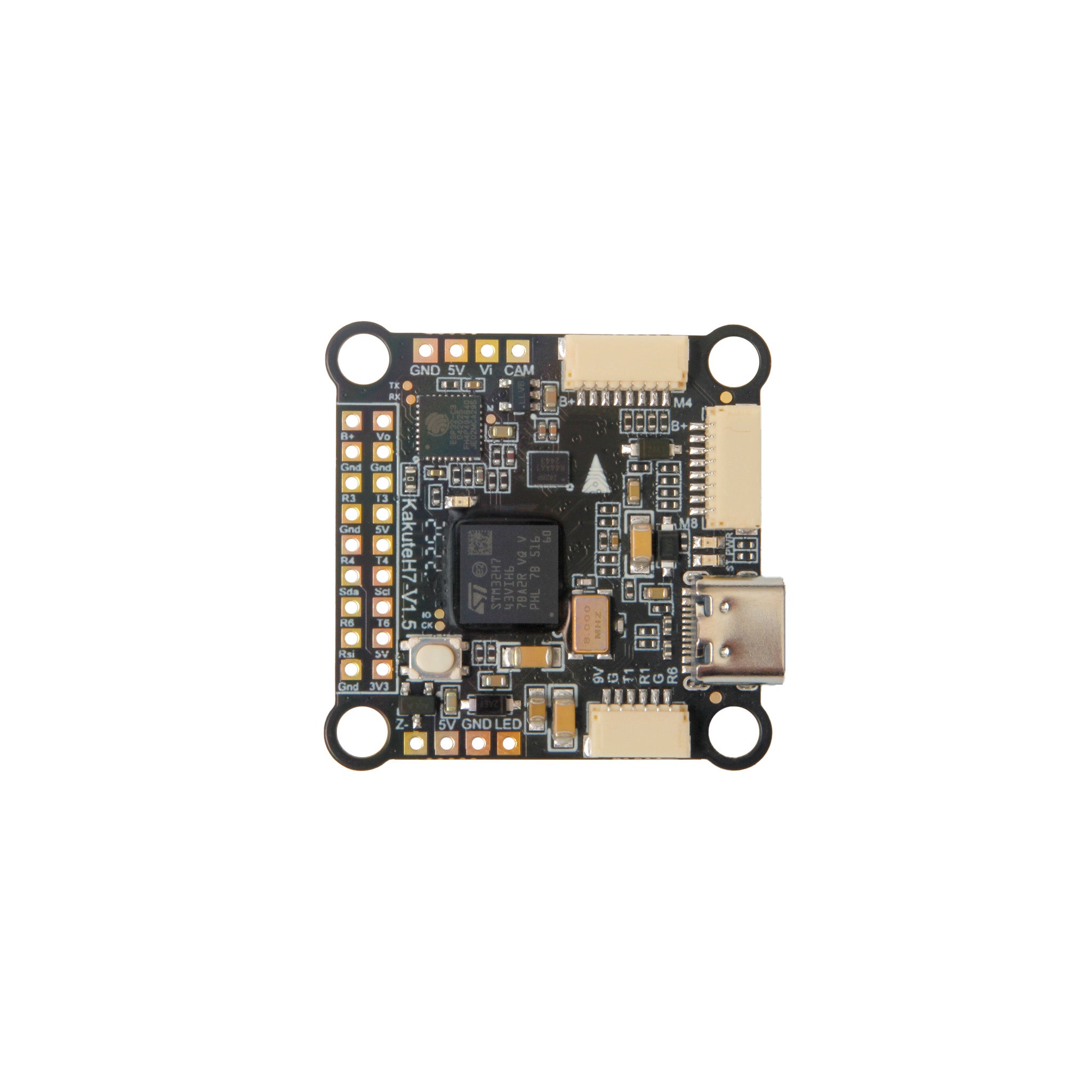
Holybro Kakute H7 V1.3 Flight Controller
The Holybro Kakute H7 V1.3 is a high-performance 30.5 mm FPV flight controller built around the powerful STM32H743 MCU running at 480 MHz.
₹9,999 + 18% GST
Flight Controllers
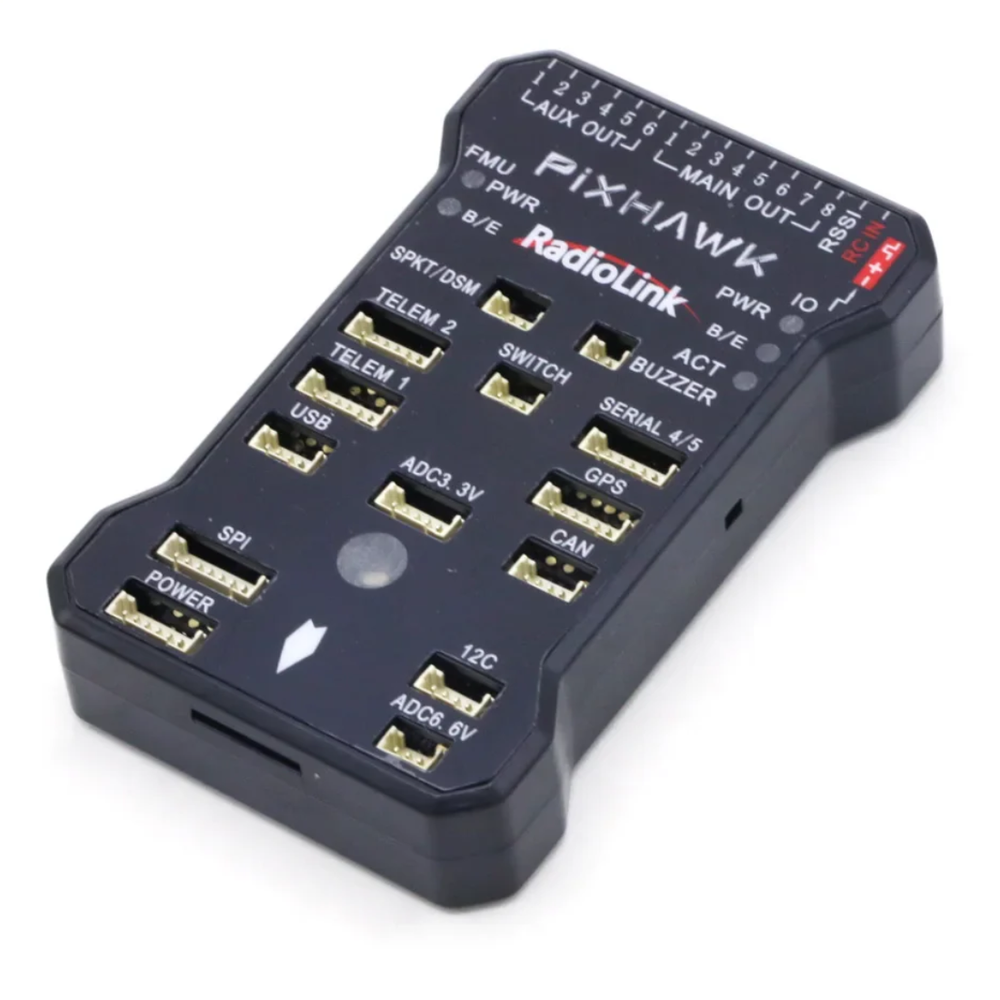
Radiolink Pixhawk Flight Controller (UAV)
The Radiolink Pixhawk is a 32-bit Pixhawk-class autopilot aimed at UAV, fixed-wing, multirotor and rover builders who want a complete, ready-to-fly ArduPilot/PX4 platform.
₹14,999 + 18% GST
Flight Controllers
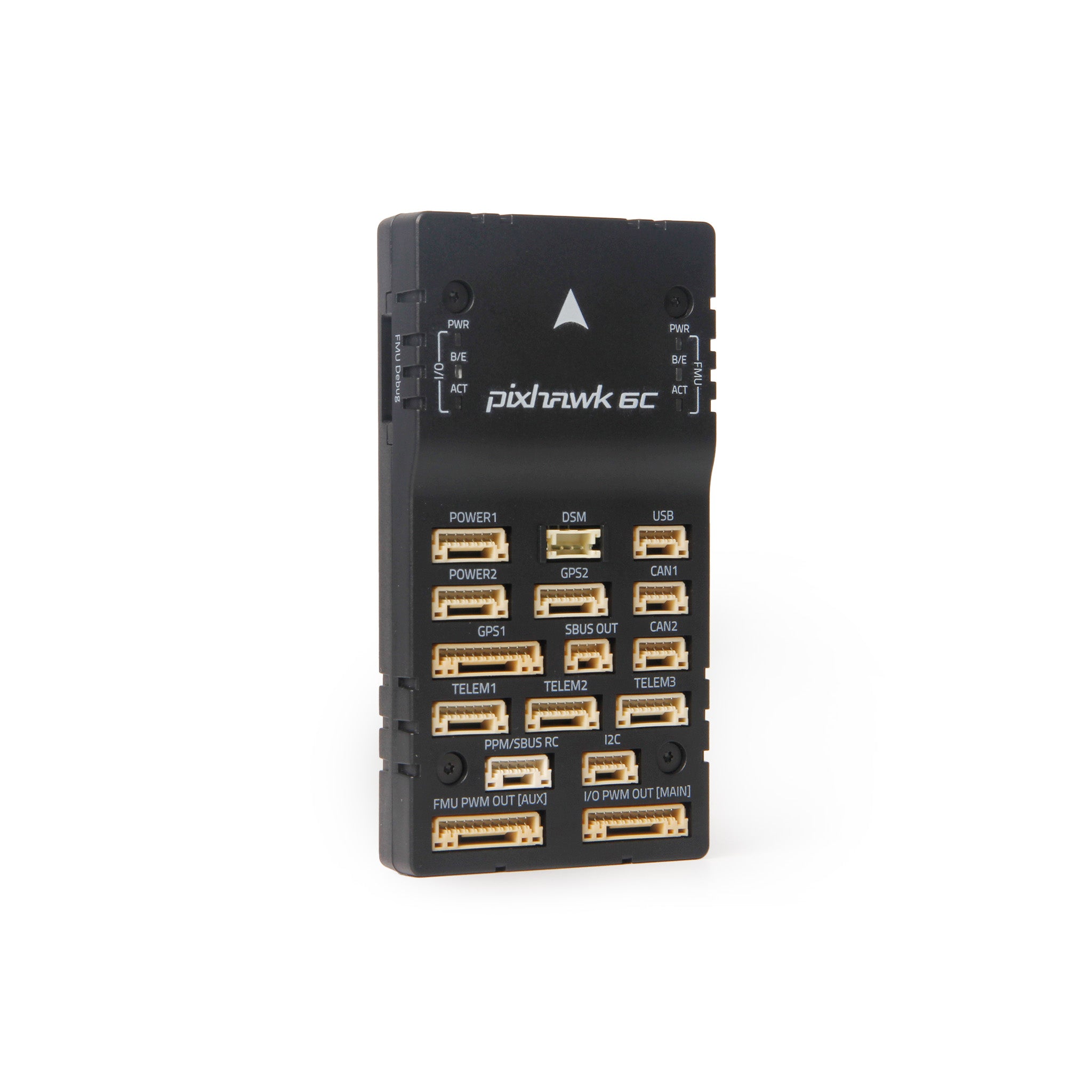
Holybro Pixhawk 6C + PM02 Power Module
The Holybro Pixhawk 6C is a modern FMUv6C-standard autopilot built around a 480 MHz STM32H743 Cortex-M7 main processor with an STM32F103 I/O co-processor, delivering substantially more processing power and memory than older FMUv2 boards.
₹31,499 + 18% GST